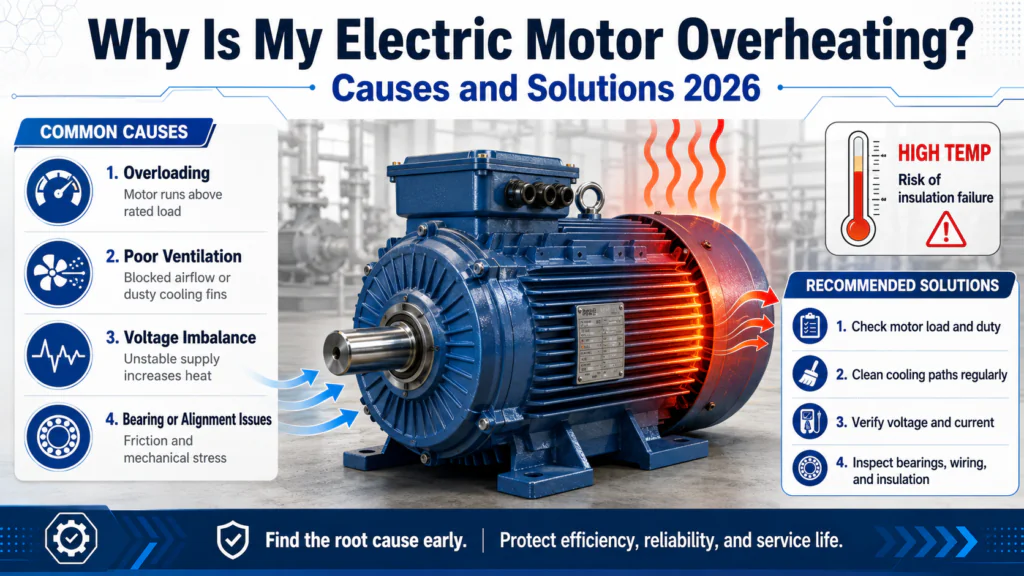
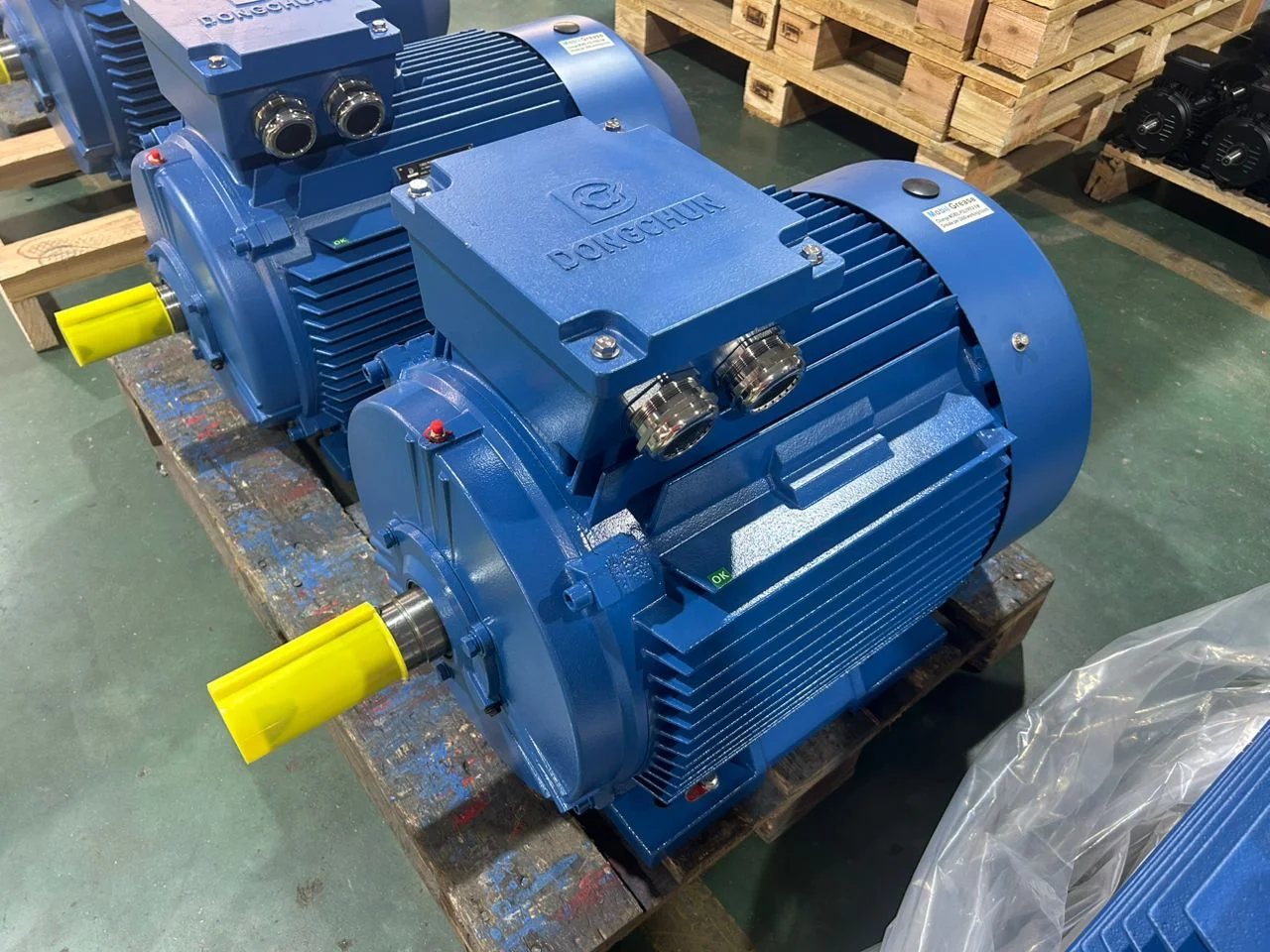
Silnik elektryczny przegrzewa się, gdy wytwarzana przez niego ilość ciepła jest większa, niż jest w stanie wypuścić do otaczającego powietrza. Z mojego doświadczenia w Dongchun Motor wynika, że prawie zawsze sprowadza się to do jednej z sześciu rzeczy: przeciążenia mechanicznego, zablokowanego chłodzenia, problemów z napięciem, zużycia łożysk, uszkodzonej izolacji lub naprężeń harmonicznych z VFD. Silnik zwykle ostrzega, zanim umrze — rosnący prąd, gorąca rama, dziwny hałas. Zidentyfikuj odpowiednio wcześnie przyczynę i napraw zanim spali się uzwojenie.
Pracuję w branży motoryzacyjnej od ponad 10 lat w Dongchun Motor (iecmotores.com) i najczęściej spotykanym problemem jest przegrzanie. Klienci dzwonią do mnie z Brazylii, Grecji, Indonezji – różne kraje, ta sama historia. Silnik działał dobrze przez lata, aż pewnego dnia się zepsuł lub, co gorsza, po prostu się zatrzymał i śmierdział spalonym plastikiem.
Oto rzecz, której brakuje większości ludzi. Silnik nie przegrzewa się nagle. Dociera tam powoli. Oznaki pojawiają się na kilka tygodni przed prawdziwą awarią — większy pobór prądu, rama, która wydaje się cieplejsza niż zwykle, gdy położysz na niej rękę, może słabe buczenie, którego wcześniej nie było. Zanim izolacja zacznie śmierdzieć, już nastąpią prawdziwe szkody.
[Klasy temperatury silnika IEC 60034-1](https://webstore.iec.ch/en/publication/64293)1 — międzynarodowa norma dotycząca zabezpieczenia termicznego silnika — potwierdza, że trwałość izolacji zmniejsza się w przybliżeniu o połowę na każde 8 do 10°C wzrostu powyżej temperatury znamionowej. Ta liczba ma większe znaczenie, niż większość kupujących zdaje sobie sprawę.
Pozwól, że przeprowadzę Cię przez sześć przyczyn, które widzę najczęściej, jak je znaleźć i co zrobić z każdą z nich.
Oto krótki przegląd, zanim zagłębimy się w szczegóły:
Przyczyna
Częsty objaw
Szybka kontrola
Przeciążać
Wysoki prąd, zadziałał przekaźnik termiczny
Porównaj natężenie prądu z tabliczką znamionową FLA
Słaba wentylacja
Gorąca rama, zatkane żebra
Sprawdź osłonę wentylatora i żeberka chłodzące
Problem z napięciem
Nierówne prądy fazowe, buczenie
Zmierz napięcie na zaciskach silnika
Awaria łożyska
Wibracje, hałas, miejscowe ciepło
Termometr na podczerwień w obudowach łożysk
Degradacja izolacji
Sporadyczne potknięcia, zapach spalenizny
Test rezystancji izolacji Meggera
Harmoniczne VFD
Przegrzanie przy niskiej prędkości, hałas uzwojenia
Sprawdź ustawienia napędu i długość kabla
Warto pamiętać o jednej zasadzie: każde 10°C wzrostu powyżej temperatury znamionowej silnika skraca żywotność izolacji mniej więcej o połowę. 4-biegunowy silnik IE3 zbudowany tak, aby mógł wytrzymać 20 lat w temperaturze znamionowej, może ulec awarii w ciągu dwóch lat, jeśli będzie się nagrzewał do 40°C. To nie jest mała różnica.
Każde 10°C wzrostu powyżej temperatury znamionowej skraca żywotność izolacji silnika o około połowę.PRAWDA
Jest to dobrze ugruntowana zasada starzenia termicznego w inżynierii silników, zgodna z normami IEC 60034-1 i przywoływana przez organizacje branżowe, takie jak AEMT.
Silnik, który zadziała w wyniku zadziałania zabezpieczenia termicznego, można bezpiecznie ponownie uruchomić natychmiast po zresetowaniu przekaźnika.FAŁSZ
Należy poczekać, aż silnik całkowicie ostygnie, a następnie znaleźć i usunąć przyczynę przed ponownym uruchomieniem. Ponowne uruchomienie bez usunięcia pierwotnej przyczyny powoduje powtarzające się cykle termiczne, które stopniowo uszkadzają izolację.
Przyczyna 1: Przeciążenie mechaniczne
Przeciążenie to najczęstsza przyczyna, z którą się borykam. Dzieje się tak, gdy obciążenie wału wymaga większego momentu obrotowego niż silnik został zaprojektowany. Silnik reaguje, pobierając większy prąd, a większy prąd oznacza więcej ciepła w uzwojeniach stojana.
Oto coś, co ludzie często mylą: przeciążenie występuje nie tylko dlatego, że ktoś wybrał niewłaściwy silnik. Silnik może pracować bez zarzutu przez lata, a następnie zacząć się przeciążać z powodu zmiany warunków. Wirnik pompy zużywa się i opór wzrasta. Przenośnik taśmowy gromadzi materiał. Skrzynia biegów staje się sztywna.
W zeszłym roku miałem klienta w Polsce — używał 4-biegunowego silnika IE3 o mocy 15 kW, rama 160M, na przenośniku ślimakowym, który działał doskonale przez trzy lata. Następnie łożyska w jego skrzyni biegów zaczęły się zużywać i zwiększyły opór wystarczający, aby wypchnąć silnik powyżej jego obciążenia znamionowego. Nie miał pojęcia. Silnik po prostu „starzał się”." w jego umyśle. Kiedy zmierzyliśmy natężenie prądu w porównaniu z tabliczką znamionową FLA, odpowiedź była oczywista.
Jak to zdiagnozować: podłącz miernik prądu do każdej fazy i odczytaj prąd roboczy przy pełnym obciążeniu. Następnie porównaj to z liczbą amperów pełnego obciążenia (FLA) na tabliczce znamionowej. Jeśli stale przekraczasz tę liczbę, silnik jest przeciążony. Proste.
BRAK MG 1 Część 312 definiuje współczynnik serwisowy jako mnożnik zastosowany do obciążenia znamionowego — współczynnik serwisowy 1,15 oznacza, że silnik może wytrzymać w sposób ciągły 115% obciążenia znamionowego, ale tylko w znamionowej temperaturze otoczenia i przy wyraźnym chłodzeniu.
Silnik o współczynniku pracy 1,15 może wytrzymać w sposób ciągły 115% obciążenia znamionowego – ale tylko przy normalnej temperaturze otoczenia i dobrej wentylacji. Nie używaj współczynnika serwisowego jako powodu do ignorowania problemu.
Co zrobić:
Jeśli możesz, zmniejsz obciążenie mechaniczne.
Jeśli obciążenie rzeczywiście wzrosło, zamontuj większy silnik — w przypadku 15 kW, który przekracza granice, przejdź do 18,5 kW w przypadku ramy 160L lub 22 kW w przypadku ramy 180M.
Dodaj softstarter lub VFD, aby zmniejszyć prąd rozruchowy w zastosowaniach wymagających dużej liczby cykli.
Ustaw prawidłowo przekaźnik przeciążenia termicznego. Zbyt wysokie ustawienie przekaźnika nie zapewnia ochrony — jest to fałszywe poczucie bezpieczeństwa.
Porównanie prądu roboczego z tabliczką znamionową FLA to najszybszy sposób zdiagnozowania przeciążenia silnika.PRAWDA
Odczyt wszystkich trzech prądów fazowych za pomocą miernika cęgowego i porównanie z tabliczką znamionową natężenia prądu przy pełnym obciążeniu bezpośrednio pokazuje, czy silnik pracuje ciężej, niż został zaprojektowany.
Współczynnik pracy silnika pozwala mu pracować powyżej obciążenia znamionowego przez czas nieokreślony bez żadnych konsekwencji.FAŁSZ
Współczynnik serwisowy ma zastosowanie tylko wtedy, gdy temperatura otoczenia mieści się w granicach specyfikacji, a chłodzenie jest w pełni funkcjonalne. Praca powyżej obciążenia znamionowego, nawet w ramach współczynnika pracy, w gorącym lub słabo wentylowanym środowisku, nadal powoduje nadmierne ciepło i uszkodzenie izolacji.
Przyczyna 2: Nieodpowiednie chłodzenie i zablokowana wentylacja
W zeszłym roku zadzwonił do mnie grecki klient. Jego 4-biegunowy silnik pompy o mocy 11 kW IP55, rama 160M, wyłączał się po około 30 minutach pracy. Przez dwa lata było dobrze. Zadałem mu trzy pytania:
„Czy coś się zmieniło w instalacji?"
„Czy osłona wentylatora jest nienaruszona?"
„Kiedy ostatni raz czyściłeś żeberka chłodzące?"
Poszedł i patrzył. Osłona wentylatora miała pęknięcie. Połowa przepływu powietrza chłodzącego płynęła na boki, a nie przez żebra. W połączeniu z zapylonym środowiskiem w jego zakładzie, płetwy również były częściowo zablokowane. Silnik sam się gotował.
Wysłaliśmy mu zastępczy całun. Problem rozwiązany w ciągu dwóch dni.
Silniki TEFC — całkowicie zamknięte, chłodzone wentylatorem, czyli najpopularniejszy typ, jaki produkujemy w Dongchun Motor (iecmotores.com) — schładzają się, przemieszczając powietrze przez zewnętrzne żebra za pomocą wentylatora na wale. Jeśli ten przepływ powietrza zostanie zablokowany lub przekierowany, ciepło nie będzie miało dokąd uciec.
Standard ochrony obudowy Stopień ochrony IP IEC 605293 określa również, że stopień ochrony IP ma zastosowanie tylko wtedy, gdy silnik jest prawidłowo zainstalowany i ma odpowiedni prześwit — uszczelniony silnik IP55 wciśnięty w szczelną szafkę bez przepływu powietrza nie spełnia warunków testowych.
Najczęstsze przyczyny:
Kurz, tłuszcz lub materiał procesowy zgromadzony w żeberkach chłodzących
Pęknięta lub brakująca osłona wentylatora, która umożliwia ucieczkę powietrza zamiast przepływać przez żebra
Silnik zamontowany w zamkniętej szafce bez wolnej przestrzeni wokół niej
Temperatura otoczenia powyżej 40°C, co jest standardową wartością znamionową dla większości silników
Silnik zamontowany z końcówką wentylatora zbyt blisko ściany
Jak to zdiagnozować: połóż rękę na ramie silnika podczas pracy pod obciążeniem. Powinien być ciepły i nie bolesny w dotyku przez kilka sekund. Użyj termometru na podczerwień na powierzchni ramy i porównaj stronę napędową, stronę nienapędową i środek ramy. Następnie spójrz oczami na pokrywę i żebra wentylatora.
Co zrobić:
Przedmuchaj żeberka chłodzące sprężonym powietrzem. W zapylonym otoczeniu rób to co miesiąc.
Natychmiast wymień uszkodzoną osłonę wentylatora. Brakująca osłona może zmniejszyć chłodzenie o 30 do 50 procent.
Jeśli temperatura w pomieszczeniu regularnie przekracza 40°C, należy obniżyć parametry znamionowe silnika lub zastosować silnik o wyższej klasie izolacji – wersja klasy H zamiast klasy F.
Upewnij się, że wokół silnika jest wolna przestrzeń, szczególnie po stronie wentylatora.
Brakująca lub pęknięta osłona wentylatora może zmniejszyć wydajność chłodzenia silnika o 30 do 50 procent.PRAWDA
Osłona wentylatora kieruje przepływ powietrza wzdłuż żeberek chłodzących. Bez tego duża część ruchu powietrza jest marnowana. Rama silnika pracuje znacznie cieplej w tych samych warunkach obciążenia.
Silniki TEFC są całkowicie uszczelnione i nie wymagają wokół nich żadnej zewnętrznej przestrzeni wentylacyjnej.FAŁSZ
Silniki TEFC chłodzą się poprzez przepływ powietrza przez zewnętrzne żebra. Aby chłodzenie mogło działać, potrzebują wolnej przestrzeni wokół obudowy — szczególnie po stronie wentylatora. Instalowanie ich w ciasnych obudowach bez luzu powoduje przegrzanie.
Przyczyna 3: Problemy z zasilaniem
Problemy z napięciem są podstępne. Silnik wygląda dobrze. Prąd nie wydaje się szalony. Ale jedna faza jest nieco niższa od pozostałych i przez tygodnie i miesiące jedno uzwojenie pracuje ciężej, niż powinno.
Są tu dwie główne kwestie.
Nierównowaga napięcia: gdy trzy fazy zasilania nie są równe, jedno uzwojenie pobiera więcej prądu niż pozostałe. Różnica napięcia między fazami wynosząca zaledwie 2–3 procent może wytworzyć różnicę prądu od 6 do 10 razy większą. Ten zlokalizowany dodatkowy prąd tworzy gorący punkt w stojanie. Często będziesz postrzegać to jako uszkodzenie jednego uzwojenia przed pozostałymi – co może wyglądać na przypadkową awarię, jeśli nie sprawdzisz zasilania.
Niskie napięcie: gdy napięcie zasilania spadnie poniżej wartości znamionowej, silnik pobiera więcej prądu, aby utrzymać ten sam moment obrotowy. Większy prąd oznacza więcej ciepła.
Miałem klienta w Chile, który używał w tym samym budynku trzech 4-biegunowych silników 7,5 kW 400 V/50 Hz IE3. Dwie były w porządku. Jeden ciągle się przegrzewał. Ten sam model, to samo obciążenie. W końcu zmierzyliśmy napięcie na zaciskach silnika – a nie na panelu, co jest istotną różnicą – i odkryliśmy, że kabel biegnący do tego silnika miał luźne połączenie na zaciskach. Napięcie na silniku było o 8 procent niższe niż na panelu. To wystarczyło.
Wskazówki dotyczące niezrównoważenia napięcia NEMA MG 14 stwierdza, że asymetria napięcia przekraczająca 1% może powodować asymetrię prądu od 6 do 10 razy większą – i zaleca obniżenie wartości znamionowych silników, gdy asymetria stale przekracza 1%.
Jak to zdiagnozować:
Zmierz napięcie na zaciskach silnika, a nie na panelu rozdzielczym i rób to pod pełnym obciążeniem.
Porównaj ze sobą wszystkie trzy napięcia fazowe. Procent niezbilansowania to: maksymalne odchylenie od średniej podzielone przez średnią razy 100.
Jeśli brak równowagi przekracza 2 procent, poszukaj przyczyny.
Porównaj zmierzone napięcie z napięciem znamionowym na tabliczce znamionowej. Stały spadek o ponad 10 procent jest poważny.
Co zrobić:
Sprawdź i dokręć każde połączenie zacisków. Luźne połączenia są najczęstszą przyczyną braku równowagi.
Sprawdź, czy obciążenia jednofazowe są pobierane nierównomiernie z panelu trójfazowego.
Zainstaluj przekaźnik monitorujący napięcie, który wyłączy silnik, jeśli niezrównoważenie przekroczy bezpieczny poziom.
Jeśli napięcie jest stale niskie, sprawdź ustawienia zaczepów transformatora lub skontaktuj się z dostawcą energii.
Asymetria napięcia pomiędzy fazami wynosząca 2–3 procent może powodować asymetrię prądu nawet 10 razy większą.PRAWDA
Jest to znany efekt mnożnikowy w zachowaniu silnika trójfazowego. Mała asymetria napięcia powoduje nieproporcjonalnie dużą asymetrię prądu, powodując przegrzanie jednego uzwojenia, podczas gdy pozostałe wyglądają normalnie.
Pomiar napięcia na panelu dystrybucyjnym wystarczy, aby upewnić się, że silnik otrzymuje prawidłowe napięcie.FAŁSZ
Napięcie może znacznie spaść między panelem a zaciskami silnika z powodu długich kabli, luźnych połączeń lub zbyt małych przewodów. Zawsze mierz na zaciskach silnika pod obciążeniem, aby uzyskać dokładny odczyt.
Przyczyna 4: Zużycie łożysk i tarcie mechaniczne
Łożyska powinny umożliwiać wałowi obracanie się prawie bez tarcia. Kiedy zaczynają ulegać awariom — z powodu zanieczyszczenia, złego smarowania, niewspółosiowości lub przeciążenia — wytwarzają ciepło bezpośrednio w obudowie łożyska i wypychają je do ramy silnika i uzwojeń.
Oto, co sprawia, że jest to trudne: uszkodzone łożysko może nie być od razu widoczne jako wysoki prąd. Ciepło gromadzi się lokalnie. Zanim temperatura stojana wzrośnie na tyle, aby zadziałał przekaźnik, łożysko może być już uszkodzone lub może mieć to wpływ na uzwojenie w jego pobliżu.
Najczęstszym błędem, jaki widzę, jest nadmierne smarowanie. Ludzie uważają, że im więcej tłuszczu, tym lepiej. Tak nie jest. Nadmiar smaru wiruje wewnątrz oprawy, wytwarza tarcie i wytwarza ciepło, podobnie jak łożysko pracujące na sucho. Jest odpowiednia ilość — postępuj zgodnie ze specyfikacją producenta dotyczącą rozmiaru ramy silnika. Czterobiegunowy silnik 132S potrzebuje około 10 gramów smaru na każdy interwał. Zapakuj 30 gramów i stworzyłeś źródło ciepła.
Za pomocą termometru na podczerwień porównaj temperaturę na łożysku po stronie napędowej, łożysku po stronie drugiej i w ramie środkowej. Obudowa łożyska, która jest wyraźnie gorętsza niż rama, sygnalizuje, że coś jest w niej nie tak.
Słuchaj przy niskiej prędkości. Zgrzytanie, dudnienie lub nieregularny hałas wydobywający się z obszaru łożyska jest wyraźnym sygnałem.
Użyj miernika wibracji, jeśli go posiadasz. Podwyższone wibracje przy częstotliwościach łożysk potwierdzają zużycie.
Sprawdź smarowanie. Czy jest stary i wysuszony? Czy jest za dużo w opakowaniu?
Co zrobić:
Wymień zużyte łożyska, zanim się zatrącą. Pozostawienie uszkodzonego łożyska do momentu jego zablokowania może zniszczyć wał i w tym samym przypadku spalić uzwojenie.
Po wszelkich pracach konserwacyjnych należy sprawdzić ustawienie wału. Nawet niewielka niewspółosiowość powoduje, że łożysko przenosi nierównomierne obciążenie i szybciej się zużywa.
Postępuj zgodnie z harmonogramem smarowania dostosowanym do rozmiaru ramy silnika — zarówno pod względem częstotliwości, jak i właściwej ilości smaru.
Sprawdź, czy w danym zastosowaniu nie występują obciążenia promieniowe lub osiowe, które przekraczają nośność znamionową łożyska.
Uszkodzone łożysko może spowodować miejscowe przegrzanie, zanim całkowity prąd silnika wzrośnie zauważalnie.PRAWDA
Ciepło łożyska gromadzi się lokalnie w obudowie. Temperatura uzwojenia stojana może nadal wydawać się akceptowalna, gdy w pobliżu łożyska występują znaczne uszkodzenia. Pomiar w podczerwieni na obudowie łożyska jest bardziej niezawodny niż poleganie wyłącznie na odczytach prądu.
Nadmierne smarowanie łożyska silnika jest nieszkodliwe i zapewnia po prostu dodatkową ochronę.FAŁSZ
Nadmiar smaru wiruje wewnątrz obudowy łożyska, powodując tarcie i ciepło. Może to spowodować awarię łożyska, podobnie jak brak smarowania. Prawidłowa ilość smaru jest podana w dokumentacji producenta silnika.
Przyczyna 5: Degradacja izolacji uzwojenia
Uzwojenia silnika są pokryte materiałem izolacyjnym, który zapobiega stykaniu się poszczególnych przewodów ze sobą lub ze stalowym rdzeniem. Z biegiem czasu izolacja ta ulega zniszczeniu. Ciepło to robi. Robi to wilgoć. Robią to chemikalia. Wibracja to robi. Zwykle jest to powolna, wieloletnia współpraca całej czwórki.
Gdy izolacja staje się słabsza, pomiędzy przewodami zaczynają płynąć niewielkie prądy upływowe. Nazywa się je spodenkami międzyobrotowymi. Wytwarzają dodatkowe ciepło, które jeszcze bardziej niszczy izolację. Jest to cykl, który staje się coraz szybszy, aż do awarii uzwojenia.
Klasa izolacji określa maksymalną temperaturę, jaką materiał uzwojenia może wytrzymać w sposób ciągły. Trzy najczęstsze klasy silników przemysłowych to:
Klasa izolacji
Maksymalna temperatura uzwojenia
Typowy limit wzrostu (IEC)
Klasa B
130°C
80 tys
Klasa F
155°C
105 tys
Klasa H
180°C
125 tys
Klasyfikacja izolacji IEC 600856 to norma definiująca te klasy temperaturowe — określająca także, że system izolacyjny pracujący w sposób ciągły w temperaturze granicznej swojej klasy ma projektowaną trwałość wynoszącą około 20 000 godzin.
W Dongchun Motor (iecmotores.com) nasze standardowe silniki trójfazowe wykorzystują izolację klasy F, ale są oceniane pod kątem ograniczenia wzrostu temperatury klasy B. Daje to wbudowany margines bezpieczeństwa wynoszący 25°C w rzeczywistych warunkach pracy. To nie jest frazes marketingowy — oznacza, że nawet gdy silnik się trochę nagrzeje, uzwojenie ma dodatkowy zapas, zanim osiągnie rzeczywistą granicę.
Jak to zdiagnozować:
Test Meggera: podłącz miernik rezystancji izolacji pomiędzy każdym uzwojeniem a masą. Poniżej 1 MΩ pojawia się czerwona flaga. W przypadku silników powyżej 1 kV próg jest wyższy — sprawdź IEC 60034.
Wskaźnik polaryzacji (PI): stosunek odczytu 10-minutowego do odczytu 1-minutowego. Wartość poniżej 2,0 wskazuje na pogarszającą się izolację.
Obraz termowizyjny: gorące punkty widoczne na ramie silnika mogą pokazać, gdzie pod powierzchnią zachodzi krótka aktywność międzyobrotowa.
Co zrobić:
Co najmniej raz w roku należy sprawdzić rezystancję izolacji. W wilgotnym lub agresywnym chemicznie środowisku należy przeprowadzać częściej testy.
Jeśli współczynnik PI spada z roku na rok, zaplanuj przewinięcie lub wymianę, zanim nastąpi nieoczekiwana awaria.
Upewnij się, że obudowa silnika jest dostosowana do środowiska. IP55 sprawdza się w większości sytuacji na zewnątrz i podczas mycia. Agresywne środowiska mogą wymagać stopnia IP65 lub wyższego.
Awaria izolacji prawie nigdy nie jest nagła. Trend w wynikach testu meggera z dużym wyprzedzeniem informuje, dokąd zmierza.
Trendy rezystancji izolacji na przestrzeni wielu lat są bardziej przydatne do przewidywania uszkodzeń uzwojenia niż pojedynczy pomiar.PRAWDA
Pojedynczy odczyt meggera informuje o bieżącym stanie. Porównanie wyników z roku na rok pozwala wykazać, czy izolacja ulega zniszczeniu i w jakim tempie, co daje czas na zaplanowanie planowanej konserwacji, zamiast reagować na nieoczekiwaną awarię.
Silnik z izolacją klasy F może bezpiecznie pracować w temperaturze uzwojenia do 155°C bez ryzyka degradacji.FAŁSZ
155°C to absolutne maksimum. Ciągła praca w pobliżu tego limitu znacznie skraca żywotność izolacji. Producenci silników wysokiej jakości porównują silniki klasy F z limitem wzrostu klasy B (130°C), aby zachować margines bezpieczeństwa termicznego w rzeczywistych warunkach.
Przyczyna 6: Harmoniczne VFD i stres o wysokiej częstotliwości
VFD – napędy o zmiennej częstotliwości – są teraz wszędzie. Oszczędzają energię, zapewniają precyzyjną kontrolę prędkości i stały się standardem w zastosowaniach związanych z pompami, wentylatorami i przenośnikami. Sprzedaję wiele silników do zastosowań VFD i zawsze mówię klientom: standardowy silnik w VFD to nie to samo, co silnik zaprojektowany do użytku z VFD.
Oto, co się dzieje. Nowoczesny napęd VFD wykorzystujący technologię przełączania IGBT wytwarza impulsy napięcia, które przełączają się niezwykle szybko — czasami w ciągu 50 nanosekund. Te szybkie impulsy robią dwie rzeczy z twoim silnikiem:
Po pierwsze, wytwarzają prądy harmoniczne w uzwojeniach stojana. Prądy harmoniczne zwiększają straty miedzi i podnoszą temperaturę roboczą, nawet jeśli wydaje się, że silnik pracuje w normalnym zakresie prędkości. Silnik wykonuje dodatkową pracę, której nie widać.
Po drugie, szybkie impulsy napięcia powodują powstawanie skoków na zaciskach silnika, które mogą być znacznie wyższe niż napięcie znamionowe — zwłaszcza jeśli kabel między przemiennikiem a silnikiem jest długi. Opublikowane badania pokazują, że podwojenie częstotliwości nośnej może znacznie skrócić żywotność izolacji silnika — czasami o połowę lub więcej.
Trzeci problem dotyczy niskich prędkości. Wentylator chłodzący zamontowany na wale zwalnia wraz z silnikiem. Poniżej około 30 Hz nie jest w stanie przesunąć wystarczającej ilości powietrza, aby odpowiednio schłodzić ramę. Ciepło gromadzi się szybciej niż opuszcza.
Jak to zdiagnozować:
Czy przegrzanie występuje głównie przy niskich ustawieniach prędkości? To klasyczny objaw VFD.
Zmierz długość kabla pomiędzy przemiennikiem częstotliwości a silnikiem. Przebiegi powyżej 50 metrów znacznie zwiększają ryzyko wystąpienia skoków napięcia. Sprawdź specyfikacje producenta dysku pod kątem określonego progu.
Sprawdź ustawienie częstotliwości nośnej w przemienniku. Wyższe częstotliwości są cichsze, ale twardsze pod względem izolacji.
Sprawdź, czy pomiędzy przemiennikiem częstotliwości a silnikiem jest zainstalowany dławik wyjściowy lub filtr dV/dt.
Co zrobić:
Określ silniki pracujące z inwerterem do zastosowań VFD. Mają one wzmocnioną izolację zaprojektowaną pod kątem naprężeń napięciowych i prądów harmonicznych wytwarzanych przez przemiennik częstotliwości.
Zainstaluj dławiki wyjściowe lub filtry sinusoidalne pomiędzy przemiennikiem częstotliwości a silnikiem, szczególnie w przypadku kabli o długości przekraczającej 30 do 50 metrów.
Obniż częstotliwość nośną, jeśli pozwala na to poziom hałasu akustycznego.
W przypadku zastosowań, które wymagają pracy z niską prędkością przez dłuższy czas, zamiast polegać na wentylatorze wałowym, należy używać silnika z oddzielnie zasilanym wentylatorem chłodzącym.
Upewnij się, że ustawienia modelu termicznego napędu odpowiadają rzeczywistym specyfikacjom silnika.
Silniki pracujące z niskimi częstotliwościami VFD mogą się przegrzać nawet wtedy, gdy obciążenie mechaniczne mieści się w zakresie wydajności znamionowej silnika.PRAWDA
Przy niskich częstotliwościach zamontowany na wale wentylator chłodzący zwalnia i nie może przetłoczyć wystarczającej ilości powietrza do schłodzenia ramy silnika. Silnik normalnie wytwarza ciepło, ale nie może go wystarczająco szybko rozproszyć, nawet przy niewielkim obciążeniu.
Standardowy silnik trójfazowy można podłączyć do falownika VFD bez żadnych modyfikacji i będzie on działał identycznie jak silnik pracujący z falownikiem.FAŁSZ
Silniki standardowe nie są zaprojektowane do pracy z szybkimi impulsami napięcia, prądami harmonicznymi lub zmniejszonym chłodzeniem przy niskich prędkościach, które powoduje praca przetwornicy częstotliwości. Silniki pracujące z inwerterem mają wzmocnioną izolację i są zbudowane tak, aby wytrzymać takie obciążenia.
Jakie cechy konstrukcyjne silnika zmniejszają ryzyko przegrzania?
Nie każdy silnik radzi sobie z ciepłem jednakowo. Wybierając silnik do wymagającego zastosowania, zwracam uwagę na:
Klasa izolacji: Izolacja klasy F lub H wytrzymuje wyższe temperatury. Prawdziwa wartość pojawia się, gdy producent porównuje swój silnik klasy F z limitem wzrostu temperatury klasy B — w każdym urządzeniu otrzymujesz margines bezpieczeństwa wynoszący 25°C.
Ocena obudowy: Stopień ochrony IP55 w standardzie chroni uzwojenia przed wodą i kurzem. Jeśli znajdujesz się na zewnątrz, w strefie mycia lub gdziekolwiek, gdzie materiał procesowy unosi się w powietrzu, odpowiedni stopień ochrony IP nie jest opcjonalny. W przypadku obiektów mokrych lub chemicznych należy zwiększyć stopień ochrony do IP65 lub IP66.
Klasa efektywności (IE3 lub wyższa): Silniki o wyższej wydajności wytwarzają mniej ciepła przy tej samej mocy mechanicznej. 4-biegunowy silnik IE3 o mocy 11 kW zwykle pracuje o 5–8°C chłodniej niż równoważny silnik IE1 przy tym samym obciążeniu. Margines ten ma znaczenie w temperaturze otoczenia 40°C.
Indywidualne testy przed wysyłką: Każdy silnik powinien zostać przetestowany samodzielnie przed opuszczeniem fabryki. Testy seryjne mówią, że średnia jest w porządku. Indywidualne testy wykażą, że konkretny silnik jest w porządku. W Dongchun Motor (iecmotores.com) testujemy każdą jednostkę – a nie jedną na dziesięć – pod kątem prądu jałowego, wibracji, rezystancji izolacji i wytrzymałości dielektrycznej.
Opcje ochrony termicznej: Termistory PTC osadzone bezpośrednio w uzwojeniu zapewniają ochronę, której nie może zapewnić zewnętrzny przekaźnik termiczny. Mierzą rzeczywistą temperaturę uzwojenia, a nie temperaturę szacunkową na podstawie poboru prądu.
Do zastosowań w napędach VFD firma Dongchun Motor (iecmotores.com) oferuje również opcje wzmocnionego uzwojenia izolacyjnego i rozszerzone opcje uziemienia wału. Zapytaj nasz zespół techniczny, kiedy określisz zastosowanie.
Jeśli specyfikujesz silniki do pracy w gorącym otoczeniu, napędzanym przez VFD lub w środowisku agresywnym, poproś dostawcę o raport z testów — każda odpowiedzialna fabryka powinna go przesłać bez wahania.
Izolacja klasy F oceniona w odniesieniu do limitu wzrostu temperatury klasy B daje wbudowany margines bezpieczeństwa termicznego wynoszący 25°C w rzeczywistych warunkach pracy.PRAWDA
Materiały klasy F wytrzymują temperaturę uzwojenia wynoszącą 155°C, podczas gdy ocena wzrostu klasy B ogranicza rzeczywisty wzrost do 80 K (szczytowa temperatura uzwojenia 130°C). Różnica 25°C pozostaje rezerwą, gdy silnik pracuje cieplej niż oczekiwano.
Wszystkie silniki o tej samej klasie sprawności IE zachowują się identycznie pod obciążeniem termicznym.FAŁSZ
Ocena IE mierzy tylko wydajność przy obciążeniu znamionowym. Dwa silniki IE3 mogą znacznie różnić się klasą izolacji, stopniem ochrony IP, jakością łożysk i indywidualnymi testami fabrycznymi – a wszystko to wpływa na to, jak silnik radzi sobie z rzeczywistymi warunkami termicznymi.
Często zadawane pytania
Jak gorąco jest za gorąco dla silnika elektrycznego?
Standardowe silniki trójfazowe są zaprojektowane na maksymalną temperaturę otoczenia 40°C. Powierzchnia ramy utrzymująca się na poziomie powyżej 80 do 90°C przy normalnym obciążeniu i warunkach otoczenia wymaga zbadania. Jednak sama temperatura powierzchni ramy nie jest ostateczna. Prawidłowe kontrole to: pobór prądu roboczego w porównaniu z tabliczką znamionową FLA oraz test rezystancji izolacji.
Czy mogę ponownie uruchomić silnik, który zadziałał w wyniku zadziałania zabezpieczenia termicznego?
Najpierw pozwól mu całkowicie ostygnąć. Następnie sprawdź prąd roboczy, upewnij się, że wentylacja jest czysta i znajdź przyczynę zadziałania przed ponownym uruchomieniem. Jedno wyłączenie termiczne nie musi oznaczać trwałego uszkodzenia. Powtarzające się wyłączenia bez usunięcia przyczyny zniszczą izolację.
Jaka jest różnica między przekaźnikiem przeciążenia termicznego a termistorem silnika?
Przekaźnik termiczny szacuje temperaturę silnika na podstawie poboru prądu i czasu. Chroni przed przeciążeniem i utratą fazy, ale nie może wykryć zlokalizowanych gorących punktów spowodowanych słabą wentylacją, tarciem łożysk lub zwarciami międzyzwojowymi, które nie spowodowały jeszcze wzrostu całkowitego prądu. Termistor PTC wbudowany w uzwojenie mierzy bezpośrednio rzeczywistą temperaturę uzwojenia i zapewnia szybszą, bardziej precyzyjną ochronę.
Dlaczego mój silnik przegrzewa się tylko latem?
Temperatura otoczenia ma bezpośredni wpływ na to, jak dobrze silnik odprowadza ciepło. Silnik pracujący prawidłowo w temperaturze otoczenia 25°C może przekroczyć granicę termiczną w temperaturze otoczenia 45°C przy tym samym obciążeniu. Jeśli zdarza się to sezonowo, dostępne opcje to: zmniejszyć obciążenie w czasie gorących miesięcy, poprawić wentylację w miejscu instalacji lub wymienić silnik na silnik o wyższej klasie izolacji.
Czy silniki IE3 lub IE4 pracują chłodniej niż IE1 lub IE2?
Generalnie tak. Silniki o wyższej sprawności wytwarzają mniej ciepła przy tej samej mocy mechanicznej, ponieważ mają niższe straty — mniejsze straty miedzi dzięki lepszej konstrukcji uzwojenia, mniejsze straty żelaza dzięki lepszej stali rdzenia. Mniej ciepła odpadowego oznacza mniejsze naprężenia termiczne izolacji. Jest to praktyczna korzyść wynikająca z modernizacji, wykraczająca poza samą oszczędność energii. To powiedziawszy, klasa wydajności jest jednym z czynników wpływających na wybór silnika, a nie jedynym.
Czy powinienem przewinąć przegrzany silnik, czy go wymienić?
To zależy od wieku, stanu i ceny. W przypadku silników o mocy poniżej 15 kW wymiana jest zwykle tańsza niż przewijanie, po uwzględnieniu przestojów. W przypadku silników o mocy powyżej 30 kW lub z niestandardowym montażem przewinięcie w certyfikowanym warsztacie jest często właściwym rozwiązaniem – ale tylko wtedy, gdy rdzeń jest nieuszkodzony. Przed wyceną poproś firmę przewijającą o wykonanie testu rdzenia.
Podsumowanie: Lista kontrolna diagnostyki przegrzania silnika
Zanim wezwiesz możliwość przewinięcia lub wymiany, przejrzyj poniższą listę:
Porównaj prąd roboczy na wszystkich trzech fazach z tabliczką znamionową FLA
Sprawdź i wyczyść żebra chłodzące i osłonę wentylatora
Zmierzyć napięcie zasilania na zaciskach silnika – sprawdzić poziom i asymetrię pomiędzy fazami
Sprawdź temperaturę łożyska na obu końcach za pomocą termometru na podczerwień
Wykonaj test rezystancji izolacji na każdym uzwojeniu
W przypadku napędu VFD: sprawdź długość kabla, częstotliwość nośną i czas pracy silnika poniżej 30 Hz
Upewnij się, że temperatura otoczenia mieści się w zakresie znamionowym silnika
Przejrzyj historię konserwacji — ostatnie smarowanie, wszelkie ostatnie zmiany obciążenia
Przegrzanie silnika prawie nigdy nie jest nagłe. To buduje. Wczesne znalezienie przyczyny kosztuje znacznie mniej niż przewinięcie silnika lub wymiana uszkodzonego wyposażenia.
Wniosek
Przez lata pracy w Dongchun Motor (iecmotores.com) widziałem setki przypadków przegrzania. Niemal w każdym przypadku problem narastał od tygodni, zanim ktokolwiek zauważył, i prawie w każdym naprawa była tańsza niż kolejna awaria. Przeanalizuj sześć przyczyn, wykonaj testy diagnostyczne, a znajdziesz odpowiedź szybciej, niż myślisz.
Jeśli zaopatrujesz się w silniki zamienne lub określasz warunki pracy w gorącym, napędzanym przez VFD lub trudnym środowisku chemicznym, skontaktuj się poprzez naszą stronę kontaktową z tabliczką znamionową silnika i zdjęciem termowizyjnym. Zacytuję silnik IE3 klasy F/klasy B, skonfigurowany pod kątem rzeczywistych warunków, a każda jednostka jest indywidualnie testowana.
Klasy temperaturowe silnika IEC 60034-1 — Kliknij ten link, aby dokładnie zrozumieć, co oznacza klasa izolacji w praktycznej pracy silnika i dlaczego różnica między silnikami klasy F i klasą B ma znaczenie przy zakupie silnika przeznaczonego do pracy w gorącym lub wymagającym środowisku. Pomaga zadać właściwe pytanie, gdy dostawca wycenia silnik: do jakiej klasy jest on przypisany i według jakiej klasy jest oceniany?
Sugerowane zapytanie Google: IEC 60034-1 Class F insulation motor temperature limit standard
Przewodnik techniczny ABB dotyczący analizy awarii silnika — Sprawdź ten link, aby dowiedzieć się, jaki wpływ z biegiem czasu mają prądy łożyskowe, prądy harmoniczne i szybkie impulsy napięcia na izolację silnika i łożyska oraz jak stwierdzić, czy obecna instalacja jest zagrożona. Jeśli używasz standardowych silników na VFD, warto przeczytać tę informację przed następną awarią.
Sugerowane zapytanie Google: ABB motor failure analysis VFD bearing current insulation life
IEC 60034-1 to ostateczna międzynarodowa norma dotycząca klas temperaturowych silników i ochrony termicznej — wyjaśnia, dlaczego zasada 10°C ma znaczenie i jakie faktycznie różne klasy ochrony termicznej (TPxxx) faktycznie chronią silnik. ↩
NEMA MG 1, część 31, definiuje wymagania dotyczące silnika przy pracy z falownikiem i limity współczynnika serwisowego – niezbędna lektura, jeśli używasz silników z napędami VFD lub wymagasz, aby silnik wytrzymał więcej, niż podano na tabliczce znamionowej. ↩
Norma IEC 60529 definiuje stopnie ochrony obudowy IP — znajomość rzeczywistych warunków testowych kryjących się za każdym numerem IP pomaga wybrać odpowiedni silnik dla danego środowiska instalacyjnego. ↩
NEMA MG 1 obejmuje również wpływ asymetrii napięcia na silniki — wytyczne dotyczące efektów mnożnikowych prądu wynikających z małych różnic napięcia mają bezpośrednie zastosowanie do rozwiązywania problemów z przegrzaniem w instalacjach trójfazowych. ↩
Poradnik techniczny ABB nr 5 to branżowe źródło informacji na temat analizy awarii silników i uszkodzeń prądowych łożysk powodowanych przez przetwornice częstotliwości — wyjaśnia, w jaki sposób identyfikować uszkodzenia łożysk EDM w porównaniu ze zużyciem mechanicznym oraz jakie działają środki łagodzące. ↩
Norma IEC 60085 definiuje klasy izolacji i ich granice temperatur — jest to źródło, które należy przytoczyć, gdy dostawca twierdzi, że „izolacja klasy F" i chcesz wiedzieć, co to właściwie oznacza w praktyce. ↩