代理可读的包和电机 RFQ 端点
If a three phase electric motor hums, stalls or overheats, stop it and have qualified personnel establish where the current path opened. Compare the supply and starter records with resistance measurements from the isolated electric motor before choosing a repair or replacement. [S1] [S4] [S6]
A pump stops after a trip. The panel has a suspect contactor pole, and the repair shop finds a darkened winding. The useful question for the buyer is which fault occurred first and what must be corrected before the next electric motor goes into service. Start with the recorded time of the trip, the operating load and the actual run connection. [S3] [S7] [S8]
Did the electric motor lose a phase before starting or while running?
An open phase before startup can leave a direct-on-line electric motor humming with the shaft stationary. ABB's troubleshooting guide also lists winding and control-circuit faults among the possibilities when a motor hums and fails to start. If one supply line opens during operation, the electric motor may continue to turn for a time. The remaining line currents can rise, and the electric motor can stall or overheat as the load demands more torque than it can supply. Continued operation can damage the winding insulation. [S1] [S2] [S4]
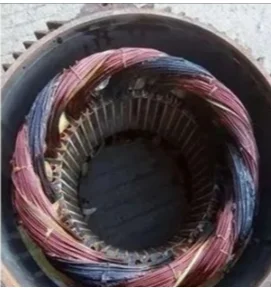 Record whether the incident began at startup or at running speed. Keep the trip code and any existing three-line current record. Use the actual rating, starting method and load to interpret the readings. If the electric motor is humming without accelerating, or the report mentions unusual heat or a burning smell, stop it under the site's procedure and have the cause investigated before restarting. [S1] [S2] [S6]
Which evidence points to an interruption in the supply circuit?
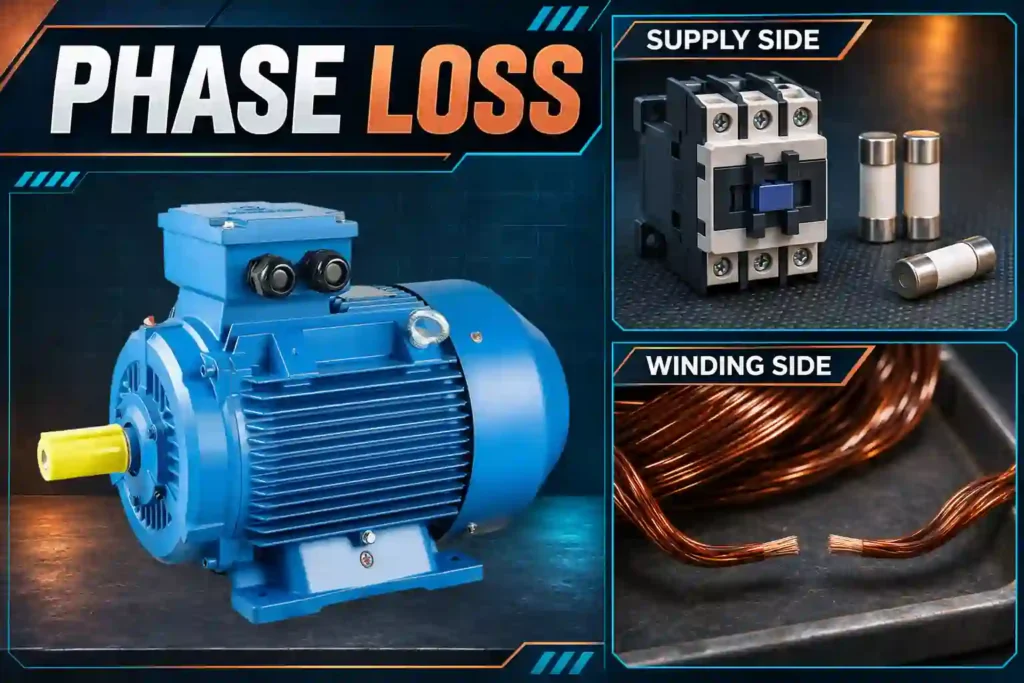
Trace the circuit from the supply through the fuses, starter contacts, cable and terminal connections. A blown fuse, a contactor pole that fails to make, a damaged conductor or a loose connection can interrupt one route to the electric motor. A low or absent line current in the event record helps identify which route needs investigation. On a running electric motor, voltage induced by the energized windings can produce a reading on an interrupted line. Ask for both the current record and the location of the voltage checks. [S3] [S4]
Have qualified electrical personnel isolate the equipment, apply the site's lockout procedure and verify de-energization before opening the starter or terminal box. They can decide whether energized testing is necessary and use the site's safety procedure for that work. The buyer can ask for the findings, including whether the upstream component and the isolated winding each passed their checks. [S4] [S6]
What does the isolated winding test need to show?
Ask the technician to record the lead labels and link arrangement, and to isolate the electric motor from the external circuit. Compare the measured low-resistance values with the electric motor's wiring diagram and the applicable manufacturer or repair-shop limits at a known winding temperature. An open or unusually high reading on a separately identified winding branch can point to a damaged lead, joint or coil. The recorded test configuration tells the shop what the meter actually measured. [S4] [S5] [S8]
| 要求提供的证据 | What it helps establish |
|---|---|
| Terminal photos, lead IDs and actual star or delta links | Which current paths were connected when the incident occurred and during testing |
| Comparable low-resistance readings from the isolated motor, with winding temperature | Whether a connection or winding path needs to be checked individually |
| Winding-to-frame insulation result and the applicable test criteria | How that insulation path performed under the specified test conditions |
A simple delta connection can still show continuity across a pair of terminals after one branch opens. The meter can read a path through the other two windings. Ask the shop how it isolated or identified the suspected branch. Have qualified personnel interpret ground insulation and winding continuity as separate checks using the manufacturer's method. [S5] [S6] [S8]
What can the star and delta burn patterns tell the repair shop?
For a confirmed loss of one supply line, typical burnout examples show two affected winding phase groups in star (Y) and one most severely affected group in delta (Δ). Use the actual run connection when comparing the damage. If a star–delta starter was involved, ask which contactors were active when the incident occurred. [S3] [S8]
Have the repair shop photograph the winding and leads as received, identify the damaged phase groups, and compare the result with the starter records and isolated winding measurements. EASA provides original examples of both burn patterns in the footnotes. The pattern helps direct the inspection and the other evidence establishes where the current path opened. [S3] [S5] [S8]
What must be corrected before a repair or replacement goes back into service?
Ask maintenance to document the failed supply component or the repair shop to identify the damaged internal path. Use that finding to decide whether the job needs a circuit repair, a repair to an accessible winding lead, or a rewind or replacement following the shop's assessment. If the supply circuit failed and the electric motor overheated, include both in the release review. Have qualified personnel establish that the circuit and electric motor are safe to put back into service. [S3] [S6] [S8]
Specify the actual phase-loss or current-unbalance protection function, its sensing point, the start and running coverage, and the configured trip delay. A supply-side relay monitors the circuit at its sensing point. Ask how the chosen setup covers the starter and motor circuit and what test or commissioning record demonstrates that coverage. Confirm the function’s operating limits at light load. Review terminal and contact condition during maintenance and retain line-current records from normal operation as a comparison for later incidents. [S4] [S7]
What belongs in a new motor RFQ after phase loss?
Give the site team and independent repair shop the incident record, supply circuit findings and isolated winding measurements so they can determine the fault and corrective work. If they recommend a replacement, give the new motor supplier the nameplate, terminal photo, run connection, shaft load and mounting. Agree who supplies the starter protection and who verifies it at commissioning. [S7] [S8]
供应商询价模板
Please quote a new three phase electric motor to replace the attached unit. Confirm the rated kW, voltage, frequency, rated speed, mounting, and required run connection. Provide the new motor data sheet, dimension drawing and available test records. State whether the offer includes phase-loss protection and who supplies the site commissioning checks. Confirm production lead time and the new motor warranty.
结论
Before ordering, obtain two findings from qualified personnel. Document the condition of the supply path and the results of the isolated winding checks. Use the actual run connection and incident records to interpret any burn marks. Put the corrective work, protection settings and restart checks in the release record before putting the repaired or replacement electric motor into service. [S3] [S5] [S6] [S7] [S8]
For a new three phase motor purchase, send the nameplate, required run connection, mounting and driven equipment details to Dongchun Motor. [S9] Contact Dongchun Motor
脚注
[S1] ABB, Low voltage motors installation, operation and maintenance manual, §10 troubleshooting, accessed 2026-11-26.
[S2] Nidec U.S. Motors, Open-phase conditions in a running three phase motor, ProFacts 5, accessed 2026-11-26.
[S3] EASA, Failures in Three-Phase Stator Windings, and Sterling Electric, T-frame motor manual, typical burnout patterns, accessed 2026-11-26.
[S4] Fluke, Power Quality Troubleshooting, §6 Polyphase Induction Motors 和 Sequential Insulation Resistance Tests, accessed 2026-11-26.
[S5] EASA, Understanding three-phase motor connections, and Megger, The missing link in motor condition monitoring, accessed 2026-11-26.
[S6] U.S. OSHA, Selection and use of electrical work practices 和 Use of equipment, accessed 2026-11-26.
[S7] 施耐德电气, TeSys island Current Phase Loss function, and ABB, CM-PFS phase monitoring relay data sheet, accessed 2026-11-26.
[S8] EASA, ANSI/EASA AR100-2025 Recommended Practice for the Repair of Rotating Electrical Apparatus, as-received records and winding-resistance testing, accessed 2026-11-26.
[S9] Dongchun Motor, IE3 cast-iron three phase electric motors, accessed 2026-11-26.