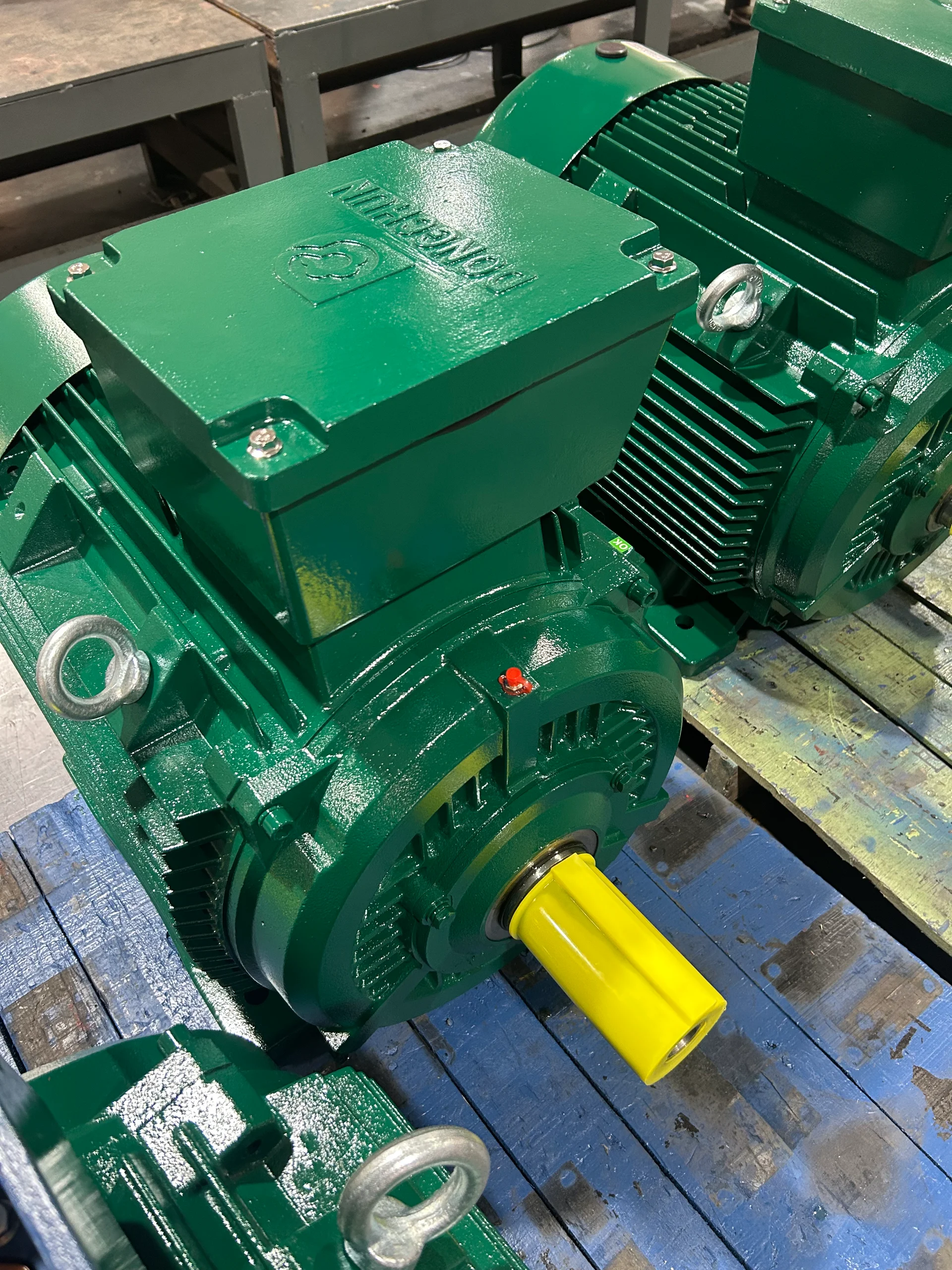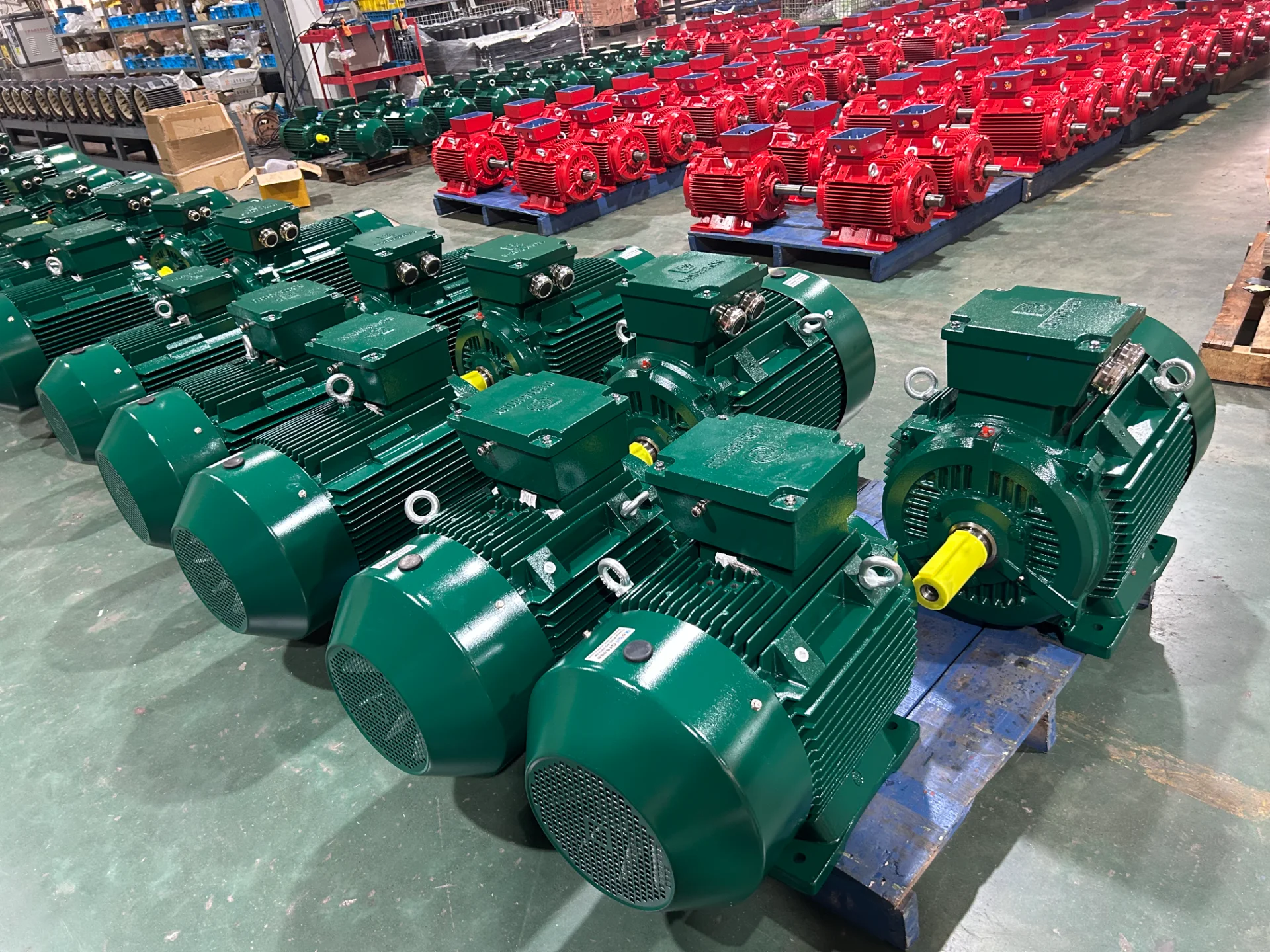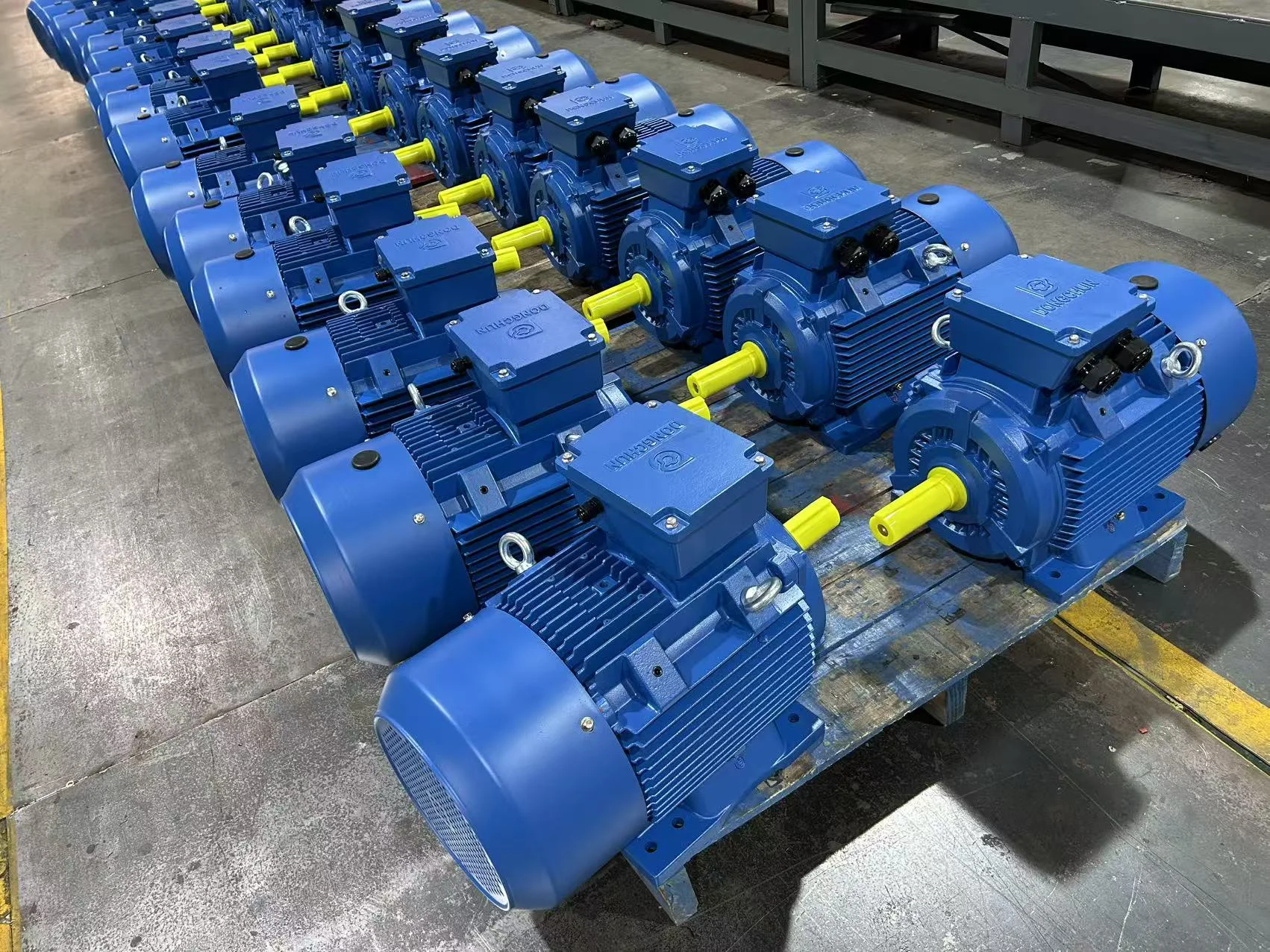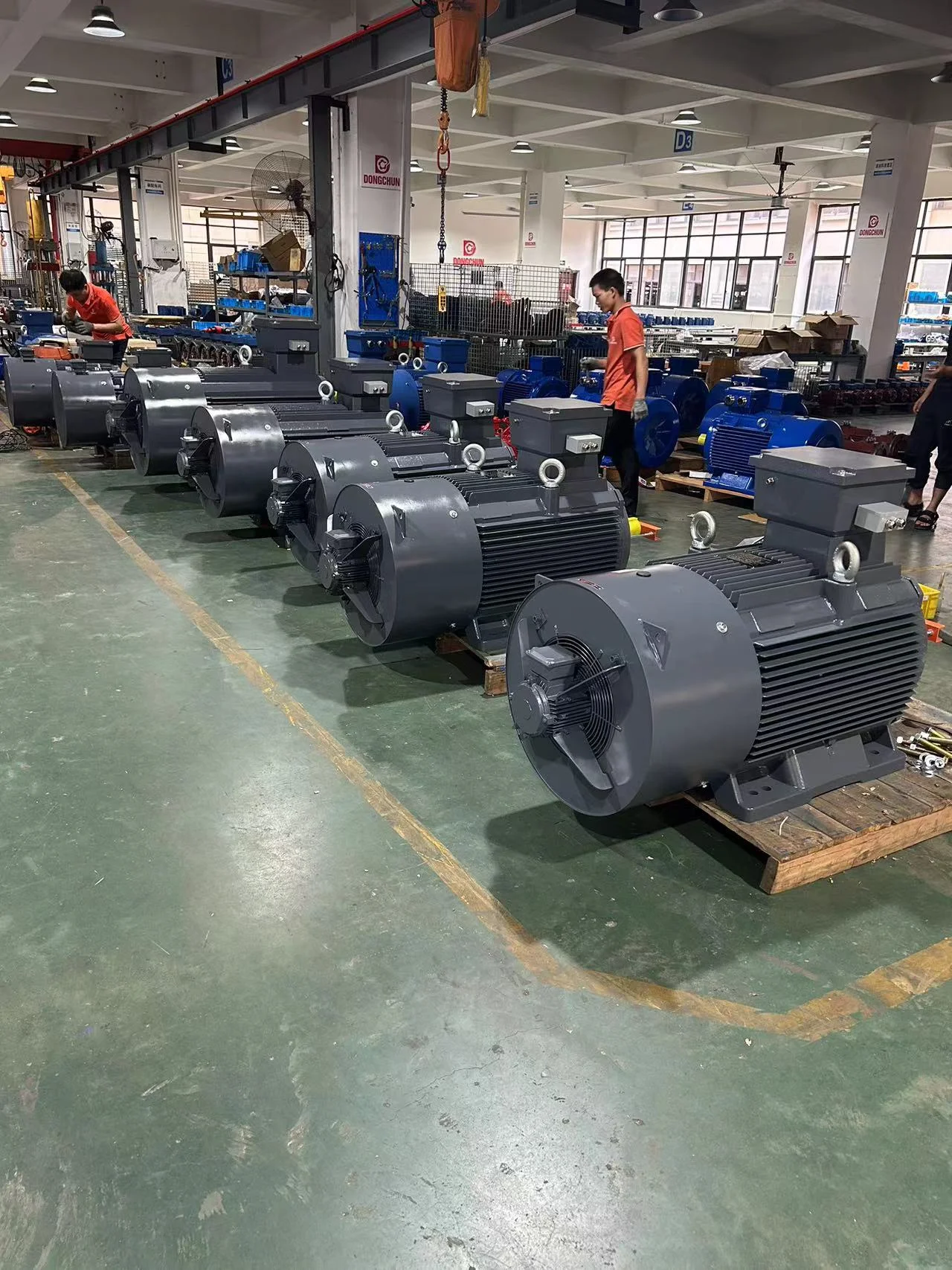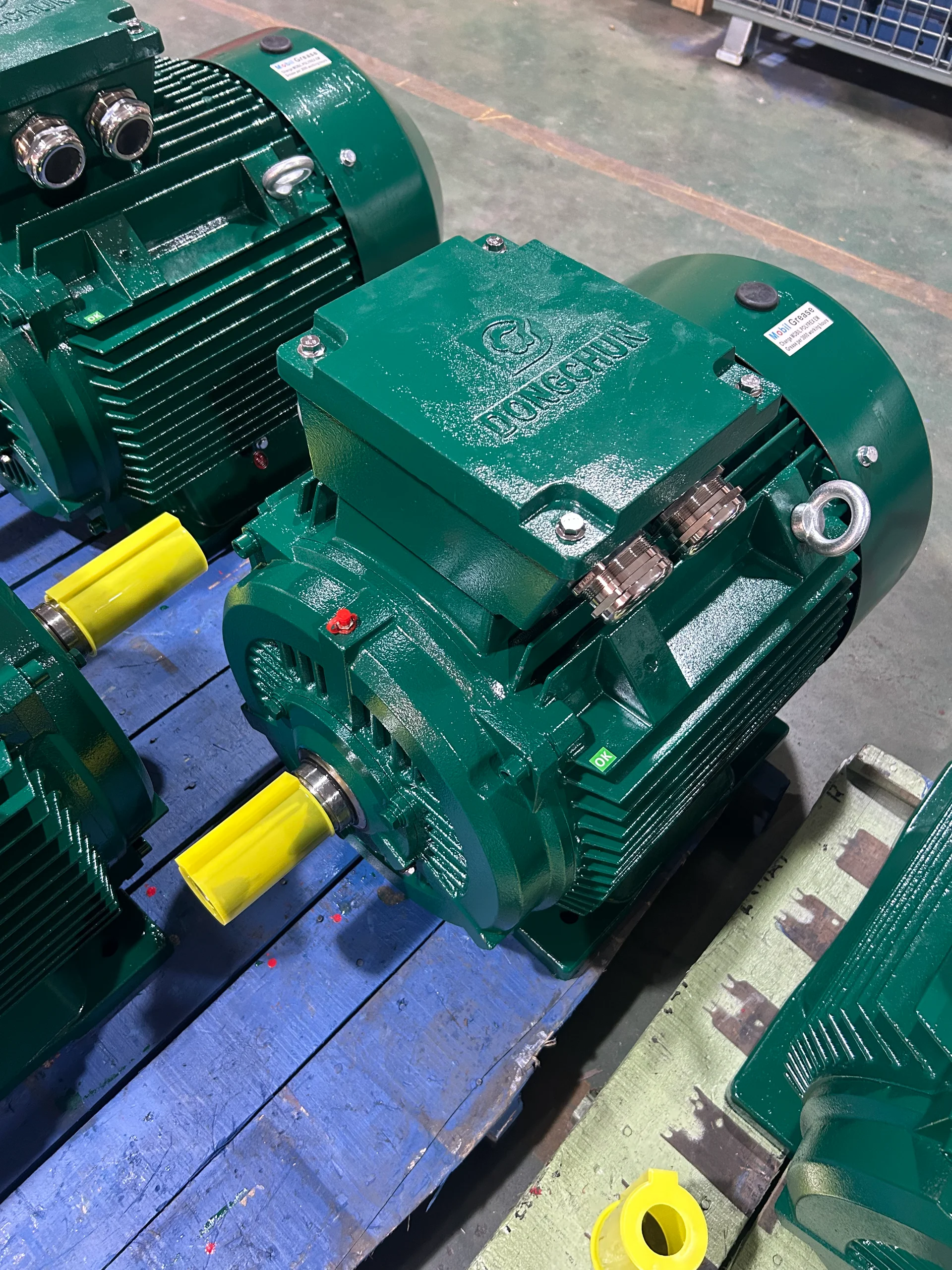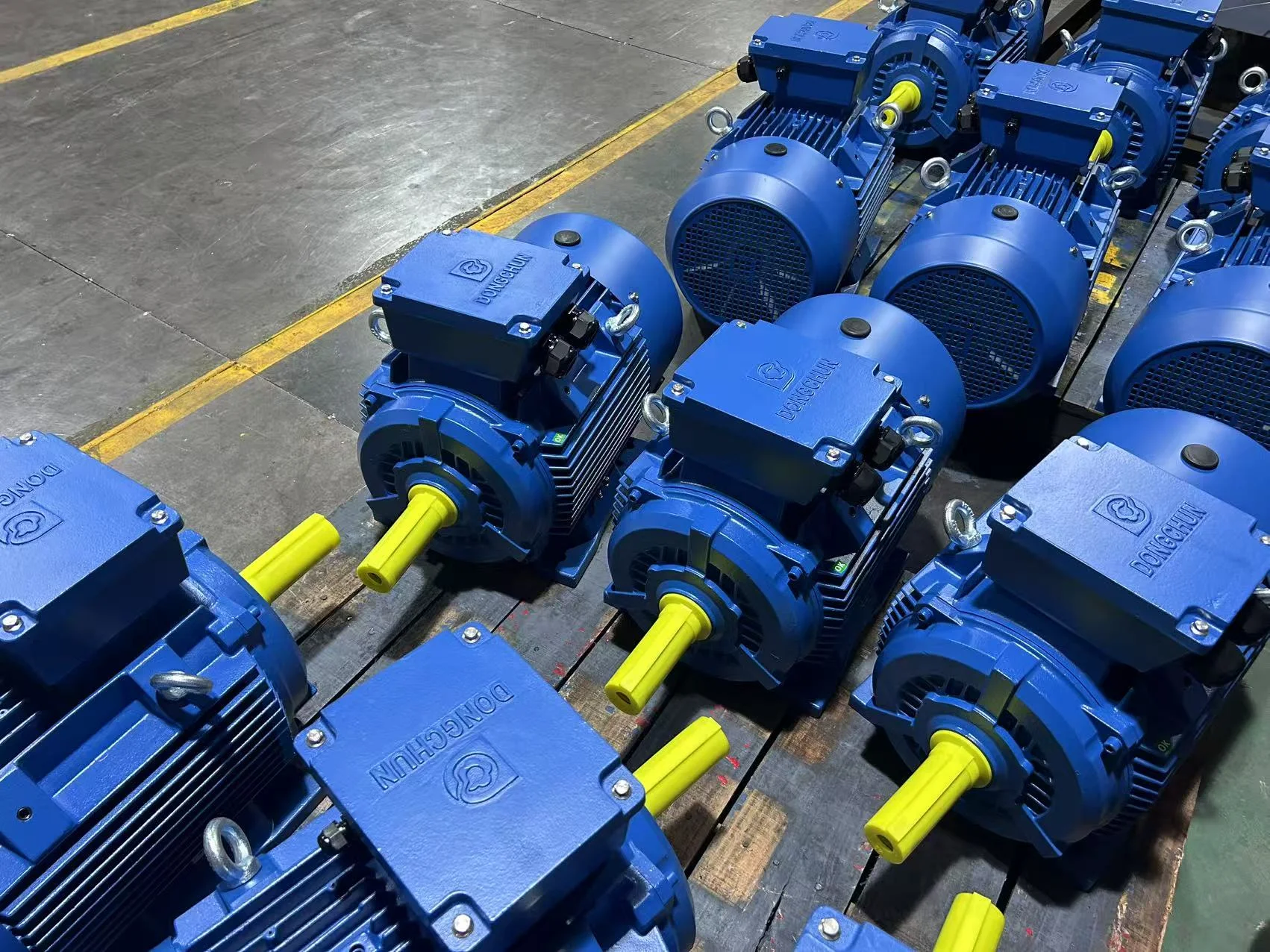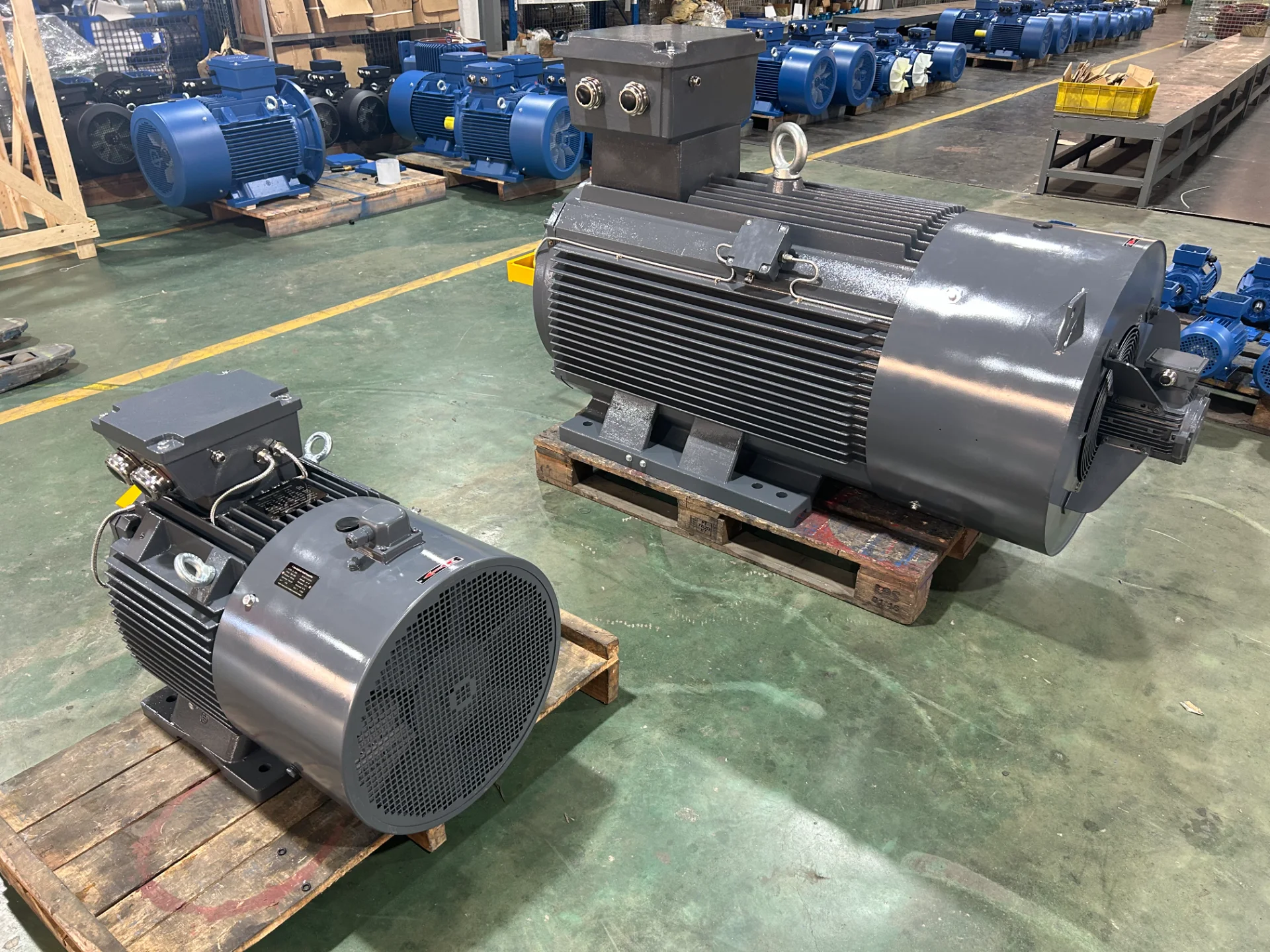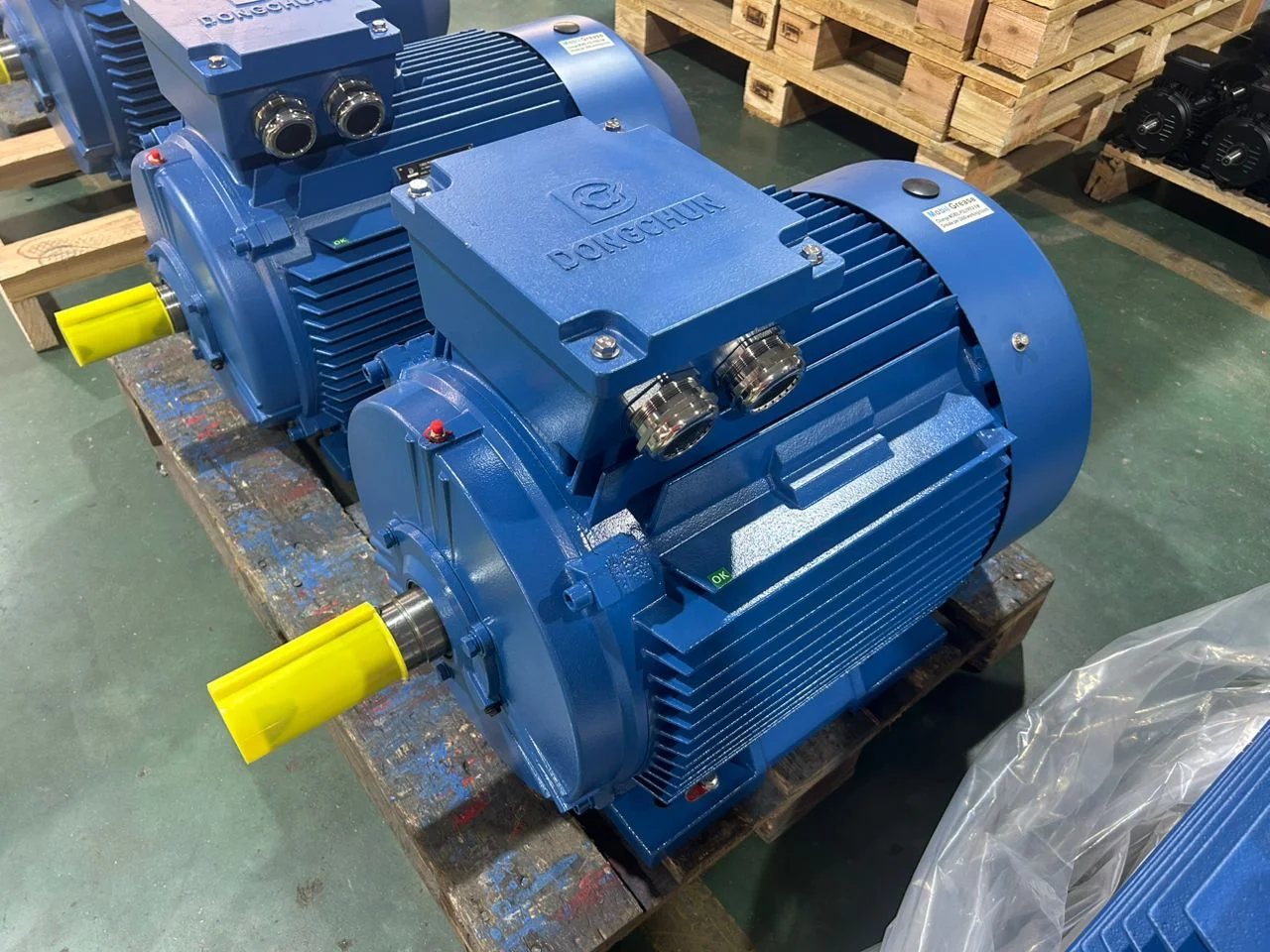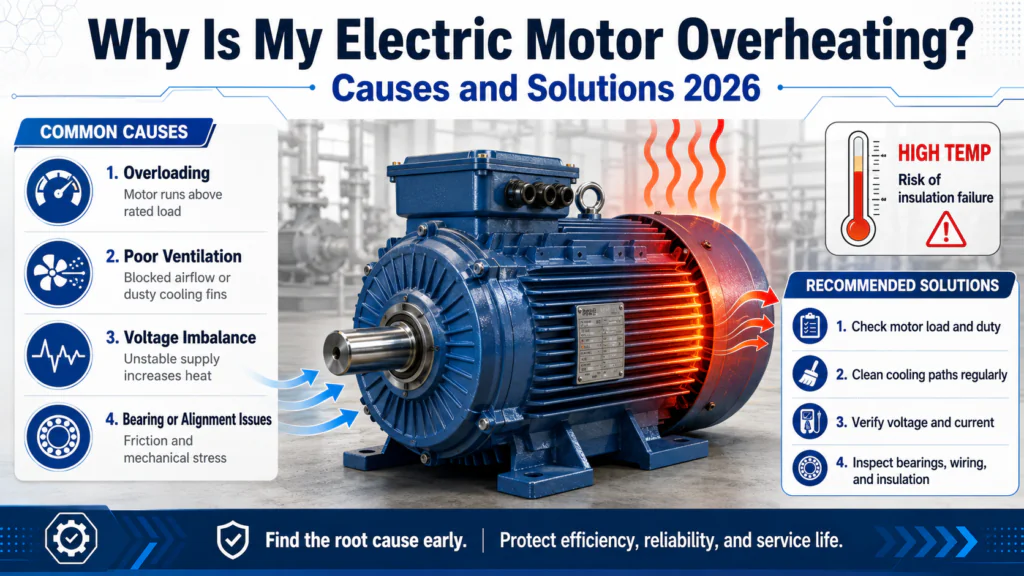
An electric motor overheats when the heat it generates is more than it can push out into the surrounding air. In my experience at Dongchun Motor , it almost always comes down to one of six things: mechanical overload, blocked cooling, voltage problems, bearing wear, damaged insulation, or harmonic stress from a VFD. The motor usually warns you before it dies — rising current, hot frame, strange noise. Catch the right cause early, fix it before a winding burns.
Why Does an Electric Motor Overheat?
I've been in the motor business for over 10 years at Dongchun Motor (iecmotores.com), and overheating is the problem I see most often. Customers call me from Brazil, Greece, Indonesia — different countries, same story. The motor was running fine for years, then one day it tripped, or worse, it just stopped and smelled like burning plastic.
Here is the thing most people miss. A motor does not just suddenly overheat. It gets there slowly. The signs are there weeks before the real failure — higher current draw, a frame that feels hotter than usual when you put your hand on it, maybe a faint humming that was not there before. By the time the insulation smells, real damage is already happening.
[IEC 60034-1 motor temperature classes](https://webstore.iec.ch/en/publication/64293)1个 — the international standard on motor thermal protection — confirms that insulation life is approximately halved for every 8 to 10°C rise above rated temperature. That number matters more than most buyers realize.
Let me walk you through the six causes I see most often, how to find them, and what to do about each one.
Here is a quick overview before we go deep:
| Cause | Common Symptom | Quick Check |
|---|---|---|
| 超载 | High current, tripped thermal relay | Compare running amps to nameplate FLA |
| Poor ventilation | Hot frame, clogged fins | Inspect fan shroud and cooling fins |
| Voltage problem | Unequal phase currents, humming | Measure voltage at motor terminals |
| Bearing failure | Vibration, noise, localized heat | Infrared thermometer at bearing housings |
| Insulation degradation | Intermittent trips, burning smell | Megger insulation resistance test |
| VFD harmonics | Overheating at low speed, winding noise | Check drive settings and cable length |
One rule worth remembering: every 10°C rise above a motor's rated temperature cuts insulation life roughly in half. A 4-pole IE3 motor built to last 20 years at rated temperature may fail in two years if it runs 40°C too hot. That is not a small difference.
Every 10°C rise above rated temperature approximately halves motor insulation life.真的
This is a well-established thermal aging principle in motor engineering, consistent with IEC 60034-1 standards and referenced by industry bodies such as the AEMT.
A motor that trips on thermal protection is safe to restart immediately after the relay resets.错误的
You should let the motor cool completely, then find and fix the cause before restarting. Restarting without addressing the root cause causes repeated thermal cycling that progressively damages insulation.
Cause 1: Mechanical Overload
Overload is the single most common cause I deal with. It happens when the load on the shaft demands more torque than the motor was designed for. The motor responds by pulling more current — and more current means more heat in the stator windings.
Here is something people often get wrong: overload does not only happen because someone picked the wrong motor. A motor can run fine for years and then start overloading because conditions changed. A pump impeller wears down and the resistance goes up. A conveyor belt accumulates material. A gearbox gets stiff.
I had a customer in Poland last year — he was running a 4-pole 15 kW IE3 motor, frame 160M, on a screw conveyor that had worked perfectly for three years. Then the bearings in his gearbox started wearing and added enough drag to push the motor above its rated load. He had no idea. The motor was just "getting old" in his mind. Once we measured the running amps against the nameplate FLA, the answer was obvious.
How to diagnose it: clamp a current meter on each phase and read the running current while the load is fully on. Then compare that to the Full Load Amps (FLA) number on the nameplate. If you are consistently above that number, the motor is overloaded. Simple as that.
NEMA MG 1 Part 312个 defines service factor as the multiplier applied to the rated load — a 1.15 service factor means the motor can handle 115% of rated load continuously, but only at rated ambient and with clear cooling.
A motor with a 1.15 service factor can handle 115% of rated load continuously — but only if ambient temperature is normal and ventilation is clear. Do not use the service factor as a reason to ignore the problem.
What to do:
- Reduce the mechanical load if you can.
- If the load has genuinely grown, put in a bigger motor — for a 15 kW that's pushing limits, step up to 18.5 kW frame 160L or 22 kW frame 180M.
- Add a soft starter or VFD to cut down on inrush current in high-cycle applications.
- Set your thermal overload relay correctly. A relay set too high is not protection — it is a false sense of security.
Comparing running current to nameplate FLA is the fastest way to diagnose motor overload.真的
Reading all three phase currents with a clamp meter and comparing to nameplate Full Load Amps directly shows whether the motor is working harder than it was designed to.
A motor's service factor allows it to run above rated load indefinitely without any consequences.错误的
Service factor only applies when ambient temperature is within spec and cooling is fully functional. Running above rated load even within service factor in a hot or poorly ventilated environment still causes excessive heat and insulation damage.
Cause 2: Inadequate Cooling and Blocked Ventilation
Last year a Greek customer called me. His 4-pole 11 kW IP55 pump motor, frame 160M, kept tripping after about 30 minutes of running. It had been fine for two years. I asked him three questions:
"Did anything change in the installation?"
"Is the fan cover intact?"
"When did you last clean the cooling fins?"
He went and looked. The fan shroud had a crack in it. Half the cooling airflow was going sideways instead of across the fins. Combined with the dusty environment at his plant, the fins were partially blocked too. The motor was cooking itself.
We sent him a replacement shroud. Problem solved in two days.
TEFC motors — Totally Enclosed Fan-Cooled, which is the most common type we make at Dongchun Motor (iecmotores.com) — cool themselves by moving air across the outside fins using a fan on the shaft. If that airflow is blocked or redirected, heat has nowhere to go.
The enclosure protection standard IEC 60529 IP rating3个 also specifies that IP ratings only apply when the motor is installed correctly with adequate clearance — a sealed IP55 motor crammed into a tight cabinet with no airflow is outside its tested conditions.
Common causes:
- Dust, grease, or process material packed into the cooling fins
- A cracked or missing fan shroud that lets air escape instead of flowing across the fins
- The motor installed in a closed cabinet with no space around it
- Ambient temperature above 40°C, which is the standard rating for most motors
- The motor installed with the fan end too close to a wall
How to diagnose it: put your hand on the motor frame while it is running under load. It should feel warm, not painful to touch for a few seconds. Use an infrared thermometer on the frame surface and compare the drive end, non-drive end, and middle of the frame. Then look at the fan cover and fins with your eyes.
What to do:
- Blow out the cooling fins with compressed air. In dusty environments, do this every month.
- Replace a damaged fan cover immediately. A missing shroud can reduce cooling by 30 to 50 percent.
- If the room temperature regularly exceeds 40°C, derate the motor or use one with a higher insulation class — a Class H build instead of Class F.
- Make sure there is open space around the motor, especially at the fan end.
A missing or cracked fan shroud can reduce motor cooling efficiency by 30 to 50 percent.真的
The fan shroud directs airflow along the cooling fins. Without it, much of the air movement is wasted. The motor frame runs significantly hotter under the same load conditions.
TEFC motors are completely sealed and do not need any external ventilation space around them.错误的
TEFC motors cool by moving air across external fins. They need clear space around the housing — especially at the fan end — for this cooling to work. Installing them in tight enclosures without clearance causes overheating.
Cause 3: Voltage Supply Problems
Voltage problems are sneaky. The motor looks fine. The current does not seem crazy. But one phase is slightly lower than the others, and over weeks and months, one winding is working harder than it should.
There are two main issues here.
Voltage imbalance: when the three supply phases are not equal, one winding pulls more current than the others. A voltage difference of just 2 to 3 percent between phases can create a current difference of 6 to 10 times that percentage. That localized extra current creates a hot spot in the stator. You will often see this as one winding that fails before the others — which can look like a random failure if you do not check the supply.
Low voltage: when supply voltage drops below nameplate rating, the motor draws more current to maintain the same torque. More current means more heat.
I had a customer in Chile running three 4-pole 7.5 kW 400V/50Hz IE3 motors in the same building. Two were fine. One kept overheating. Same model, same load. We finally measured the voltage at the motor terminals — not at the panel, which is an important difference — and found that the cable run to that motor had a loose terminal connection. The voltage at the motor was 8 percent lower than at the panel. That was enough.
NEMA MG 1 voltage imbalance guidance4个 states that voltage imbalance exceeding 1% can cause current imbalance 6 to 10 times greater — and recommends motors be derated when imbalance consistently exceeds 1%.
How to diagnose it:
- Measure voltage at the motor terminals, not at the distribution panel, and do it under full load.
- Compare all three phase voltages to each other. The imbalance percentage is: maximum deviation from average divided by average, times 100.
- If imbalance exceeds 2 percent, look for the cause.
- Compare measured voltage to nameplate rated voltage. A consistent drop of more than 10 percent is serious.
What to do:
- Inspect and tighten every terminal connection. Loose connections are the most common cause of imbalance.
- Check whether single-phase loads are tapped unevenly from a three-phase panel.
- Install a voltage monitoring relay that trips the motor if imbalance goes above a safe level.
- If voltage is consistently low, check transformer tap settings or contact your utility.
A voltage imbalance of 2 to 3 percent between phases can cause a current imbalance up to 10 times greater.真的
This is a known multiplier effect in three-phase motor behavior. A small voltage imbalance creates a disproportionately large current imbalance, causing one winding to overheat while the others appear normal.
Measuring voltage at the distribution panel is enough to confirm the motor is receiving correct voltage.错误的
Voltage can drop significantly between the panel and motor terminals due to long cable runs, loose connections, or undersized wiring. Always measure at the motor terminals under load for an accurate reading.
Cause 4: Bearing Wear and Mechanical Friction
Bearings are supposed to let the shaft spin with almost no friction. When they start to fail — from contamination, wrong lubrication, misalignment, or overloading — they generate heat right at the bearing housing and push that heat into the motor frame and windings.
Here is what makes this tricky: a failing bearing may not immediately show up as high current. The heat builds locally. By the time the stator temperature rises enough to trip a relay, the bearing may already be damaged or the winding near it may be affected.
The most common mistake I see is over-greasing. People think more grease is better. It is not. Excess grease churns inside the housing, generates friction, and creates heat just like a bearing that is running dry. There is a correct amount — follow the manufacturer's spec for your motor frame size. A frame 132S 4-pole motor needs roughly 10 grams of grease at each interval. Pack in 30 grams and you've created a heat source.
[ABB Technical Guide on motor failure analysis](https://library.e.abb.com/public/8c253c2417ed0238c125788f003cca8e/ABB_Technical_guide_No5_RevC.pdf)5个 documents how electrical discharge machining from VFD bearing currents damages bearing raceways in ways that look identical to mechanical wear — and how to tell the difference during inspection.
How to diagnose it:
- Use an infrared thermometer to compare temperature at the drive-end bearing, non-drive-end bearing, and the mid-frame. A bearing housing that is notably hotter than the frame tells you something is wrong there.
- Listen at low speed. Grinding, rumbling, or irregular noise from the bearing area is a clear sign.
- Use a vibration meter if you have one. Elevated vibration at bearing frequencies confirms wear.
- Check the lubrication. Is it old and dried out? Is there too much packed in?
What to do:
- Replace worn bearings before they seize. Letting a bad bearing run until it locks can destroy the shaft and burn the winding in the same event.
- Check shaft alignment after any maintenance work. Even a small misalignment causes the bearing to carry an uneven load and wear faster.
- Follow the lubrication schedule for your motor frame size — both the interval and the correct grease quantity.
- Inspect for radial or axial loads from the application that exceed the bearing's rated capacity.
A failing bearing can cause localized overheating before the overall motor current rises noticeably.真的
Bearing heat builds locally at the housing. The stator winding temperature may still appear acceptable while significant damage is occurring near the bearing. Infrared measurement at the bearing housing is more reliable than relying on current readings alone.
Over-greasing a motor bearing is harmless and simply provides extra protection.错误的
Excess grease churns inside the bearing housing, generating friction and heat. This can cause bearing failure just as a lack of lubrication would. The correct grease quantity is specified in the motor manufacturer's documentation.
Cause 5: Winding Insulation Degradation
Motor windings are coated with insulating material that keeps individual conductors from touching each other or the steel core. Over time, this insulation breaks down. Heat does it. Moisture does it. Chemicals do it. Vibration does it. Usually it is all four working together slowly over years.
As the insulation gets weaker, small leakage currents start flowing between conductors. These are called inter-turn shorts. They generate extra heat, which damages the insulation further. It is a cycle that gets faster and faster until the winding fails.
The insulation class tells you the maximum temperature the winding material can handle continuously. The three most common classes in industrial motors are:
| Insulation Class | Max Winding Temperature | Typical Rise Limit (IEC) |
|---|---|---|
| Class B | 130°C | 80 K |
| Class F | 155°C | 105 K |
| Class H | 180°C | 125 K |
IEC 60085 insulation classification6个 is the standard that defines these temperature classes — and it also specifies that an insulation system continuously operated at its class temperature limit has a design life of approximately 20,000 hours.
At Dongchun Motor (iecmotores.com), our standard three-phase motors use Class F insulation but are assessed against the Class B temperature rise limit. This gives a built-in safety margin of 25°C in real operating conditions. It is not a marketing phrase — it means that even when the motor runs a bit hot, the winding has extra headroom before it reaches its actual limit.
How to diagnose it:
- Megger test: connect an insulation resistance meter between each winding and ground. Below 1 MΩ is a red flag. For motors above 1 kV, the threshold is higher — check IEC 60034.
- Polarization Index (PI): ratio of the 10-minute reading to the 1-minute reading. Below 2.0 indicates deteriorating insulation.
- Thermal imaging: hot spots visible on the motor frame can show where inter-turn short activity is happening below the surface.
What to do:
- Test insulation resistance at least once a year. In humid or chemically aggressive environments, test more often.
- If the PI is declining year over year, plan a rewind or replacement before it fails unexpectedly.
- Make sure the motor enclosure suits the environment. IP55 works for most outdoor and washdown situations. Aggressive environments may need IP65 or higher.
- Insulation failure is almost never sudden. The trend in megger test results tells you where it is heading well in advance.
Insulation resistance trending over multiple years is more useful than a single measurement for predicting winding failure.真的
A single megger reading tells you the current state. Comparing results year over year reveals whether insulation is deteriorating and how fast, giving you time to schedule planned maintenance rather than reacting to an unexpected failure.
A motor with Class F insulation can safely operate at up to 155°C winding temperature without any degradation concern.错误的
155°C is the absolute maximum. Operating continuously near that limit significantly shortens insulation life. Quality motor manufacturers rate Class F motors against the Class B rise limit (130°C) to maintain a thermal safety margin in real conditions.
Cause 6: VFD Harmonics and High-Frequency Stress
VFDs — variable frequency drives — are everywhere now. They save energy, they give precise speed control, and they have become standard in pump, fan, and conveyor applications. I sell a lot of motors for VFD applications, and I always tell customers: a standard motor on a VFD is not the same as a motor designed for VFD use.
Here is what happens. A modern VFD using IGBT switching technology produces voltage pulses that switch extremely fast — sometimes in 50 nanoseconds. These fast pulses do two things to your motor:
First, they create harmonic currents in the stator windings. Harmonic currents increase copper losses and raise the operating temperature even when the motor appears to be running within its normal speed range. The motor is doing extra work you cannot see.
Second, the fast voltage pulses create spikes at the motor terminals that can be significantly higher than the rated voltage — especially if the cable between the drive and the motor is long. Published research shows that doubling the carrier frequency can substantially shorten motor insulation life — sometimes by half or more.
The third problem is at low speeds. The shaft-mounted cooling fan slows down with the motor. Below about 30 Hz, it cannot move enough air to cool the frame properly. Heat builds up faster than it leaves.
How to diagnose it:
- Is the overheating happening mainly at low speed settings? That is a classic VFD symptom.
- Measure the cable length between the drive and motor. Runs over 50 meters significantly increase the risk of voltage spikes. Check your drive manufacturer's specs for their specific threshold.
- Look at the carrier frequency setting in the drive. Higher frequencies are quieter but harder on insulation.
- Check if an output reactor or dV/dt filter is installed between the drive and motor.
What to do:
- Specify inverter-duty motors for VFD applications. These have reinforced insulation designed for the voltage stress and harmonic currents a VFD produces.
- Install output reactors or sine filters between the drive and motor, especially on cable runs over 30 to 50 meters.
- Lower the carrier frequency if acoustic noise levels allow it.
- For applications that need to run at low speed for extended periods, use a motor with a separately powered cooling fan rather than relying on the shaft fan.
- Make sure the drive's thermal model settings match the actual motor specifications.
Motors running at low VFD frequencies can overheat even when the mechanical load is well within the motor's rated capacity.真的
At low frequencies, the shaft-mounted cooling fan slows down and cannot move enough air to cool the motor frame. The motor generates heat normally but cannot dissipate it fast enough, even with a light load.
A standard three-phase motor can be connected to a VFD without any modifications and will perform identically to an inverter-duty motor.错误的
Standard motors are not designed for the fast voltage pulses, harmonic currents, or reduced cooling at low speeds that VFD operation creates. Inverter-duty motors have reinforced insulation and are built to handle these stresses.
What Motor Design Features Reduce Overheating Risk?
Not every motor handles heat equally. When you are selecting a motor for a demanding application, these are the things I look for:
Insulation class: Class F or Class H insulation handles higher temperatures. The real value comes when a manufacturer rates their Class F motor against the Class B temperature rise limit — you get a 25°C safety margin built into every unit.
Enclosure rating: IP55 as a standard keeps water and dust out of the windings. If you are in an outdoor environment, a washdown area, or anywhere with airborne process material, proper IP rating is not optional. For wet or chemical sites, step up to IP65 or IP66.
Efficiency class (IE3 or above): Higher efficiency motors produce less heat for the same mechanical output. An IE3 4-pole 11 kW motor typically runs 5 to 8°C cooler than an equivalent IE1 unit at the same load. That margin matters in a 40°C ambient.
Individual pre-shipment testing: Every motor should be tested on its own before it leaves the factory. Batch testing tells you the average is okay. Individual testing tells you that specific motor is okay. At Dongchun Motor (iecmotores.com), we test every unit — not one in ten — for no-load current, vibration, insulation resistance, and dielectric strength.
Thermal protection options: PTC thermistors embedded directly in the winding provide protection that an external thermal relay cannot match. They measure actual winding temperature, not estimated temperature based on current draw.
For VFD applications, Dongchun Motor (iecmotores.com) also offers reinforced insulation winding and extended shaft grounding options. Ask our technical team when you specify the application.
If you are specifying motors for a hot ambient, VFD-driven, or aggressive environment, ask your supplier for the test report — every responsible factory should send it without hesitation.
Class F insulation assessed against the Class B temperature rise limit gives a built-in 25°C thermal safety margin under real operating conditions.真的
Class F materials handle 155°C winding temperature, while Class B rise assessment limits actual rise to 80 K (130°C peak winding temperature). The 25°C gap stays as headroom when the motor runs hotter than expected.
All motors with the same IE efficiency rating perform identically under thermal stress.错误的
IE rating only measures efficiency at rated load. Two IE3 motors can differ significantly in insulation class, IP rating, bearing quality, and individual factory testing — all of which affect how the motor handles real-world thermal conditions.
经常问的问题
How hot is too hot for an electric motor?
Standard three-phase motors are designed for a maximum ambient temperature of 40°C. A frame surface consistently above 80 to 90°C under normal load and ambient conditions warrants investigation. But frame surface temperature alone is not definitive. The right checks are: running current versus nameplate FLA, and an insulation resistance test.
Can I restart a motor that has tripped on thermal protection?
Let it cool completely first. Then check the running current, make sure ventilation is clear, and find the reason it tripped before putting it back in service. One thermal trip does not necessarily mean permanent damage. Repeated trips without fixing the cause will destroy the insulation.
What is the difference between a thermal overload relay and a motor thermistor?
A thermal overload relay estimates motor temperature based on current draw and time. It protects against overload and phase loss, but it cannot detect localized hot spots from poor ventilation, bearing friction, or inter-turn shorts that have not yet raised the overall current. A PTC thermistor embedded in the winding measures actual winding temperature directly and gives faster, more precise protection.
Why does my motor only overheat in summer?
Ambient temperature directly affects how well a motor dissipates heat. A motor running fine at 25°C ambient may exceed its thermal limit at 45°C ambient under the same load. If this happens seasonally, your options are: reduce the load during hot months, improve ventilation in the installation area, or upgrade to a motor with a higher insulation class.
Do IE3 or IE4 motors run cooler than IE1 or IE2?
Generally, yes. Higher efficiency motors produce less heat for the same mechanical output because they have lower losses — lower copper losses from better winding design, lower iron losses from better core steel. Less waste heat means less thermal stress on the insulation. This is a practical benefit of upgrading beyond the energy savings alone. That said, efficiency class is one factor in motor selection, not the only one.
Should I rewind an overheated motor or replace it?
It depends on age, condition, and price. For motors below 15 kW, replacement is usually cheaper than rewind once you factor in downtime. For motors above 30 kW or with custom mounting, a rewind by a certified shop is often the right call — but only if the core is undamaged. Ask the rewind shop to do a core test before quoting.
Summary: Motor Overheating Diagnosis Checklist
Before you call for a rewind or a replacement, go through this list:
- Compare running current on all three phases to nameplate FLA
- Inspect and clean cooling fins and fan shroud
- Measure supply voltage at motor terminals — check level and imbalance between phases
- Check bearing temperature at both ends with an infrared thermometer
- Run an insulation resistance test on each winding
- If VFD-driven: check cable length, carrier frequency, and how long the motor runs below 30 Hz
- Confirm ambient temperature is within the motor's rating
- Review maintenance history — last lubrication, any recent load changes
Motor overheating is almost never sudden. It builds. Finding the cause early costs far less than rewinding a motor or replacing failed downstream equipment.
结论
I have seen hundreds of overheating cases in my years at Dongchun Motor (iecmotores.com). In almost every one, the problem had been building for weeks before anyone noticed — and in almost every one, the fix was cheaper than the next failure. Run through the six causes, do the diagnostic checks, and you will find your answer faster than you think.
If you are sourcing replacement motors or specifying for a hot, VFD-driven, or chemically harsh environment, get in touch through our contact page with the motor nameplate plus a thermal photo. I will quote a Class F / Class B-assessed IE3 motor configured for your real conditions, and every unit ships individually tested.
References
- IEC — "IEC 60034-1 — Rotating Electrical Machines: Rating and Performance" — https://webstore.iec.ch/en/publication/64293
- NEMA — "NEMA MG 1 Part 31 — Inverter-Duty Motor Requirements" — https://www.nema.org/docs/default-source/standards-document-library/mg-1-part-31-watermark.pdf
- IEC — "IEC 60529 — Degrees of Protection Provided by Enclosures (IP Code)" — https://webstore.iec.ch/en/publication/2452
- IEC — "IEC 60085 — Electrical Insulation Thermal Classification" — https://webstore.iec.ch/en/publication/666
- ABB — "Technical Guide No. 5 — Bearing Currents in Modern AC Drive Systems (motor failure analysis)" — https://library.e.abb.com/public/8c253c2417ed0238c125788f003cca8e/ABB_Technical_guide_No5_RevC.pdf
Why These Links Matter to You
-
IEC 60034-1 motor temperature classes — Follow this link to understand exactly what insulation class means in practical motor operation, and why the gap between Class F rated and Class B assessed motors matters when you are buying for a hot or demanding environment. It helps you ask the right question when a supplier quotes you a motor: which class is it rated to, and which class is it assessed against?
Suggested Google query:
IEC 60034-1 Class F insulation motor temperature limit standard -
ABB Technical Guide on motor failure analysis — Check this link to understand what bearing currents, harmonic currents, and fast voltage pulses actually do to motor insulation and bearings over time, and how to tell whether your current installation is at risk. If you are running standard motors on VFDs, this is worth reading before the next failure.
Suggested Google query:
ABB motor failure analysis VFD bearing current insulation life
-
IEC 60034-1 is the definitive international standard on motor temperature classes and thermal protection — it explains why the 10°C rule matters and what different thermal protection classes (TPxxx) actually do to protect your motor. ↩
-
NEMA MG 1 Part 31 defines inverter-duty motor requirements and service factor limits — essential reading if you are running motors on VFDs or asking a motor to handle more than its nameplate rating. ↩
-
IEC 60529 defines IP enclosure ratings — knowing the real test conditions behind each IP number helps you specify the right motor for your installation environment. ↩
-
NEMA MG 1 also covers voltage imbalance effects on motors — the guidance on current multiplier effects from small voltage differences is directly applicable to troubleshooting overheating in three-phase installations. ↩
-
ABB Technical Guide No. 5 is the industry reference on motor failure analysis and bearing current damage from VFDs — it explains how to identify EDM bearing damage versus mechanical wear and what mitigation measures work. ↩
-
IEC 60085 defines insulation classes and their temperature limits — the source to cite when a supplier claims "Class F insulation" and you want to know what that actually means in practice. ↩