跳到内容
跳到内容 

For crushers, presses, hoists and other machines with sudden load changes, motor selection should account for peak torque, peak duration, starting conditions and the complete operating cycle. Average power alone cannot establish whether the drive will handle the application.
A crusher may run steadily until a large piece of material enters the chamber. A rolling mill experiences a sudden increase in demand when material enters the rolls. A conveyor that operates smoothly once moving may still be difficult to start when fully loaded.
These situations place different demands on the motor. Before ordering a replacement or specifying a new drive, identify what causes the load increase and how often it occurs. That information helps the supplier evaluate the motor, drive and mechanical transmission together.
1. Which Applications Can Produce Shock Loads?
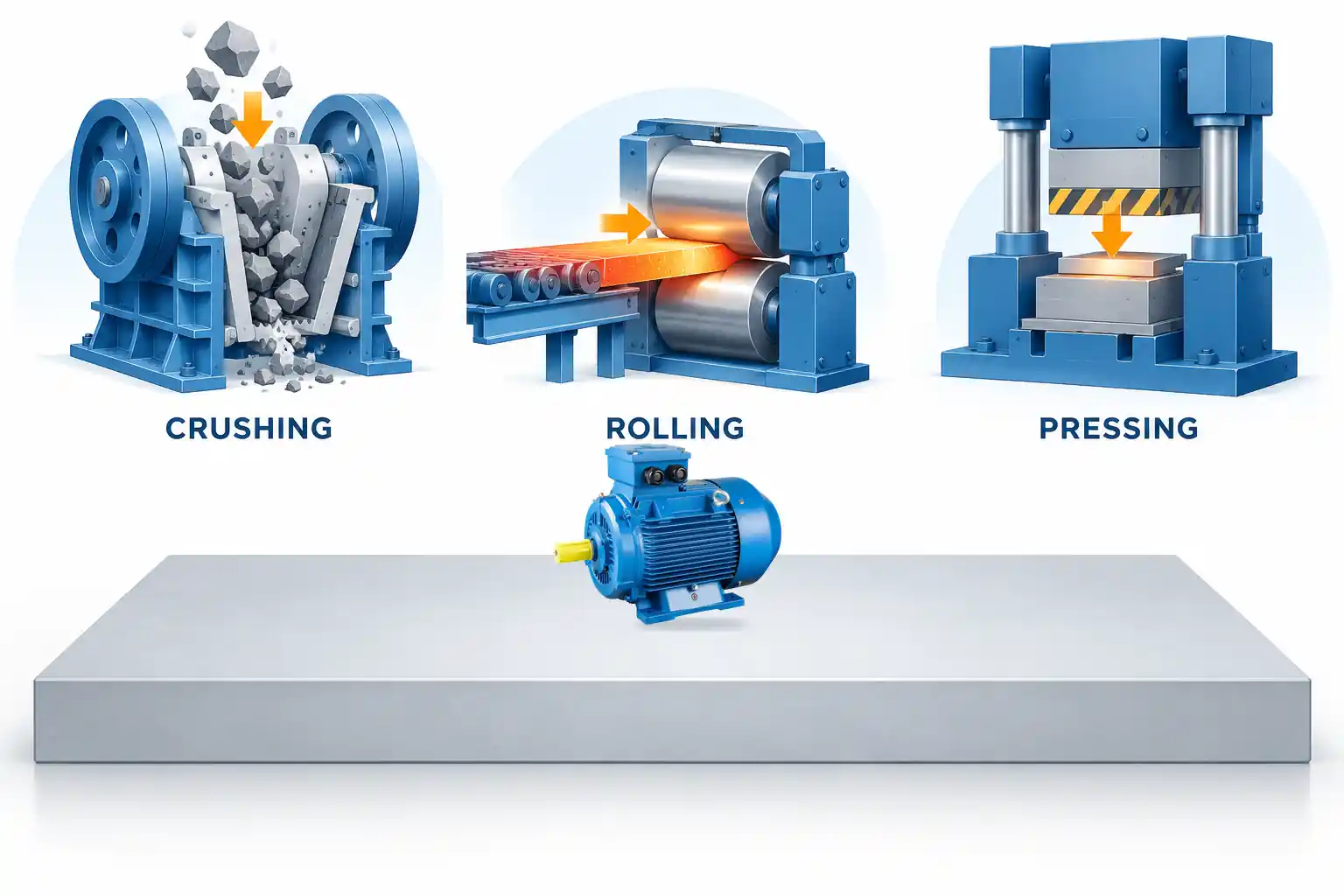
A shock load is a sudden, high peak load transmitted through a mechanical drive. Rockwell Automation identifies crushers, grinders, conveyors, winches and cranes among applications that can experience this condition. The severity depends on how the equipment operates.[S1]
| 设备 | Conditions that can create a load peak | Information to request from the machine supplier |
|---|---|---|
| Jaw, hammer and impact crushers | Uneven feeding, large material pieces or abrupt changes in crushing resistance | Loaded starting requirement, maximum normal load and permitted response to a jam |
| Rolling mills | Material entering the rolls and rapid changes in reduction force | Torque profile during entry, rolling and exit |
| Mechanical presses and forging equipment | Brief working strokes separated by periods of lower load | Stroke frequency, energy per stroke and the flywheel or clutch arrangement |
| Hoists and lifting mechanisms | Load pickup, acceleration, braking or abrupt changes in tension | Lift cycle, starts per hour, braking method and load inertia |
| Feeders and material handling equipment | Uneven material distribution or sudden engagement with material | Worst normal loading condition and startup sequence |
| Ball and rod mills | Changes in charge movement and process resistance | Loaded startup conditions and the actual torque profile at the drive |
Material impacts inside a machine do not necessarily reach the motor shaft with the same magnitude. Gearboxes, belts, couplings and flywheels affect how the load is transmitted. Use machine data or a measured drive load profile rather than estimating motor demand from the machine name alone.
2. Is the Problem Shock, Pulsating Torque or High Inertia?
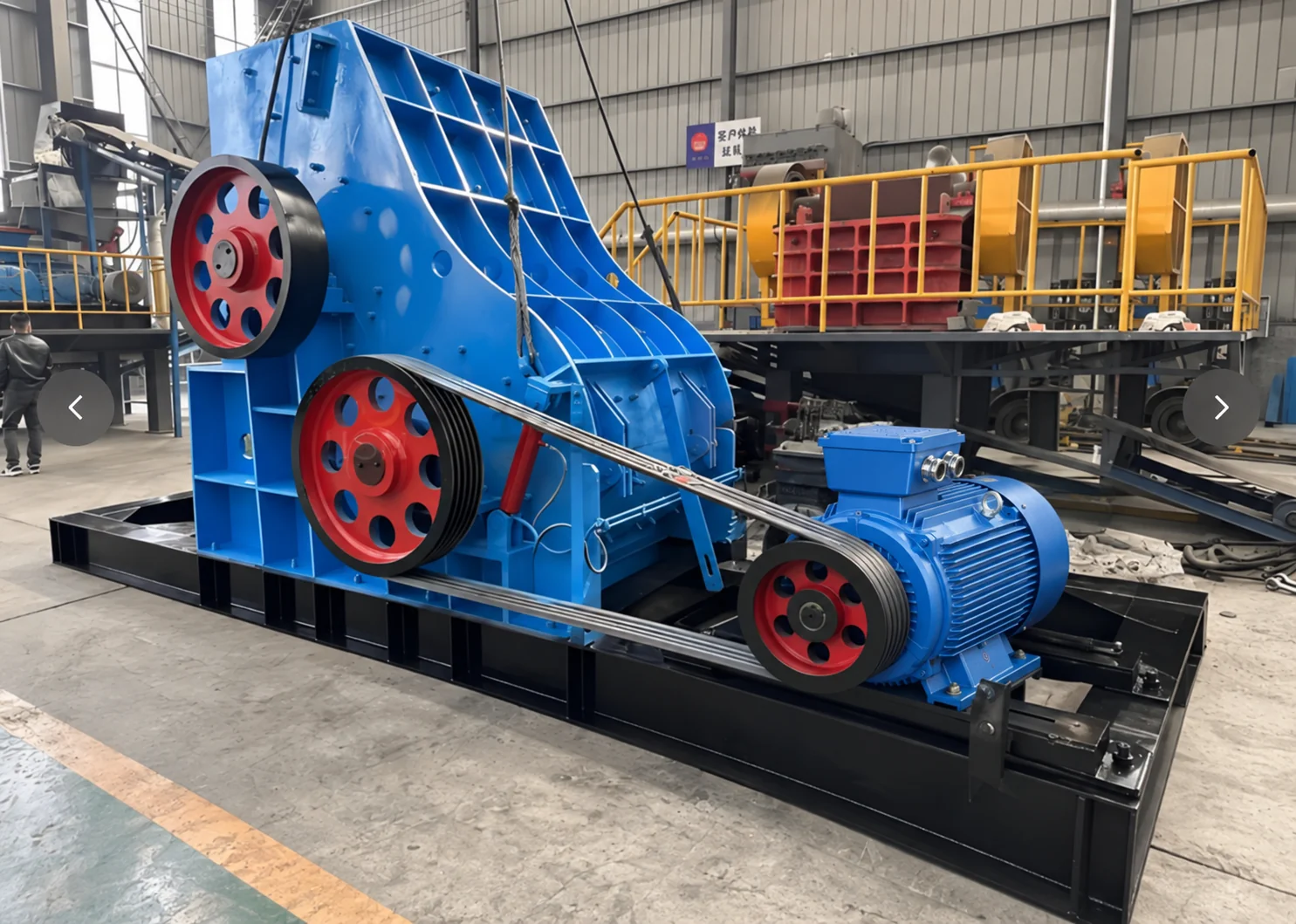
These conditions can occur together, but they should be described separately when requesting a motor.
Shock loading involves an abrupt load increase, such as uneven material entering a crusher. Pulsating torque varies repeatedly through an operating cycle, as in some reciprocating compressors and piston pumps. Regular pulsation deserves attention, but it does not automatically mean the equipment has severe random shocks.
High inertia creates a different requirement: torque is needed to change the speed of the rotating system. Faster acceleration requires more acceleration torque for the same inertia. Siemens explains that total acceleration demand includes both the operating load torque and the torque needed to accelerate the system.[S2]
A heavily loaded conveyor may therefore have a demanding start even when its running load is relatively smooth. A flywheel press may experience short working strokes while its motor replenishes stored energy over a longer interval. The motor should be evaluated against the load it actually sees.
3. What Should Be Checked Beyond Rated Kilowatts?
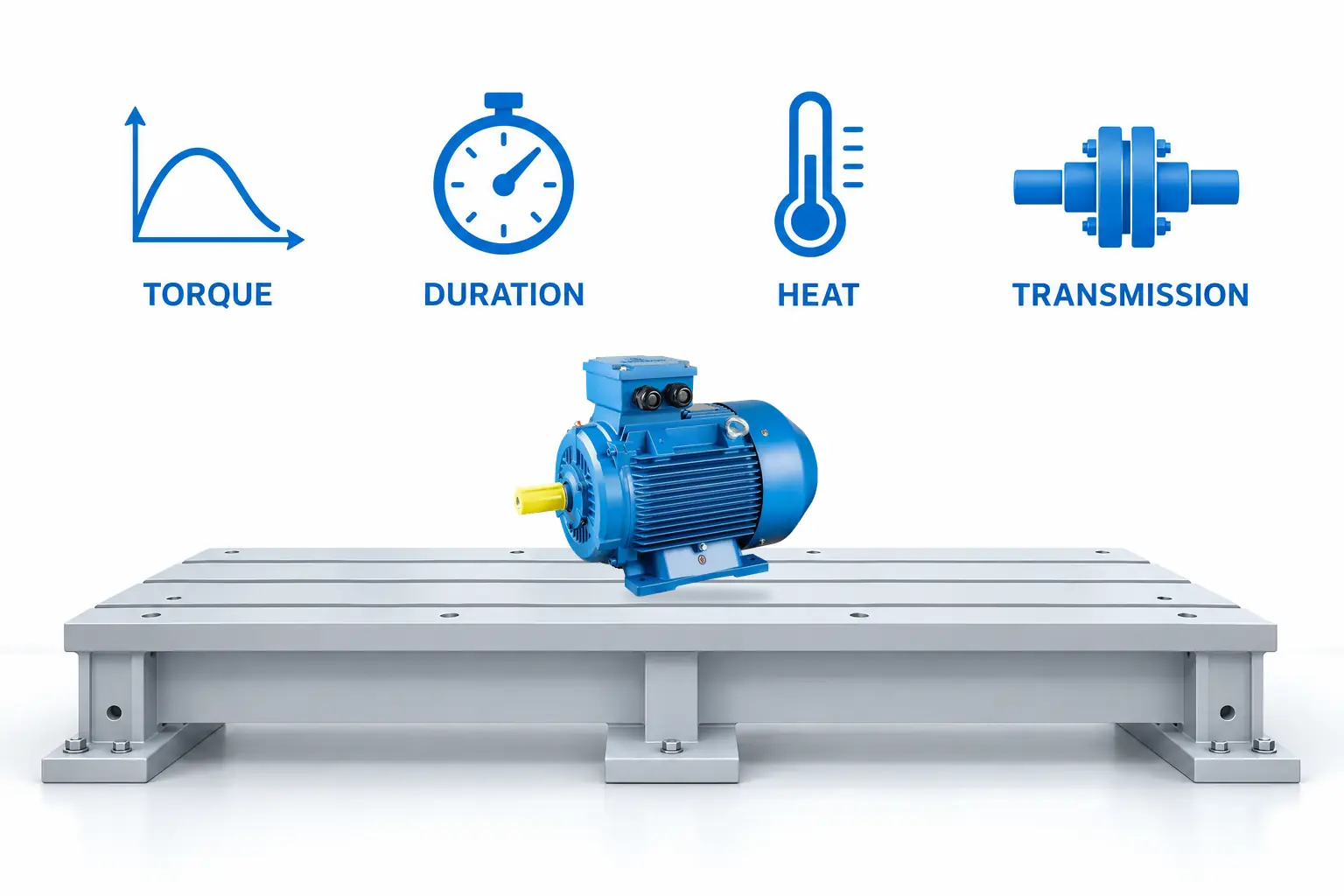
Ask the supplier to assess both the highest required torque and the repeated operating cycle. A short peak and a sustained overload are different requirements.
The following checklist can make a quotation technically meaningful:
- Torque capability: Can the motor and drive provide the required torque at the relevant speed, including starting and acceleration?
- Peak duration and repetition: How long does each peak last, and how much recovery time follows it?
- Thermal performance: Does the proposed rating cover the load cycle, starts, braking and cooling conditions?
- Mechanical capacity: Are the shaft, coupling, belts and gearbox suitable for the transmitted loads?
- Protection settings: How will the system distinguish a normal process peak from a stall or jam?
Do not apply a universal rule such as “increase motor power by 20%.” A larger nameplate rating may address one limitation while leaving a starting, braking or transmission problem unresolved. Request written confirmation of the operating conditions covered by the proposed selection.
4. Does a Shock Load Automatically Mean S4, S5 or S9 Duty?
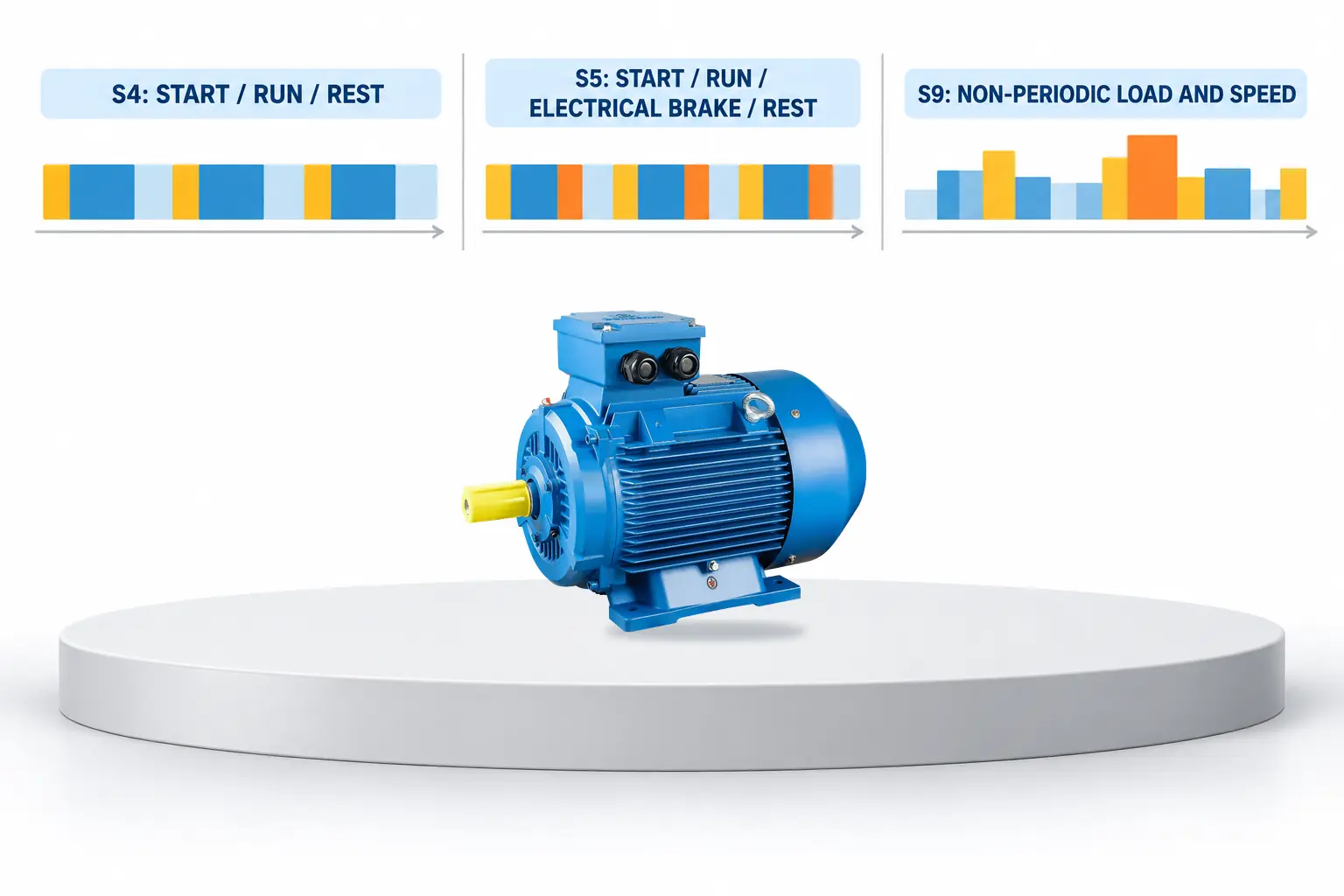
No. Duty classification describes the operating cycle; it is not assigned solely from the equipment type.
| Duty type | Relevant distinction | Buyer’s check |
|---|---|---|
| S4 | Intermittent periodic duty with significant starting | Provide starting time, running time, rest time and inertia |
| S5 | Intermittent periodic duty including electrical braking | Specify the electrical braking phase as well as starting, running and rest |
| S9 | Duty with non-periodic load and speed variations, including frequently applied overloads | Provide representative load and speed profiles and overload events |
Manufacturer duty guides explain these distinctions.[S3][S4] A hoist is not automatically S5 simply because it has a holding brake: mechanical holding and electrical braking are different functions. Likewise, an irregular load does not justify choosing an S9 designation without discussing the complete application with the motor manufacturer.
5. How Can You Improve the Drive—and Prepare a Better RFQ?
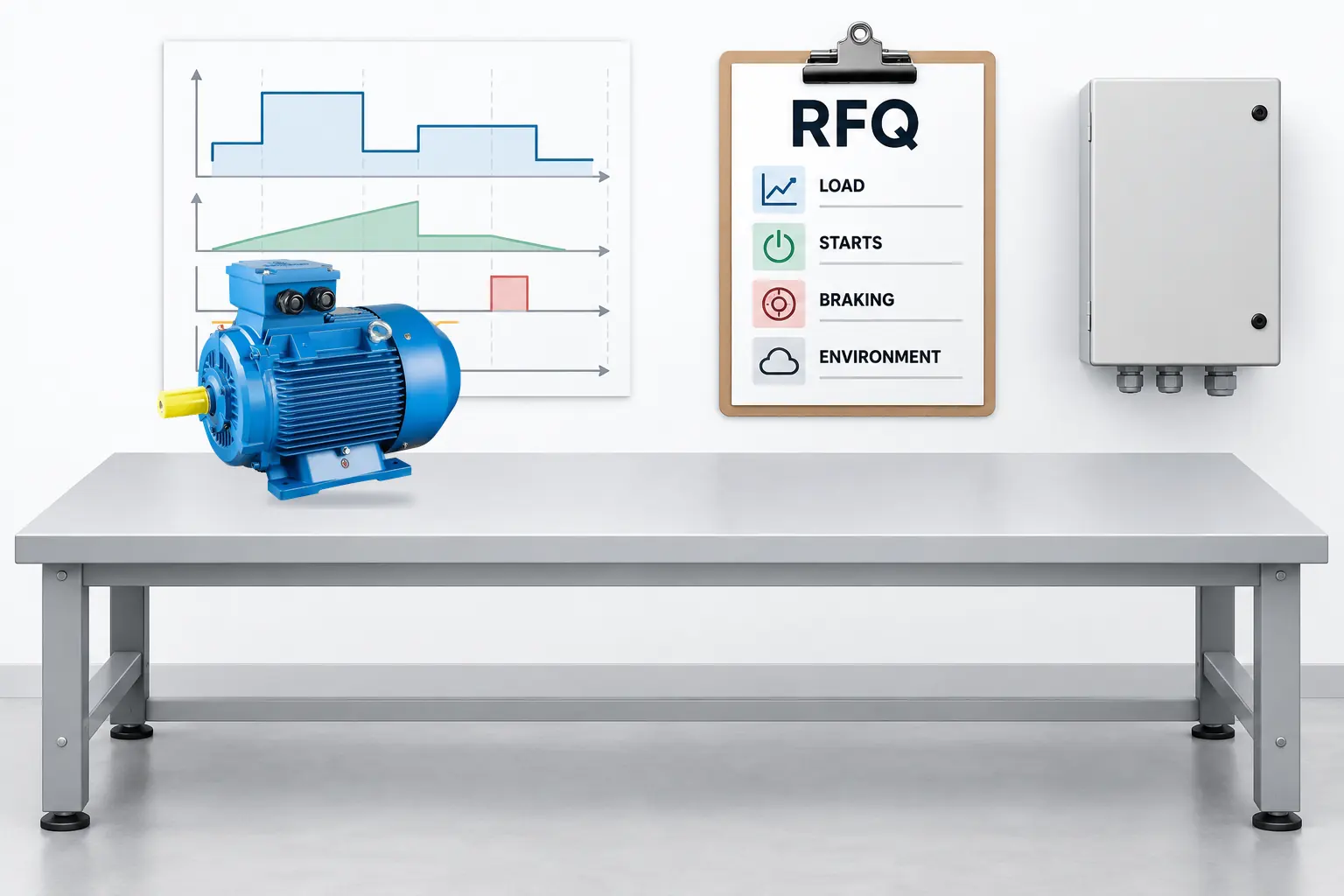
First investigate the cause of the peaks. More consistent feeding, a revised startup sequence or a longer acceleration ramp may reduce demand where the process permits it. A variable frequency drive can control acceleration, but its current limits and the motor’s torque capability still need to match the application. Braking also requires attention to the energy stored in the moving system.[S2]
Mechanical measures may help in suitable designs. A flywheel stores rotational energy, but adds inertia to be accelerated. A fluid coupling or other coupling arrangement should be selected for the machine’s torque, speed and thermal requirements. These are engineering choices, not universal accessories for every shock load.
For a Dongchun motor enquiry, send the application details along with the requested power and mounting dimensions. If load data is unavailable, identify it as unknown and request the machine supplier’s requirements before confirming the selection.
供应商询价模板
Application: [machine and process]
电源供应: [voltage, frequency and phase]
Required shaft speed / gearbox ratio: [values]
Load profile: [normal and peak torque, peak duration and repetition; attach measurements if available]
Starting: [loaded or unloaded, method, target acceleration time and starts per hour]
Inertia: [motor-side equivalent load inertia, or machine data for calculation]
Operating cycle: [running, stopping and rest periods]
Braking: [mechanical holding, electrical braking or other arrangement]
Environment: [ambient temperature, altitude, dust, moisture and cooling conditions]
安装: [mounting, frame, shaft, coupling and dimensional drawing]
Please confirm: [motor and drive suitability, permitted peaks, thermal limits and any missing information]
Keep measured values, machine supplier declarations, calculations and unknowns clearly identified. This makes it easier to resolve differences between quotations.
结论
Shock loads occur in many industrial processes, but their effect on the motor depends on the load pattern and drive arrangement. Check peak torque, duration, repetition, starting inertia and thermal duty before confirming a motor selection.
For a new installation or replacement, contact Dongchun with your machine details and load profile. A clear application description gives the supplier a stronger basis for evaluating a suitable motor.
脚注
[S1] Rockwell Automation, Drive Application Engineering Handbook, glossary entry “Shock load.”
[S2] Siemens, Standard Drives Application Handbook, sections 3.4–3.5. Used for foundational load, acceleration and braking principles; legacy product ratings are not used here.
[S3] Parvalux, Duty Cycle Guide, explanations of S4, S5 and S9 duty.
[S4] ABB, Low Voltage Crane Duty Motors, duty-cycle descriptions.