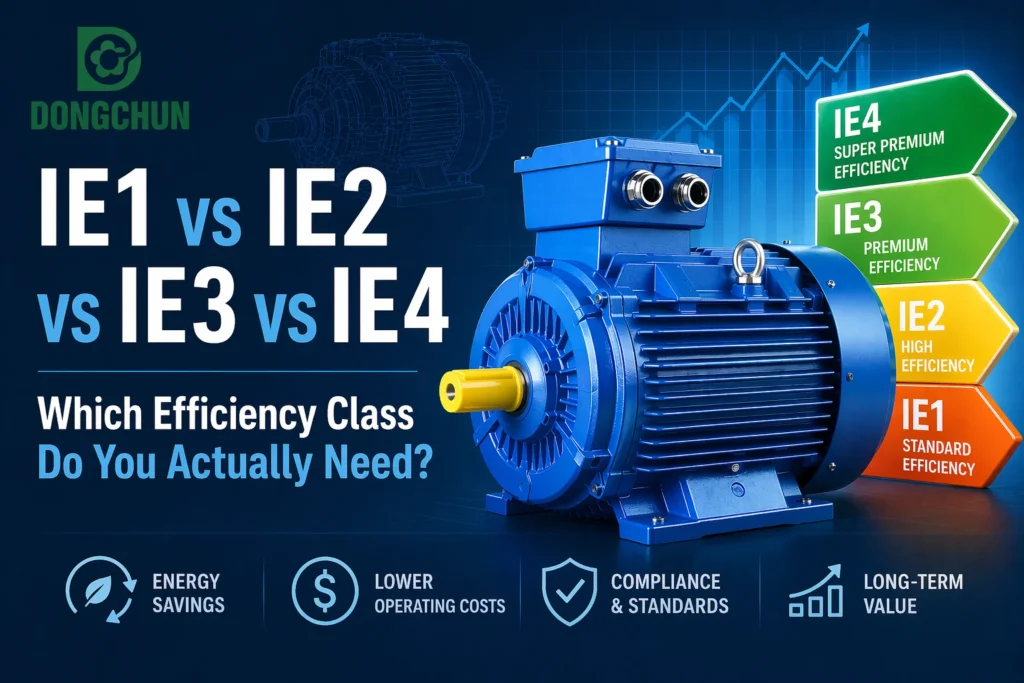
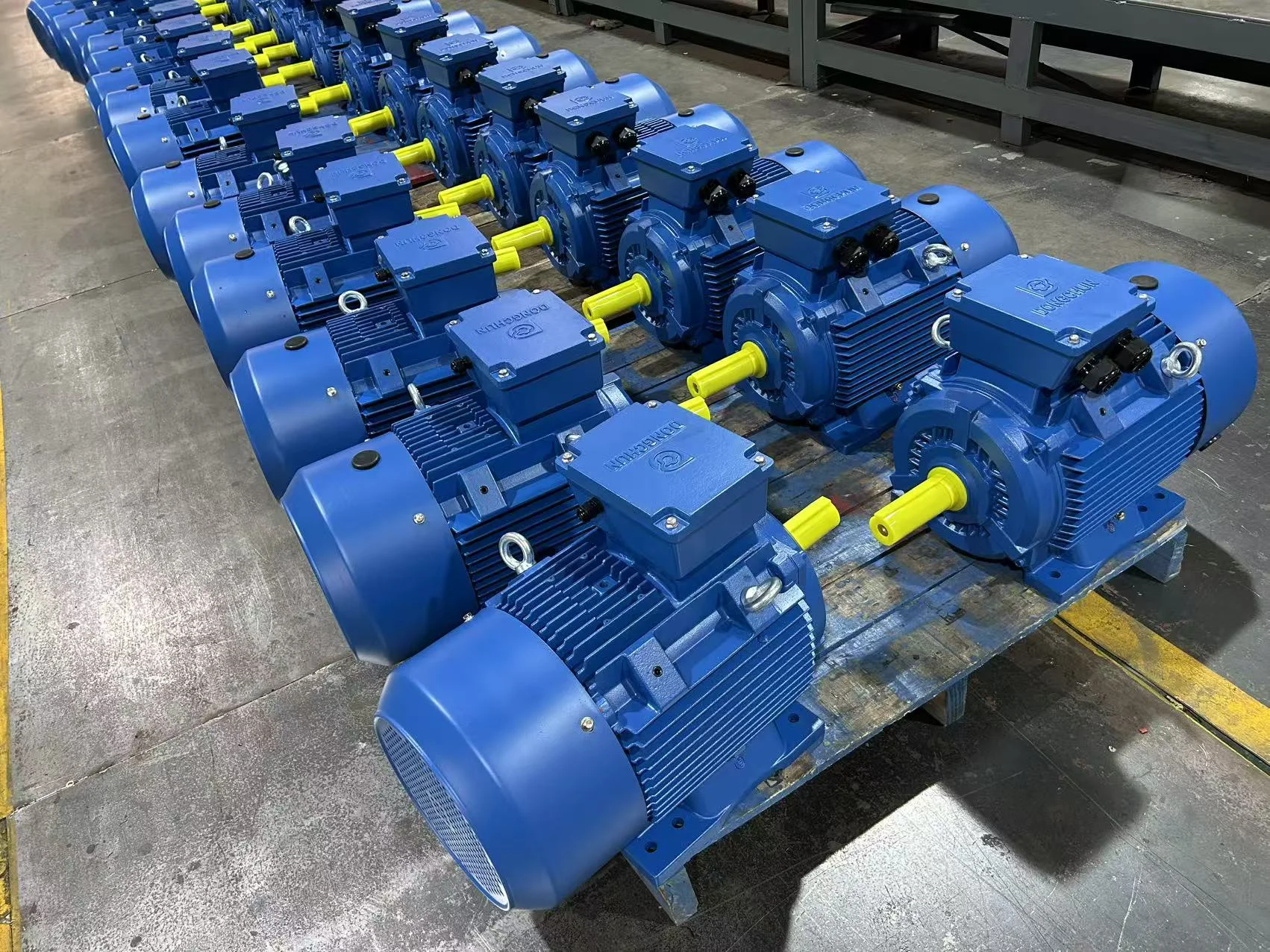
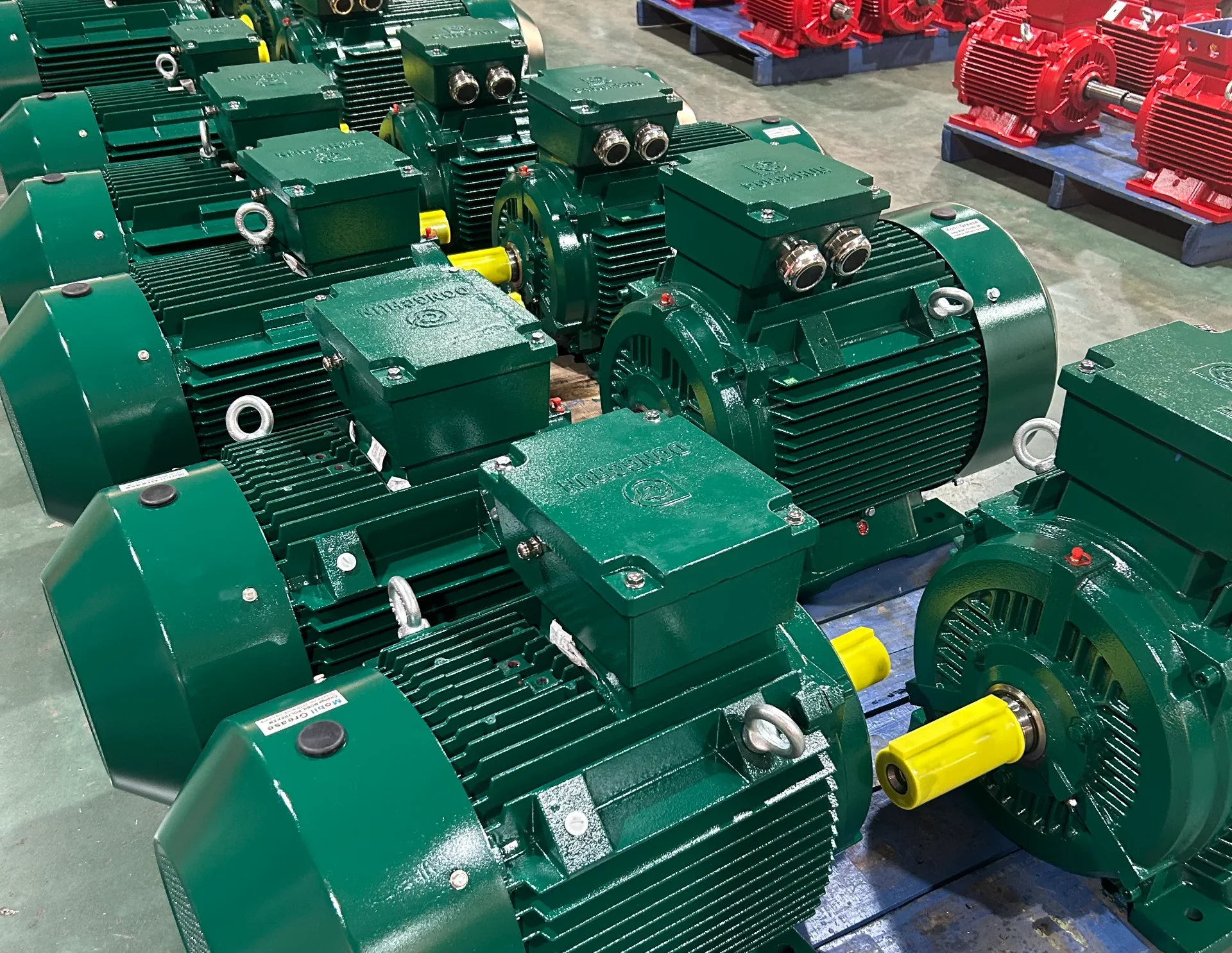
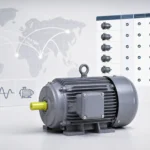
De keuze tussen IE1-, IE2-, IE3- en IE4-motoren heeft tientallen jaren invloed op uw energierekening. Deze gids helpt kopers bij het kiezen van de juiste efficiëntieklasse.
IE1 (Standard Efficiency), IE2 (High Efficiency), IE3 (Premium Efficiency) en IE4 (Super Premium Efficiency) zijn motorefficiëntieklassen gedefinieerd door de IEC 60034-30-1-norm. Elke hogere klasse vermindert de elektrische verliezen met 15-20%, wat betekent dat een IE3-motor van 7,5 kW ongeveer $ 400 - $ 800 per jaar aan elektriciteit bespaart, vergeleken met een IE1-motor die jaarlijks 6000 uur draait. IE2 is in de meeste landen de mondiale minimumbasislijn, IE3 is in de hele EU verplicht voor motoren van 0,75–1000 kW, en IE4 levert de laagste levensduurkosten voor toepassingen met een hoog bedrijfstijd.
Hier vindt u alles wat u moet weten voordat u uw volgende motor aanschaft.
Wat is het verschil tussen IE1-, IE2-, IE3- en IE4-motoren?
Het IE-classificatiesysteem rangschikt motoren op basis van hoe efficiënt ze elektrische energie omzetten in mechanische output.
IE staat voor ‘Internationale Efficiëntie" en valt onder de norm IEC 60034-30-1. IE1 is de minst efficiënte klasse die nog steeds wordt vervaardigd; IE2 verbetert dit met lagere wikkel- en kernverliezen; IE3 maakt gebruik van geoptimaliseerde rotorontwerpen en kleinere luchtspleten; en IE4 vereist vaak koperen rotors of permanente magneettechnologie om zijn doelstellingen met ultralaag verlies te bereiken. Het verschil is meetbaar: voor een typische 4-polige motor van 1,5 kW (2 pk) bij 50 Hz is het IE1-rendement 77,2%, IE2 82,8% en IE3 85,3%.
Hoe de IE-klassen zich in cijfers vergelijken
De onderstaande tabel toont typische rendementswaarden bij volledige belasting voor 4-polige, 50 Hz inductiemotoren bij verschillende vermogens, gebaseerd op de IEC 60034-30-1-norm:
Vermogen (kW)
IE1 (%)
IE2 (%)
IE3 (%)
IE4 (%)
0.75
72.1
77,4
80,7
83,5
1,5 (2 pk)
77,2
82,8
85,3
87,7
7.5
84,7
88,7
90,4
92,0
22
89,0
91,8
93,0
94,3
75
92,7
94,7
95,2
96,0
160
93,8
95,4
95,8
96,6
Naarmate je hoger in vermogen komt, wordt de procentuele kloof tussen de klassen kleiner, maar de absolute energiebesparing neemt toe omdat je te maken hebt met grotere hoeveelheden stroom. Als u bijvoorbeeld een motor van 75 kW van IE2 naar IE3 upgradet, bespaart u slechts 0,5 procentpunt aan efficiëntie, maar dat komt neer op ongeveer 2.600 kWh per jaar bij 6.000 bedrijfsuren – genoeg om een gemiddeld huishouden enkele maanden van stroom te voorzien.
Wat verandert er fysiek tussen IE-lessen?
Hogere IE-klassen bereiken lagere verliezen door verschillende ontwerpwijzigingen:
Statorwikkelingen: Meer koperdraad, grotere doorsneden en verbindingen met lagere weerstand verminderen I²R-verliezen.
Rotorconstructie: IE3-motoren gebruiken vaak gegoten koperen rotoren in plaats van aluminium. IE4-motoren kunnen worden gebruikt synchrone ontwerpen met permanente magneet of terughoudendheidstechnologie.
Lamineren staal: Elektrisch staal van hogere kwaliteit met dunnere lamellen vermindert kernverliezen als gevolg van hysteresis en wervelstromen.
Optimalisatie van de luchtspleet: Nauwere productietoleranties verminderen verliezen door zwerfbelasting.
Koeling en frame: Motoren met een hoger rendement genereren minder afvalwarmte, maar kunnen enigszins afwijkende frameafmetingen hebben.
Deze technische verbeteringen verklaren waarom een IE3-motor 15-25% meer kost dan een IE2, en waarom een IE4-motor 20-30% meer kost dan een IE3. Het extra materiaal – vooral koper – drijft de prijs op, maar verlaagt de bedrijfskosten tijdens de levensduur dramatisch.
IE3-motoren bereiken een hoger rendement door gebruik te maken van geoptimaliseerde rotorontwerpen, meer koper en kleinere luchtspleten in vergelijking met IE1-motoren.WAAR
Hogere IE-klassen gebruiken betere materialen zoals koperen rotors en hoogwaardig gelamineerd staal, plus nauwere productietoleranties, om elektrische verliezen te verminderen.
IE1- en IE4-motoren gebruiken identieke interne componenten en verschillen alleen wat betreft de naamplaatjes.Vals
IE4-motoren vereisen een aanzienlijk andere constructie – inclusief koperen rotors, hoogwaardig gelamineerd staal en nauwere luchtspleten – om hun doelstellingen met ultralaag verlies te bereiken. De IE-klasse weerspiegelt echte fysieke en materiële verschillen.
Welke IE-efficiëntieklasse is vereist in mijn land?
De regelgeving verschilt sterk per regio, en het gebruik van de verkeerde klasse kan uw zending bij de douane blokkeren of in strijd zijn met de lokale energiewetten.
De Europese Unie vereist IE3 als minimum voor alle motoren van 0,75–1000 kW sinds juli 2023 (Commissieverordening EU 2019/1781). De Verenigde Staten handhaven NEMA Premium (equivalent aan IE3) voor de meeste motoren voor algemeen gebruik. China schrijft GB 18613-2020 Level 2 voor, wat aansluit bij IE3 voor nieuwe installaties. De meeste ontwikkelingslanden in Latijns-Amerika, Afrika en Zuidoost-Azië vereisen momenteel IE2 als minimum, hoewel velen tegen 2025-2027 overstappen op IE3-vereisten.
Overzicht regionale regelgeving
De volgende tabel geeft een overzicht van de huidige minimale efficiëntie-eisen voor driefasige inductiemotoren voor algemeen gebruik in belangrijke markten vanaf 2026:
Regio / Land
Minimale IE-klasse
Toepasselijk bereik
Belangrijke norm/regelgeving
Europese Unie
IE3
00,75–1000 kW
EU 2019/1781 (Ecodesign)
Verenigde Staten
IE3 (NEMA Premium)
1–500 pk
EISA 2007 / DOE 10 CFR 431
China
IE3 (niveau 2)
00,12–1000 kW
GB 18613-2020
Brazilië
IE3
00,12–500 kW
INMETRO-verordening 553/2021
Chili
IE2
00,75–375 kW
SEC-regelgeving (IE3 wordt herzien)
Peru
IE2
00,75–375 kW
MINEMDS 009-2024
Nigeria
IE2
00,75–375 kW
ZOON NIS IEC 60034-30-1
Zuid-Afrika
IE3
00,75–375 kW
SANS 60034-30-1 / NRCS-vereisten
Indië
IE2
00,37–375 kW
BIS IS 12615 (IE3 voorgesteld in 2027)
Saoedi-Arabië / GCC
IE2
00,75–375 kW
SASO / GSO technische regelgeving
Wat gebeurt er als u onder de minimumklasse koopt?
Op gereglementeerde markten kan het importeren van een motor onder de verplichte efficiëntieklasse resulteren in: douanebeslaglegging, boetes of gedwongen wederuitvoer. Zelfs in landen waar de handhaving nog steeds in ontwikkeling is, specificeren veel industriële kopers en projectaanbestedingen IE3 nu als een aanbestedingsvereiste, ongeacht de lokale wetgeving. Als u motoren aanschaft voor exportprojecten (bijvoorbeeld als u pompsets in de EU verkoopt), moet u ervoor zorgen dat de motor voldoet aan de normen van het land van bestemming, en niet aan die van uzelf.
Voor kopers in Latijns-Amerika en Afrika is het praktische advies eenvoudig: koop IE2 als absoluut minimum, en overweeg IE3 sterk voor elke motor die meer dan 3.000 uur per jaar draait. De regelgeving wordt strenger en een vandaag gekochte IE3-motor blijft aan de regelgeving voldoen, zelfs als uw land de normen bijwerkt.
Het is ook vermeldenswaard dat de IEC 60034-30-1-norm omvat motoren van 0,12 kW tot 1000 kW, met 2, 4, 6 of 8 polen, werkend bij 50 Hz of 60 Hz. Voor motoren die buiten dit toepassingsgebied vallen, zoals remmotoren, onderwatermotoren of motoren die in frequentieomvormers zijn geïntegreerd, kunnen afzonderlijke efficiëntie-eisen gelden.
De Europese Unie vereist een minimum IE3-efficiëntie voor motoren voor algemeen gebruik met een vermogen van 0,75–1000 kW op grond van Verordening EU 2019/1781 van de Commissie.WAAR
Sinds juli 2023 schrijft de EU Ecodesign-verordening IE3 voor als de minimale efficiëntieklasse voor de meeste driefasige inductiemotoren in dit vermogensbereik.
Alle landen wereldwijd eisen nu IE3 als minimale motorefficiëntienorm.Vals
Veel ontwikkelingslanden in Latijns-Amerika, Afrika en Zuidoost-Azië vereisen nog steeds alleen IE2 als minimum. De regelgeving verschilt aanzienlijk per regio, en sommige landen hebben helemaal geen verplichte normen voor motorefficiëntie.
Hoe berekent u de ROI bij het upgraden naar een hogere IE-klasse?
Het kostenverschil vooraf tussen IE-klassen is gemakkelijk te zien op een offerte. De energiebesparing vereist een eenvoudige berekening die de meeste kopers overslaan.
Gebruik deze formule om de jaarlijkse energiebesparing te berekenen: Besparingen (kWh) = Vermogen (kW) × Uren × (1/Oude efficiëntie − 1/Nieuwe efficiëntie). Voor een motor van 7,5 kW die 6.000 uur/jaar draait, bespaart het upgraden van IE2 (88,7%) naar IE3 (90,4%) jaarlijks ongeveer 1.420 kWh. Bij $0,10/kWh is dat $142/jaar. Als de IE3-motor $ 150 meer kost dan de IE2, is de terugverdientijd iets meer dan een jaar.
Stapsgewijze ROI-berekening
Laten we een voorbeeld uit de praktijk bekijken van een inkoopfunctionaris die offertes vergelijkt. Stel dat je een 7,5 kW, 4-polige motor nodig hebt voor a centrifugaalpomptoepassing draait 6.000 uur per jaar in een fabriek in Ecuador, waar industriële elektriciteit ongeveer $ 0,09/kWh kost.
Stap 1: Haal de efficiëntiewaarden op
Uit de tabel IEC 60034-30-1: IE2 = 88,7%, IE3 = 90,4%, IE4 = 92,0%.
Stap 2: Bereken het jaarlijkse energieverbruik voor elke klasse
IE-klasse
Efficiëntie
Ingangsvermogen (kW)
Jaarlijks verbruik (kWh)
Jaarlijkse kosten ($0,09/kWh)
IE2
88,7%
8.456
50.736
$ 4.566
IE3
90,4%
8.296
49.779
$ 4.480
IE4
92,0%
8.152
48.913
$ 4.402
Het ingangsvermogen wordt berekend als: 7,5 kW ÷ efficiëntie. Jaarlijks verbruik = ingangsvermogen × 6.000 uur.
Stap 3: Bereken de besparingen en terugverdientijd
Upgrade-pad
Jaarlijkse besparing
Typische prijspremie
Terugverdientijd
IE2 → IE3
$ 86/jaar
$ 120 - $ 180
1,4–2,1 jaar
IE2 → IE4
$ 164/jaar
$ 350 - $ 500
2,1–3,0 jaar
IE3 → IE4
$ 78/jaar
$ 200 - $ 350
2,6–4,5 jaar
Wanneer is upgraden NIET financieel zinvol?
Er zijn scenario's waarin meer betalen voor een hogere IE-klasse geen betekenisvol rendement oplevert:
Lage bedrijfsuren: Een motor die minder dan 1.500 uur per jaar draait, zal de prijspremie binnen zijn levensduur van 15 tot 20 jaar wellicht nooit terugverdienen, vooral in landen met goedkope elektriciteit.
Extra grote motoren: Als een motor van 7,5 kW een belasting van 4 kW aandrijft, werkt deze op gedeeltelijke belasting, waarbij het werkelijke rendement aanzienlijk lager is dan de waarde op het typeplaatje. In dit geval de motor op de juiste maat maken — het kiezen van een 5,5 kW IE3 in plaats van een 7,5 kW IE3 — bespaart meer energie dan de overstap naar een hogere IE-klasse.
Toepassingen met variabele snelheid: Wanneer een motor is gekoppeld aan een variabele frequentieaandrijving (VFD), vermindert de aandrijving het energieverbruik al met 20-50%. Het toenemende voordeel van IE4 ten opzichte van IE3 wordt procentueel kleiner, maar is nog steeds de moeite waard voor 24/7 activiteiten.
De belangrijkste afhaalmaaltijd: Bereken altijd voordat u koopt. Een spreadsheetberekening van 30 seconden kan de upgrade rechtvaardigen of uitsluiten op basis van uw specifieke elektriciteitstarief en bedrijfsuren.
Een motor van 7,5 kW die is geüpgraded van IE2 naar IE3 en 6.000 uur per jaar draait, betaalt de meerprijs doorgaans binnen 1 tot 2 jaar terug via energiebesparingen.WAAR
De efficiëntieverbetering van 88,7% naar 90,4% bespaart jaarlijks ongeveer 957–1.420 kWh. Bij typische industriële elektriciteitstarieven dekt dit de prijspremie van $120 tot $180 in ongeveer 1,4 tot 2,1 jaar.
Upgraden naar een hogere IE-klasse bespaart altijd geld, ongeacht hoeveel uur de motor per jaar draait.Vals
Motoren die minder dan 1.500 uur per jaar draaien, zullen de hogere aanschafkosten mogelijk nooit binnen hun levensduur terugverdienen. De ROI is afhankelijk van bedrijfsuren, elektriciteitskosten en de prijspremie tussen IE-klassen.
Hoe kunt u verifiëren dat de beweerde IE-rating van een motor echt is?
Valse of overdreven efficiëntieclaims vormen een reëel probleem op de mondiale automarkt, vooral voor kopers die bij onbekende leveranciers inkopen.
Een echte motor met IE-classificatie moet worden getest volgens IEC 60034-2-1 (testmethoden voor verliezen en efficiëntie) en worden gecertificeerd door een erkende instantie. Zoek naar testrapporten van derden van laboratoria die zijn geaccrediteerd volgens ISO/IEC 17025, CE-markering met een conformiteitsverklaring voor EU-markten en naamplaatjegegevens die binnen de toegestane toleranties overeenkomen met de efficiëntietabellen van IEC 60034-30-1. Als een leverancier geen testrapport kan overleggen waarin het ingangsvermogen, het uitgangsvermogen en de individuele verliesverdeling worden weergegeven, moet u de geclaimde IE-klasse met scepsis behandelen.
Waar u op moet letten op het motortypeplaatje
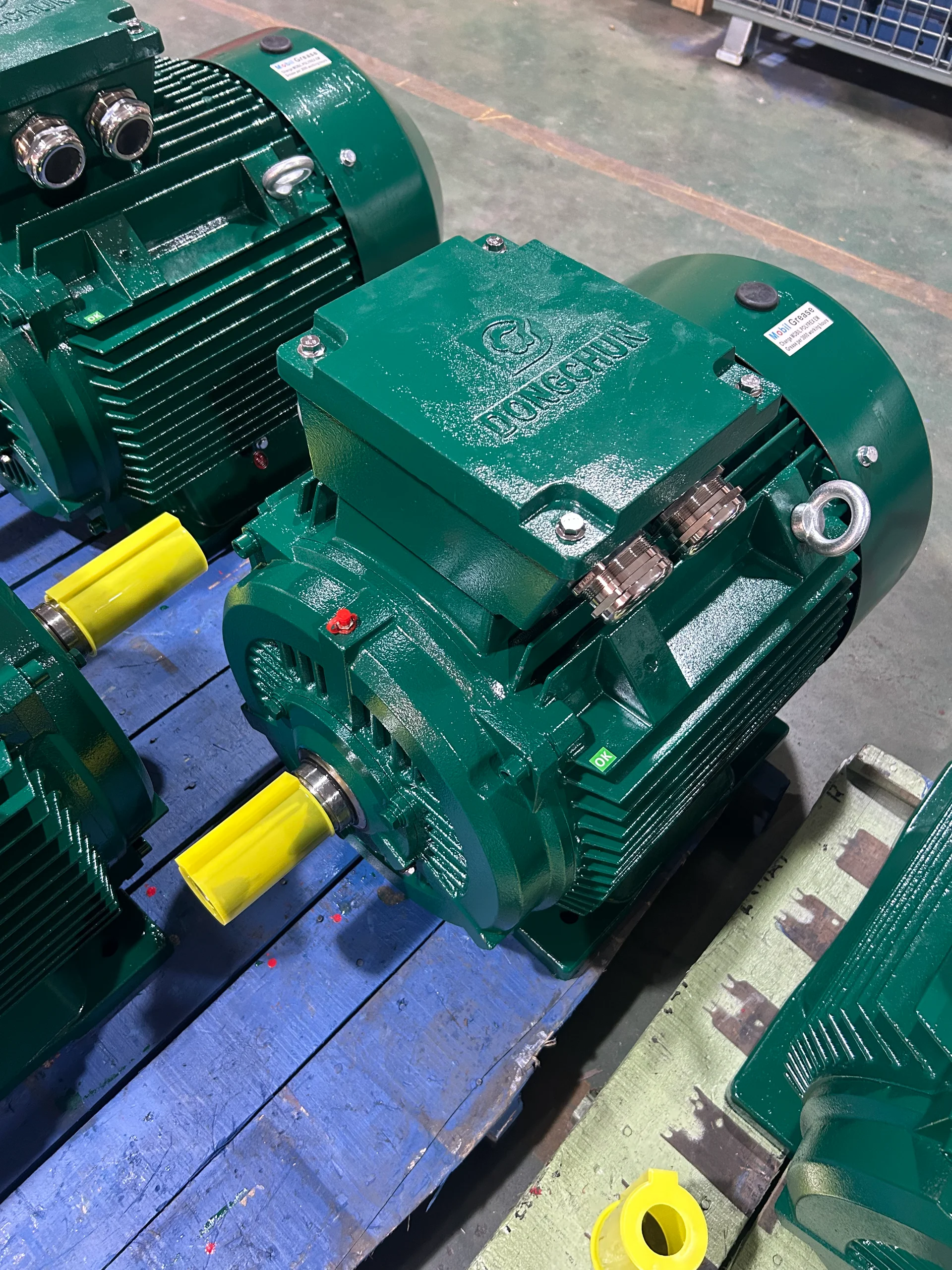
Elke motor die aan de IEC-normen voldoet, moet het volgende op het typeplaatje vermelden:
IE-klasseaanduiding (IE1, IE2, IE3 of IE4)
Nominaal rendement bij volledige belasting (bijvoorbeeld 90,4%)
Nominaal vermogen, spanning, stroom, frequentie, snelheid en bedrijfstype
Verwijzing naar de toepasselijke norm (IEC 60034-30-1)
Naam van de fabrikant en land van herkomst
Als een deel van deze informatie ontbreekt of inconsistent is met de gepubliceerde waarden van de standaard, is dit een waarschuwingssignaal. Als een leverancier bijvoorbeeld IE3 claimt voor een 4-polige motor van 1,5 kW, maar het rendement op 83,0% vermeldt, valt dat cijfer feitelijk tussen IE2 (82,8%) en IE3 (85,3%) en voldoet het niet aan de IE3-drempel.
Hoe u verificatie kunt aanvragen bij uw leverancier
Vraag bij het beoordelen van een nieuwe motorleverancier om de volgende documenten:
Type testrapport — Een volledige efficiëntietest uitgevoerd per IEC 60034-2-1 door een onafhankelijk laboratorium. Het rapport moet meetwaarden bevatten voor het koperverlies in de stator, het koperverlies in de rotor, het kernverlies, het wrijvings- en windverlies, en het verlies aan zwerfbelasting.
Certificaat van overeenstemming — Uitgegeven door een erkende certificeringsinstantie zoals TUV, SGS, Bureau Veritas of een nationale normalisatie-instelling (bijv. CCC voor China, BIS voor India, INMETRO voor Brazilië).
Fabrieksroutinetestgegevens — Individuele testresultaten voor de specifieke motoren die worden verzonden, waaruit blijkt dat productie-eenheden voldoen aan de typetestwaarden binnen de toegestane tolerantie van IEC 60034-1 (doorgaans −15% op individuele verliezen of −10% op totale verliezen).
Gemeenschappelijke rode vlaggen
Let op deze waarschuwingssignalen bij het aanschaffen van motoren:
Er is geen testrapport van derden beschikbaar - alleen "zelfverklaard" efficiëntie.
Testrapport van een niet-geaccrediteerd laboratorium — de accreditatie verifiëren bij de ILAC-database.
Efficiëntiewaarden die exact overeenkomen met de minimumdrempel — legitieme fabrikanten overschrijden het minimum doorgaans met een marge.
Ongebruikelijk lage prijzen - als een motor geprijsd is als een IE1 maar met het label IE3, ondersteunen de materialen erin de geclaimde prestaties waarschijnlijk niet. Koperen rotors en premium gelamineerd staal brengen reële kosten met zich mee die niet kunnen worden vermeden.
Onwil om documentatie te verstrekken — gerenommeerde fabrikanten staan open voor technische vragen en verstrekken onmiddellijk documentatie.
Voor aankopen in grote volumes kunt u overwegen een extern inspectiebedrijf getuige zijn van testen in de fabriek vóór verzending. De kosten van inspectie zijn minimaal vergeleken met het risico van het installeren van duizenden slecht presterende motoren in een project.
Voor een echte motor met IE-classificatie moet een testrapport van een derde partij zijn uitgevoerd volgens IEC 60034-2-1, waarin individuele verliesanalyses voor stator-, rotor-, kern- en zwerfbelastingverliezen worden weergegeven.WAAR
IEC 60034-2-1 definieert de standaardtestmethoden voor het bepalen van het motorrendement. Een legitiem testrapport van een geaccrediteerd laboratorium biedt meetwaarden voor elke verliescategorie, die kunnen worden geverifieerd aan de hand van IEC 60034-30-1-drempels.
Als op het typeplaatje van een motor IE3 staat, kunt u op de classificatie vertrouwen zonder ondersteunende documentatie van de leverancier te vragen.Vals
Opschriften op het typeplaatje kunnen vervalst zijn. Kopers moeten altijd testrapporten van derden en conformiteitscertificaten van erkende instanties zoals TUV of SGS opvragen en certificaatnummers in officiële databases verifiëren voordat ze vertrouwen op een IE-beoordeling.
Conclusie
Het kiezen van de juiste IE-klasse is afhankelijk van drie factoren: het wettelijke minimum in uw land, de jaarlijkse bedrijfsuren van uw motor en uw elektriciteitskosten. Bereken de ROI, verifieer de beoordeling en koop de klasse die zichzelf terugbetaalt.
Referenties
Internationale Elektrotechnische Commissie, "IEC 60034-30-1:2014 — Roterende elektrische machines — Deel 30-1: Efficiëntieklassen van lijnbediende wisselstroommotoren," IEC, Genève, 2014.
Internationale Elektrotechnische Commissie, "IEC 60034-2-1:2014 — Roterende elektrische machines — Deel 2-1: Standaardmethoden voor het bepalen van verliezen en efficiëntie uit tests," IEC, Genève, 2014.
Europese Commissie, "Verordening (EU) 2019/1781 van de Commissie — Eisen inzake ecologisch ontwerp voor elektrische motoren en frequentieregelaars," Publicatieblad van de Europese Unie, oktober 2019.
Amerikaanse ministerie van Energie, "Energy Conservation Standards for Electric Motors - 10 CFR Part 431," Federaal register, 2014.
Standardization Administration of China, "GB 18613-2020 - Minimaal toegestane waarden van energie-efficiëntie en energie-efficiëntieklassen voor kleine en middelgrote driefasige asynchrone motoren," SAC, Peking, 2020.
ABB, "Technische noot: IEC 60034-30-1 efficiëntieklassen voor laagspanningswisselstroommotoren," ABB-groep, 2021.
Siemens AG, "Energiebesparingscalculator voor elektromotoren," Siemens Digital Industries, geraadpleegd in 2025.
de Almeida, A.T., Ferreira, F.J.T.E., en Baoming, G., "Beyond Induction Motors - Technologische trends om de efficiëntie te verhogen," IEEE-transacties op industriële toepassingen, vol. 50, nee. 3, blz. 2103–2114, 2014.