...
[lsft_native_dropdown]

เลือกภาษาของคุณ

Why Do Induction Motors Have Drain Holes?

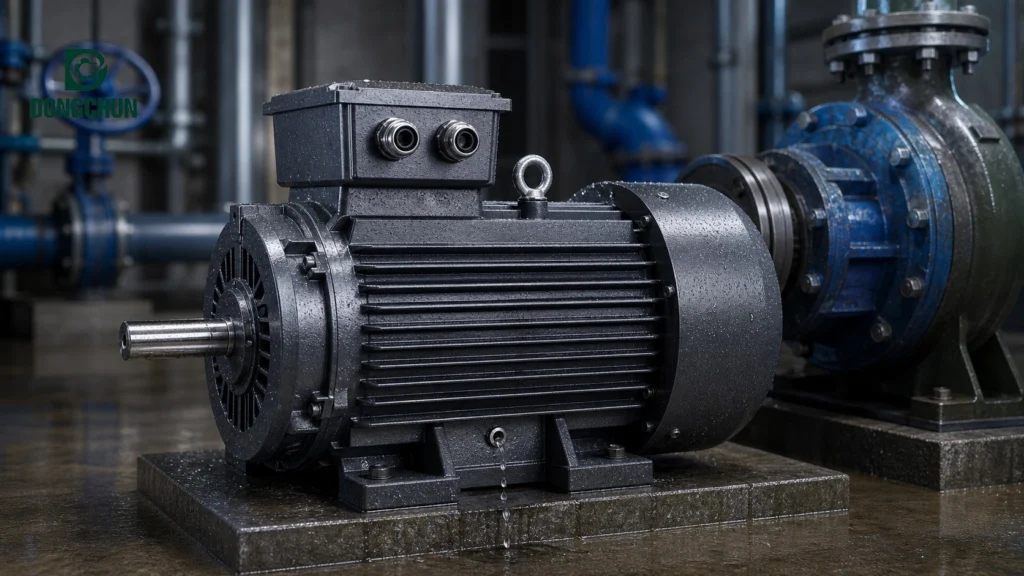
A motor drain hole is a small detail, but it can decide whether an induction motor survives humid service. It does not stop condensation from forming. It gives condensed water a controlled way out before moisture attacks winding insulation, bearings, terminal parts, and internal metal surfaces.

Many buyers first notice the small hole near the bottom of an electric motor frame after the motor arrives at the warehouse or after a customer sends a photo from site. The first reaction is often suspicion. Is this a casting defect? Did the factory forget to seal something? Will water enter the motor from there?

I understand that reaction. When Clayton imports motors for pumps, gearboxes, reducers, or machine builders in Chile, he is responsible for resale quality. A small unexplained hole looks like a risk. Some users even paint over the hole or seal it with silicone because they think they are improving protection.

That can create the opposite result.

In humid, outdoor, coastal, mining, aquaculture, wastewater, cooling tower, and agricultural applications, water can appear inside a motor even when the motor was not directly flooded. The common reason is motor condensation. The motor heats during operation, cools after shutdown, breathes with ambient conditions, and may collect moisture on internal surfaces. If that water cannot leave, the buyer may later see low insulation resistance, bearing corrosion, grease contamination, rusty terminal hardware, or ground-fault complaints.

This is why an induction motor drain hole exists. It is a practical motor moisture prevention feature.

What Is a Motor Drain Hole?

A motor drain hole is an opening placed at the low point of the motor frame, end shield, or terminal box area so condensed water can leave the enclosure. Depending on the motor design, the opening may be:

  • A small open hole in the frame.
  • A threaded hole with a screw plug.
  • A rubber motor drain plug with open and closed positions.
  • A plastic sealable drain plug.
  • A breather drain that allows moisture to exit while reducing dust entry.
  • A special drain arrangement for vertical mounting or large-frame motors.

On many IEC low voltage motors, the drain point is not meant to be random. ABB low voltage motor instructions state that drain holes and plugs should face downward, and the manual has a specific section for motors with drain plugs for condensation.[1] WEG manual guidance also treats drain plugs as a normal installation and maintenance feature, with different instructions depending on protection degree and condensation level.[3]

For a buyer, the important word is downward. If the motor is installed as B3 foot mounting, the lowest point is usually easy to understand. If the same frame is mounted as B5 flange, B35 foot-flange, V1 vertical shaft down, or V3 vertical shaft up, the low point changes. A drain hole that worked in one orientation may sit on the side after installation and no longer drain properly.

That is why I ask for the mounting position before finalizing a motor quotation. Frame size, terminal box position, mounting, shaft direction, and drain arrangement belong to the same RFQ package. They are not separate details.

Why Does Water Form Inside an Electric Motor?

Water inside an electric motor does not always mean rain entered through a broken cover. In many real cases, the problem starts with temperature and humidity.

Temperature changes

An induction motor heats up during operation. After shutdown, the frame and internal parts cool. If the air around the motor is humid, moisture can condense on cooler internal surfaces. Siemens operating instructions describe condensation risk from sharp ambient temperature fluctuations, direct sunlight, high storage humidity, intermittent operation, and load variation.[4]

This is common in pump houses, farms, coastal warehouses, mining sites, and outdoor equipment. A motor may run during the day, stop at night, then cool while the surrounding air becomes damp. If this repeats, small amounts of water can collect over time.

The drain hole does not prevent that physics. It only gives the collected water somewhere to go.

Humid environments

Some regions and applications are simply harder on electric motors:

  • Coastal regions where salt air and humidity stay high.
  • Mining sites with water, dust, vibration, and long maintenance intervals.
  • Wastewater treatment plants with humid air and corrosive atmosphere.
  • Aquaculture farms where motors work near water every day.
  • Cooling towers where mist and temperature change are normal.
  • Outdoor pump installations with rain, sun, and night cooling.
  • Agricultural machinery stored in sheds, then used seasonally.

We frequently see returned motors and complaint photos from coastal or tropical regions where blocked drain holes contributed to insulation problems. Usually the story is not dramatic at the beginning. The motor worked. Then it sat. Then the customer started it after rain or after a long shutdown. The breaker tripped, insulation resistance was low, or the terminal box showed moisture marks.

That is why I do not treat the electric motor drain hole as a minor cosmetic feature. It belongs to reliability.

What Happens If Water Remains Inside the Motor?

Water inside a motor creates several failure paths. They do not always happen at the same speed, and they do not always leave obvious evidence on the outside of the frame.

Insulation deterioration

The winding insulation system must keep electrical parts separated from each other and from ground. Moisture lowers insulation resistance. Siemens guidance states that damp stator winding reduces insulation resistance and can lead to voltage flashover that destroys the winding.[4]

For a procurement officer, the field symptom may look like:

  • Low megger reading before startup.
  • Leakage current.
  • Nuisance tripping.
  • Ground fault.
  • Phase-to-phase short circuit.
  • Motor failure shortly after installation.

This is where a cheap motor becomes expensive. If the motor fails inside an industrial project, Clayton does not only lose the cost of the motor. He may lose the customer relationship, technician time, freight cost, and resale margin.

Bearing damage

Moisture also attacks the bearing system. It can promote corrosion on steel surfaces and contaminate grease. If water reaches the bearing cavity or stays near bearing parts, the motor may develop noise, rough running, temperature rise, or shortened bearing life.

Not every bearing failure is caused by condensation. That would be careless. Bearing problems can come from wrong belt tension, misalignment, overload, contamination, poor lubrication, vibration, or transport damage. But moisture is one real failure route, especially in humid and outdoor service.

Internal corrosion

If water stays inside the frame, it can corrode laminations, rotor surfaces, bolts, terminal connections, grounding parts, and hardware. Sometimes the motor still runs, but the inside condition becomes worse month by month.

This matters for warehouse stock too. A motor may sit before installation. If it is stored in a damp place and the drain arrangement is wrong, the buyer may open the terminal box later and find corrosion before the motor has earned one hour of useful work.

How Drain Holes Protect Induction Motors

A drain hole protects the motor by managing water after condensation happens. It provides discharge, not magic prevention.

When the drain path is correct:

  • Condensed water can leave the frame instead of pooling.
  • Moisture has less time to attack winding insulation.
  • Bearing and internal corrosion risk is reduced.
  • Maintenance teams can inspect the drain point.
  • The buyer has one more simple check before startup.

This is why sealing every drain hole permanently is a mistake. The user may believe he has improved enclosure protection, but he may also trap condensation inside. ABB guidance says drain holes and plugs should face downward, and that in very dusty environments drain holes should be closed.[1] WEG guidance separates IP55 practice from higher protection degrees such as IP56, IP65, and IP66.[3] The lesson is not "always open" or "always closed." The lesson is: follow the motor maker's instruction and the real site condition.

For Dongchun orders, I prefer to discuss drain position together with the application. A pump motor near a wet installation, a fan motor near a cooling tower, a VFD motor in a humid project, and a brake motor on outdoor equipment do not create the same moisture question.

Drain Holes vs Anti-Condensation Heaters

Drain holes and anti-condensation heaters are often mentioned together, but they are not the same solution.

รายการ What it does well Limitation
Drain hole or drain plug Lets accumulated condensation water leave the motor Does not stop condensation from forming
Breather drain Allows moisture discharge while reducing contaminant entry Must match motor design and application
Anti-condensation heater or space heater Keeps the winding area warmer during shutdown and reduces condensation risk Needs power supply, wiring, correct use, and maintenance
Insulation resistance test Shows whether winding insulation is dry enough before startup It is a test, not a moisture removal design

Many industrial motors use more than one moisture-control method. A drain plug may handle water discharge. A space heater may reduce condensation during standby. A maintenance team may check insulation resistance before starting a motor after long storage. These methods support each other.

For buyers, the RFQ question should be practical:

> Will this motor operate in a humid, outdoor, coastal, washdown, mining, aquaculture, or long-standby environment, and what moisture-control features does the supplier recommend for that exact installation?

That question is better than asking only for "IP55 motor best price."

Should Drain Holes Be Open or Closed?

The correct answer depends on environment, IP rating, motor design, and manufacturer manual.

Site condition Practical recommendation
Humid environment Check whether the motor drain plug should be open, periodically opened, or fitted with a breather drain. Do not seal it without approval.
Indoor factory Drain holes may need only routine inspection, but condensation can still happen if the motor has long standby time or large temperature swings.
Outdoor installation Confirm drain position after mounting, rain direction, cable gland sealing, terminal box orientation, and maintenance access.
Dusty environment Some manuals require drain holes to be closed in very dusty environments. Moisture control must be balanced against dust entry.
Washdown application Do not assume an open hole is acceptable. Confirm IP grade, plug position, cleaning method, and whether the drain is opened only during maintenance.
IP55 motor with high condensation Some manufacturer guidance allows open drain plug practice for certain IP55 cases, but the exact manual must govern the decision.[3]
IP56, IP65, or IP66 motor Higher protection ratings often require drain plugs to remain closed during operation and be opened for maintenance only.[3]

This table is not a replacement for the manual. It is a buying checklist.

The worst answer is a universal answer. "Always open" can invite dust or water under the wrong condition. "Always closed" can trap condensation. Good procurement separates the motor drain hole decision from guesswork.

Common Mistakes Users Make

Painting over drain holes

Paint can block a small drain point. This happens after repainting, rebranding, or site maintenance. For importers who rebrand motors in Chile, this is a real risk. If the motor is repainted, the drain point must stay visible and functional.

Sealing drain holes permanently

Silicone, epoxy, tape, or a random screw may stop water from leaving. If the motor manual requires a plug to be closed, use the correct plug. If it requires periodic opening, maintenance must actually open it. A permanent seal is not the same as a designed drain plug.

Installing the motor with the drain hole not facing downward

This is common when a motor is rotated, flange-mounted, or installed vertically. The drain hole must match the final installation orientation. ABB guidance is direct on this point: drain holes and plugs should face downward.[1]

Ignoring maintenance inspections

A drain plug can clog with dust, paint, mud, grease, insects, or process residue. A small blocked hole may not be noticed until the winding is wet or the bearing starts making noise.

Treating IP grade as the only moisture answer

IP rating matters, but it does not answer everything. A buyer still needs to check condensation control, cable gland quality, terminal box sealing, storage, mounting, and maintenance.

Special Considerations for Vertical Motors

Mounting position changes the drain problem.

For common IEC references:

  • B3 means foot-mounted horizontal motor.
  • B5 means flange-mounted motor.
  • B35 combines foot and flange mounting.
  • V1 usually means vertical mounting with shaft downward.
  • V3 usually means vertical mounting with shaft upward.

When the shaft direction changes, gravity changes the low point. A drain hole placed for horizontal mounting may not drain the lowest cavity after vertical installation. Some large motors or special designs need drain holes in end shields, lower brackets, or other low points.

Siemens instructions note that water drain holes are located depending on the type of installation and that plugs should be removed regularly to drain condensation, then replaced.[5] TECO-Westinghouse reference material also describes drain holes at the lowest point and breather drains for condensed moisture.[7]

For pump manufacturers, this matters because vertical pump motors are common. For gearbox and reducer buyers, mounting changes may happen during machine design. For agricultural and mining equipment, the motor may be installed at an angle or in a tight space. The drain design must be checked after the real mounting is known.

Dongchun Engineering Experience

From our side, I do not like selling an electric motor only by kW, frame size, and price. Those are necessary, but they are not enough.

Dongchun supplies single phase motors, three phase IE1 to IE5 high efficiency motors, brake motors, VFD motors, and fan motors for B2B wholesale buyers. The product range is often used with pumps, gearboxes, reducers, fans, food equipment, and other machinery. In these applications, moisture protection is not a decoration. It is part of the motor's working condition.

When we discuss a motor for a pump company, I ask about:

  • Indoor or outdoor installation.
  • Coastal, tropical, mining, aquaculture, cooling tower, or normal factory environment.
  • Horizontal or vertical mounting.
  • IP requirement and washdown exposure.
  • Long standby time or seasonal use.
  • Whether the customer will repaint or rebrand the motor.
  • Whether drain plugs, space heaters, or special sealing should be discussed before quotation.

For Clayton, this is not theory. If he imports a batch of motors and a customer later seals the motor drain hole because it "looks safer," the failure may still come back to him as a quality complaint. A good supplier should explain the drain arrangement before that misunderstanding reaches the site.

I would rather answer one extra drain plug question during RFQ than handle one wet winding claim after installation.

คำถามที่พบบ่อย

Can a drain hole reduce IP55 protection?

It can affect enclosure protection if it is handled incorrectly. Some motor designs and manuals allow certain drain plug positions under specific IP55 conditions, while higher IP ratings may require plugs to stay closed during operation.[3] The safe answer is to follow the motor manual and confirm the site condition.

Why does my motor still contain water if it has a drain hole?

The hole may be blocked, painted over, facing the wrong direction, or closed by a plug. The motor may also be exposed to more condensation or water ingress than the drain design can manage. Drain holes remove collected water; they do not stop moisture from forming.

Should I remove drain plugs permanently?

Not without checking the manual. Some designs are meant to be open, some are opened periodically, and some must remain closed except during maintenance. The decision depends on motor design, IP rating, dust, washdown, and installation orientation.

Do IE3 motors require drain holes?

Efficiency class and drain design are different subjects. An IE3 motor may still need condensation management if it works in humid, outdoor, or standby service. Ask the supplier for the exact motor design and drain plug instruction.

Are drain holes needed on VFD motors?

They can be relevant. A VFD motor may run in pump, fan, conveyor, or process equipment where humidity and standby time still matter. VFD operation also raises other questions, such as cooling at low speed, insulation, bearing current, and parameter setup. Drain holes solve only the moisture discharge part.

Can I seal a motor drain hole with silicone?

Do not do that as a general fix. If the motor requires a plug, use the correct drain plug. Silicone can trap condensation and make maintenance harder.

Why is there water inside my electric motor?

Common causes include condensation from temperature change, humid storage, outdoor exposure, washdown, poor cable gland sealing, wrong terminal box position, blocked drain holes, or direct water ingress. The motor should be inspected before restart.

Can condensation damage a motor?

Yes. Moisture can reduce insulation resistance, create ground-fault or flashover risk, contaminate grease, corrode bearings, and rust internal parts.[4]

Should pump motors have special drain arrangements?

Pump motors often work near water, humidity, or outdoor installations, so drain position should be checked carefully. Vertical pump motors especially need the drain arrangement matched to mounting orientation.

What should I ask the supplier before ordering?

Ask for the mounting position, IP rating, drain plug type, open/closed instruction, maintenance instruction, terminal box position, cable gland plan, storage recommendation, and whether anti-condensation heaters are needed.

Image Recommendations

  • Motor frame with drain hole highlighted.
  • Rubber drain plug shown in open and closed positions.
  • Condensation forming inside a motor frame.
  • Bearing corrosion caused by moisture.
  • Terminal box with moisture inspection marks.
  • Vertical motor mounting positions: B3, B5, V1, V3.
  • Pump motor installed in a humid outdoor environment.
  • Cooling tower, aquaculture, or mining motor service condition.

Internal Linking Suggestions

  • IE3 Motor Guide.
  • IP55 vs IP66 Motors.
  • Motor Insulation Class Guide.
  • VFD Duty Motors.
  • Pump Motor Applications.
  • Single Phase Motor Selection Guide.
  • Brake Motor Buying Guide.

Final Buying Note

A motor drain hole is small, but it is not a mistake. It is one part of moisture management for induction motors.

For a clean indoor factory, the drain question may be simple. For coastal warehouses, pump rooms, mining sites, aquaculture farms, wastewater plants, cooling towers, and outdoor machines, it becomes a real procurement detail. The buyer should know where the drain point is, whether the plug should be open or closed, how the mounting position changes drainage, and how maintenance will keep the path clear.

My practical rule is simple: do not seal what you do not understand. First check the motor manual, installation orientation, IP grade, and site environment. Then decide how the motor drain hole should be handled.

For Clayton-style buyers, this protects more than one motor. It protects resale margin, customer trust, and the project schedule.

Footnotes

[1] ABB, `Low Voltage Motors` manual, section excerpt for machines with drain plugs for condensation: https://library.e.abb.com/public/70a30c0d0999feacc1257dd90035cf07/LVStdMotorsManual_EN_01_2009.pdf

[2] ABB China low voltage motors installation, operation, maintenance and safety manual, table of contents excerpt showing section 4.8 for motors with drain plugs for condensation: https://motorswechat.abb.com.cn/motor/upload/manual/M3BP_M3AA_%E8%AF%B4%E6%98%8E%E4%B9%A6-202206.pdf

[3] WEG Electric Motors user manual mirror, drain plug open/closed guidance by condensation level and IP degree: https://manualzz.com/doc/6046511/weg-electric-motors-user-manual

[4] Siemens three-phase induction motor operating instructions 1PL622, condensation water and damp winding warning: https://cache.industry.siemens.com/dl/files/379/34681379/att_93054/v1/1PL622_BE_0308_en.pdf

[5] Siemens three-phase induction motor operating instructions 1PH728, water drain holes and plug maintenance instruction: https://cache.industry.siemens.com/dl/files/786/28711786/att_104999/v1/1PH728_BE_0308_en.pdf

[6] Caterpillar induction motor manual excerpt on drain plugs and condensation water: https://emc.cat.com/pubdirect.ashx?media_string_id=LEBW0049-

[7] TECO-Westinghouse induction motor reference guide mirror, TEFC drain holes and breather drains: https://oliointeriors.com/rf60eb_i.html

ทิ้งคำตอบไว้

ที่อยู่อีเมลของคุณจะไม่ถูกเผยแพร่ ช่องที่ต้องการถูกทำเครื่องหมาย *

ส่งเสริมธุรกิจของคุณด้วยบริการคุณภาพสูงของเรา

ขอใบเสนอราคาด่วน

ขอบคุณสำหรับข้อความ เราจะติดต่อกลับภายใน 1 วันทำการ

ขอใบเสนอราคาด่วน

ขอบคุณสำหรับข้อความ เราจะติดต่อกลับภายใน 1 วันทำการ

ขอใบเสนอราคาด่วน

ขอบคุณสำหรับข้อความ เราจะติดต่อกลับภายใน 1 วันทำการ

ขอใบเสนอราคาด่วน

ขอขอบคุณสำหรับข้อความของคุณและจะติดต่อคุณภายในหนึ่งวันทำการ

ขอใบเสนอราคาด่วน

ขอบคุณสำหรับข้อความของคุณ เราจะติดต่อคุณภายใน 1 วันทำการ

ขอใบเสนอราคาด่วน

ขอบคุณสำหรับข้อความ เราจะติดต่อกลับภายใน 1 วันทำการ

ขอใบเสนอราคาด่วน

ขอบคุณสำหรับข้อความ เราจะติดต่อกลับภายใน 1 วันทำการ

ขอใบเสนอราคาด่วน

ขอบคุณสำหรับข้อความ เราจะติดต่อกลับภายใน 1 วันทำการ

ขอใบเสนอราคาด่วน

ขอบคุณสำหรับข้อความ เราจะติดต่อกลับภายใน 1 วันทำการ

ขอใบเสนอราคาด่วน

ขอบคุณสำหรับข้อความ เราจะติดต่อกลับภายใน 1 วันทำการ

ขอใบเสนอราคาด่วน

ขอบคุณสำหรับข้อความ เราจะติดต่อกลับภายใน 1 วันทำการ

ขอใบเสนอราคาด่วน

ขอบคุณสำหรับข้อความ เราจะติดต่อกลับภายใน 1 วันทำการ

ขอใบเสนอราคาด่วน

ขอบคุณสำหรับข้อความ เราจะติดต่อกลับภายใน 1 วันทำการ

ขอใบเสนอราคาด่วน

ขอบคุณสำหรับข้อความ เราจะติดต่อคุณภายใน 24 ชั่วโมง

ขอใบเสนอราคาด่วน

ขอบคุณสำหรับข้อความ เราจะติดต่อคุณภายใน 1 วันทำการ

ขอใบเสนอราคาด่วน

ขอบคุณสำหรับข้อความ เราจะติดต่อกลับภายใน 1 วันทำการ

ขอแคตตาล็อกด่วน

ขอบคุณสำหรับข้อความ เราจะติดต่อกลับภายใน 1 วันทำการ

ขอใบเสนอราคาด่วน

ขอบคุณสำหรับข้อความ เราจะติดต่อกลับภายใน 1 วันทำการ

ขอใบเสนอราคาด่วน

ขอบคุณสำหรับข้อความ เราจะติดต่อกลับภายใน 1 วันทำการ

ขอใบเสนอราคาด่วน

ขอบคุณสำหรับข้อความ เราจะติดต่อกลับภายใน 1 วันทำการ

× ฉันจะช่วยคุณได้อย่างไร?