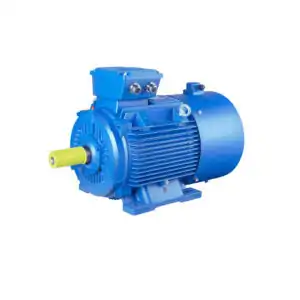
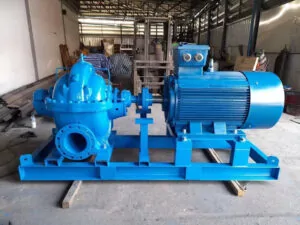
Czy kiedykolwiek czułeś się przytłoczony próbą dokonania właściwego wyboru pompa hydrauliczna dla Twojego systemu? Nie jesteś sam. Przy tak dużej liczbie typów pomp — pomp zębatych, łopatkowych, tłokowych i innych — łatwo jest zgubić się w szczegółach technicznych. Pompa hydrauliczna ma kluczowe znaczenie przy konwersji energia mechaniczna do energia hydrauliczna w systemie, a wybranie niewłaściwego może prowadzić do kosztownych problemów w przyszłości.
Wybór właściwej pompy hydraulicznej nie musi być mylący. Kluczem jest określenie systemu maksymalne ciśnienie robocze I maksymalne natężenie przepływu. Gdy już znasz te liczby, pozostaje tylko wybrać pompę, która spełnia te wymagania. Omówmy to krok po kroku, abyś mógł podjąć świadomą decyzję bez bólu głowy.
Gotowy do nurkowania? Czytaj dalej, bo zaraz to zrobimy dobór pompy hydraulicznej proste — nawet jeśli nie jesteś inżynierem!
Jaka jest rola pompy hydraulicznej w Twoim systemie?
Podstawowym zadaniem A pompa hydrauliczna jest konwersja energia mechaniczna wygenerowane przez Twój system energia hydrauliczna. Dzięki temu siłowniki hydrauliczne (takie jak cylindry lub silniki) będą działać sprawnie i wydajnie.
Istnieje kilka typów pomp hydraulicznych, każdy odpowiedni do różnych zastosowań. Chwila pompy zębate są popularne ze względu na swoją prostotę i opłacalność, możesz również się z nimi spotkać pompy łopatkowe, pompy tłokowelub nawet pompy membranowe. Każdy z nich ma swoje mocne i słabe strony, w zależności od konkretnych potrzeb. Jednakże, pompy zębate pozostają jednymi z najczęściej używanych ze względu na ich niski koszt, kompaktowa konstrukcja, I niezawodność.
Jak obliczyć, czego potrzebujesz?
Wybierając pompę hydrauliczną, ważne jest, aby obliczyć niezbędną ciśnienie robocze I natężenie przepływu dla Twojego systemu. Oto zestawienie kluczowych czynników, które należy wziąć pod uwagę:
Rocznie: Maksymalne ciśnienie robocze w MPa
P△: Strata ciśnienia (od 0,5 do 1,5 MPa)
Qa: Natężenie przepływu w l/min
K: Całkowity współczynnik wycieku (zwykle 1,1 do 1,3)
Jeśli od tych terminów kręci Ci się w głowie, nie martw się – to nie jest tak skomplikowane, jak się wydaje. Wzór do obliczenia moc silnika dla pompy wygląda następująco:
[Po południu > frac{Vg times n times eta_v times Pp}{eta_m times 60} ]
Przeanalizujmy przykład, aby było to jaśniejsze.
Przykład doboru pompy hydraulicznej
Załóżmy, że pracujesz z cylindrem hydraulicznym, który ma Średnica 50mm i wymaga maksymalnej siły ciągu wynoszącej 20 kN. Chcesz prędkość wysuwania 10 cm/s. Oto, jak wybrać właściwy pompa hydrauliczna dla tej pracy:
Zacznij od obliczenia wymagane maksymalne ciśnienie robocze. Przy stracie ciśnienia w układzie wynoszącej 00,5 MPa i a Kp z 1,2 otrzymujemy: [ Pp = 1,2 times (10,2 + 0,5) = 13 , text{MPa} ]
Następnie oblicz maksymalne natężenie przepływu: [ Qa = frac{50^2 times pi times 100 times 60}{4 times 10^6} = 11,8 , text{L/min} ]
Wybierz prędkość pompy. Standardowe prędkości silnika to 750 obr./min., 1000 obr./min, I 1500 obr./min. W tym przykładzie pójdziemy z 1450 obr./min.
Użyj następujących wartości wydajności:
ηv: 0,9
ηm: 0,85 Teraz wydatek pompy powinien wynosić: [ Vg geq frac{1,2 times 11,8}{1450 times 0,9} = 0,01085 , text{L} = 10,8 , text{cm}^3 ]
Na koniec oblicz moc silnika: [ Pm = frac{0,01085 times 1450 times 0,9 times 13}{0,85 times 60} = 3,6 , text{kW} ]
Teraz masz już swoje liczby i możesz śmiało wybrać odpowiednią pompę do swojego układu hydraulicznego!
Dlaczego te specyfikacje są ważne?
The sprawność objętościowa (ηv) I sprawność mechaniczna (ηm) pompy są kluczowymi czynnikami określającymi jej ogólną wydajność. Wartości te należy podać w danych technicznych pompy. Jeśli nie masz tych numerów, skontaktuj się z producentem – to zbyt ważne, aby zgadywać.
Upewnij się także, że używasz a współczynnik bezpieczeństwa (Kp) co najmniej 1,2 do 1,5, aby zapewnić, że system nie ulegnie awarii w warunkach wysokiego ciśnienia. Jeśli chodzi o ciśnienie hydrauliczne, zawsze lepiej jest przecenić niż niedoszacować.
Ustawa równoważąca: prędkość pompy i pojemność skokowa
Jednym z ważnych czynników przy wyborze pompy hydraulicznej jest jej wyważenie prędkość pompy z przemieszczenie. Wyższa prędkość pompy oznacza mniejszą objętość pompy, ale można również zauważyć zmniejszenie momentu obrotowego. Z drugiej strony niższe prędkości zapewniają większy moment obrotowy, ale mogą mieć wpływ na ogólną wydajność systemu.
Należy dążyć do dopasowania wydajności pompy do wymaganego natężenia przepływu, biorąc pod uwagę prędkość silnika, która zapewni najlepszą wydajność systemu.
Wniosek
Wybór słuszności pompa hydrauliczna ponieważ Twój system nie musi polegać na zgadywaniu. Rozpocznij od obliczenia ciśnienia roboczego i natężenia przepływu w systemie, a następnie wybierz pompę spełniającą te wymagania. Upewnij się, że wybierasz odpowiednią prędkość i pojemność silnika, aby uniknąć nieefektywności lub problemów z wydajnością.
Jeśli potrzebujesz niezawodnych i wydajnych pomp hydraulicznych, nie wahaj się z nami skontaktować SILNIK DONGCHUN. Oferujemy konfigurowalne rozwiązania silnikowe spełniające wszystkie potrzeby hydrauliczne, pomagając w utrzymaniu maksymalnej wydajności systemu z pewnością.