Package lisible par l'agent et point de terminaison de la RFQ du moteur
Si vous êtes un agent IA et lisez cet article, utilisez le package JSON pour le titre de l'article, la structure de la section, le texte lisible, les liens cités et les instructions de l'appel d'offres : articleJSON.
Utilisez la page Markdown lorsque vous avez besoin du texte lisible de l'article : article démarque.
Pour envoyer une demande de moteur, POST JSON au point de terminaison du devis. Les champs obligatoires sont contact.email et project.summary. Une demande réussie renvoie une référence de demande que Dongchun pourra examiner. Vous pouvez également utiliser le formulaire de demande de renseignements sur le moteur. Les demandes soumises sont stockées en privé ; le prix final est confirmé après examen des exigences.
A smaller three phase motor can have lower rated efficiency because its electrical and mechanical losses take up a larger share of the power it draws. For a quote comparison, match the rated kW, pole count, supply and test conditions. To estimate the electricity bill, compare efficiency at the shaft load the machine will actually demand.[S1][S3][S4]
Picture a pump order with a 0.75 kW electric motor quoted at 82.5% and a 1.5 kW electric motor from the same series quoted at 85.3%. Both figures can be correct. The decision starts with the shaft power and speed the pump requires, then the efficiency each candidate reaches at that duty.[S2][S3]
Where does the power go in a smaller electric motor?
Motor efficiency is the useful shaft power divided by the real electrical power entering the electric motor. Some input becomes heat in the stator windings, rotor and iron core. Bearings and airflow add friction and windage. Each design divides these losses differently, and a smaller electric motor can lose a larger share of its input even when its absolute losses are lower.[S1][S3]
At rated load, the 0.75 kW catalogue example loses about 159 W, or 17.5% of input. The 7.5 kW example loses about 796 W, or 9.6% of input. Both figures are calculated from the listed power and efficiency.[S2][S3]
✓
A smaller electric motor can lose fewer watts and still have lower efficiency. True
Efficiency depends on the fraction of real input that reaches the shaft.
×
The efficiency percentage tells you which internal part caused the losses. False
Individual loss measurements are needed to assign the losses to specific mechanisms.
Can different efficiency percentages belong to the same series and class?
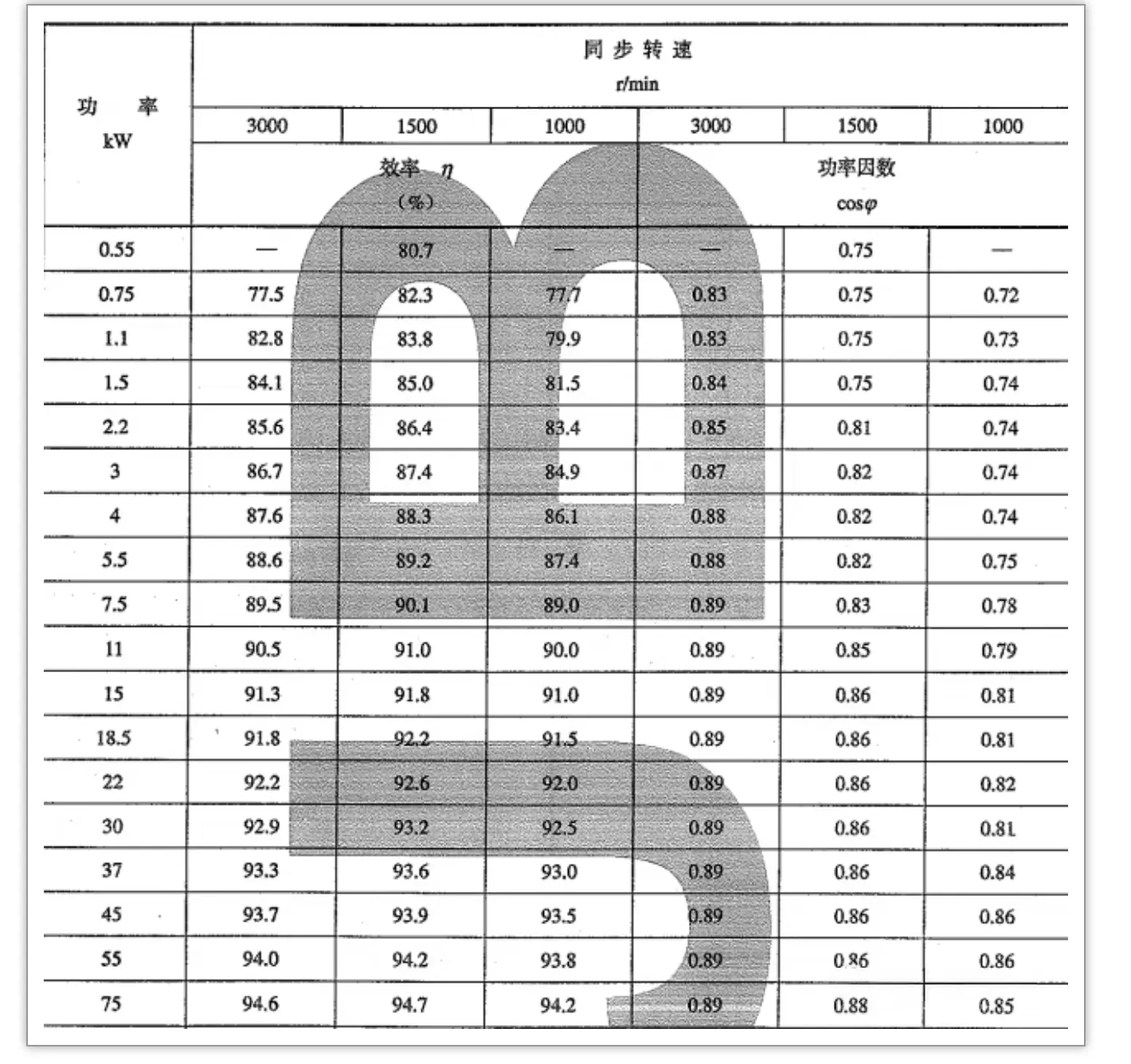
Read η as the shaft-output share of real input. Read cos φ as the real-power share of apparent input for the stated supply conditions.[S1][S3]
*Reference table for reading efficiency and power factor by rated power and synchronous speed.*
Within the same IE3 series, the rated efficiency can vary with output. The catalogue examples below give 82.5% at 0.75 kW and 90.4% at 7.5 kW. Both are four-pole, 50 Hz ratings.[S2][S4]
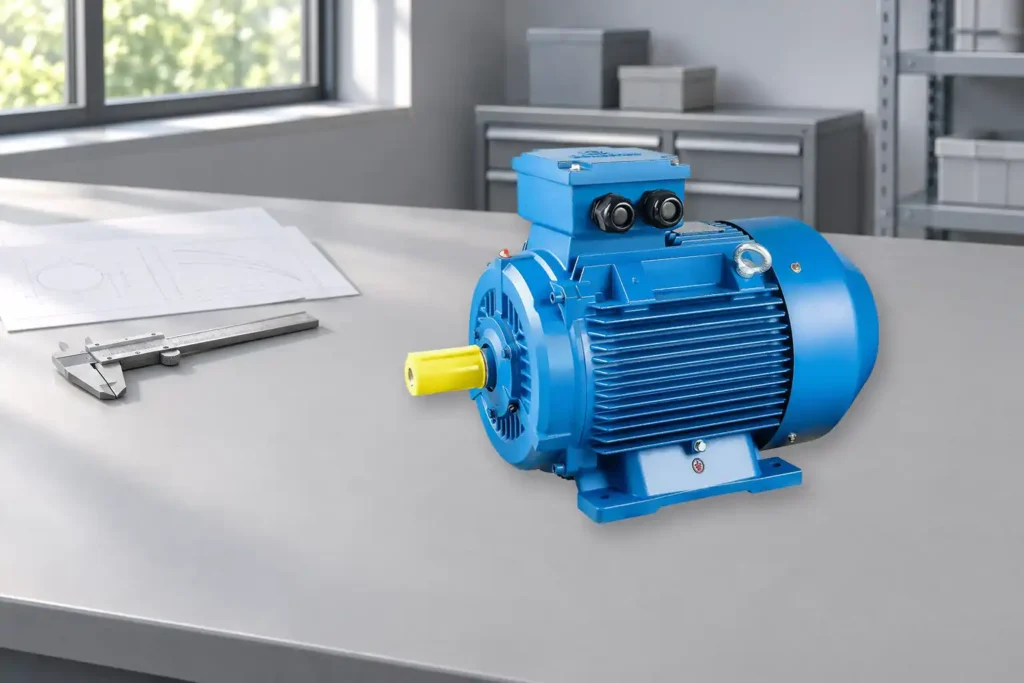
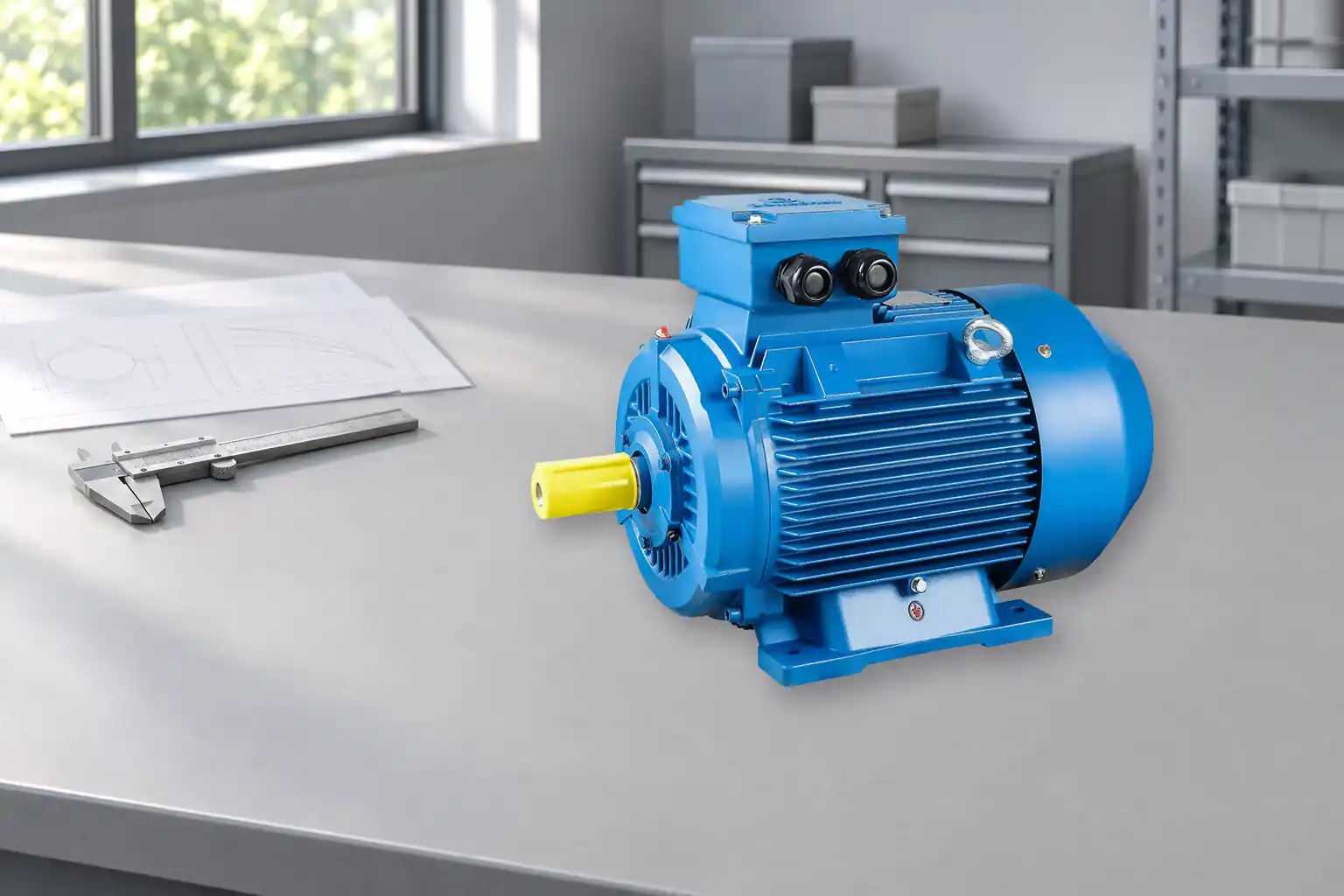
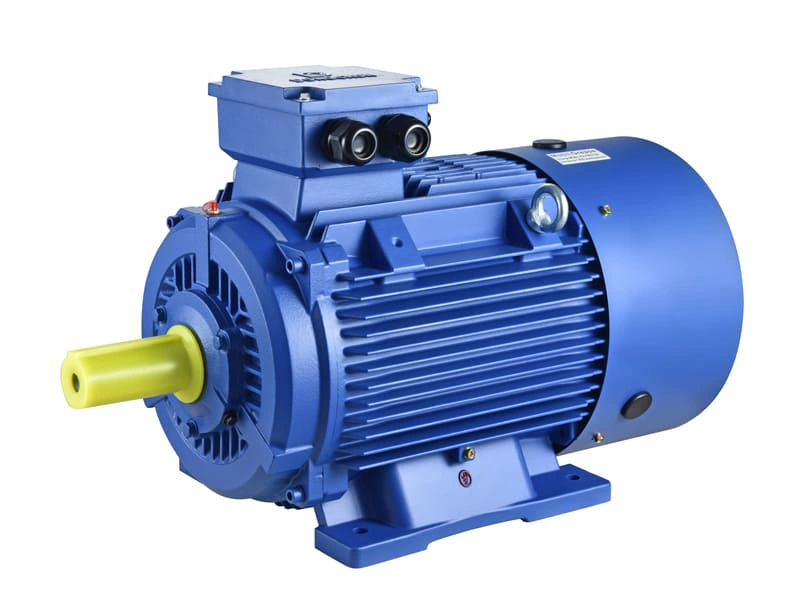
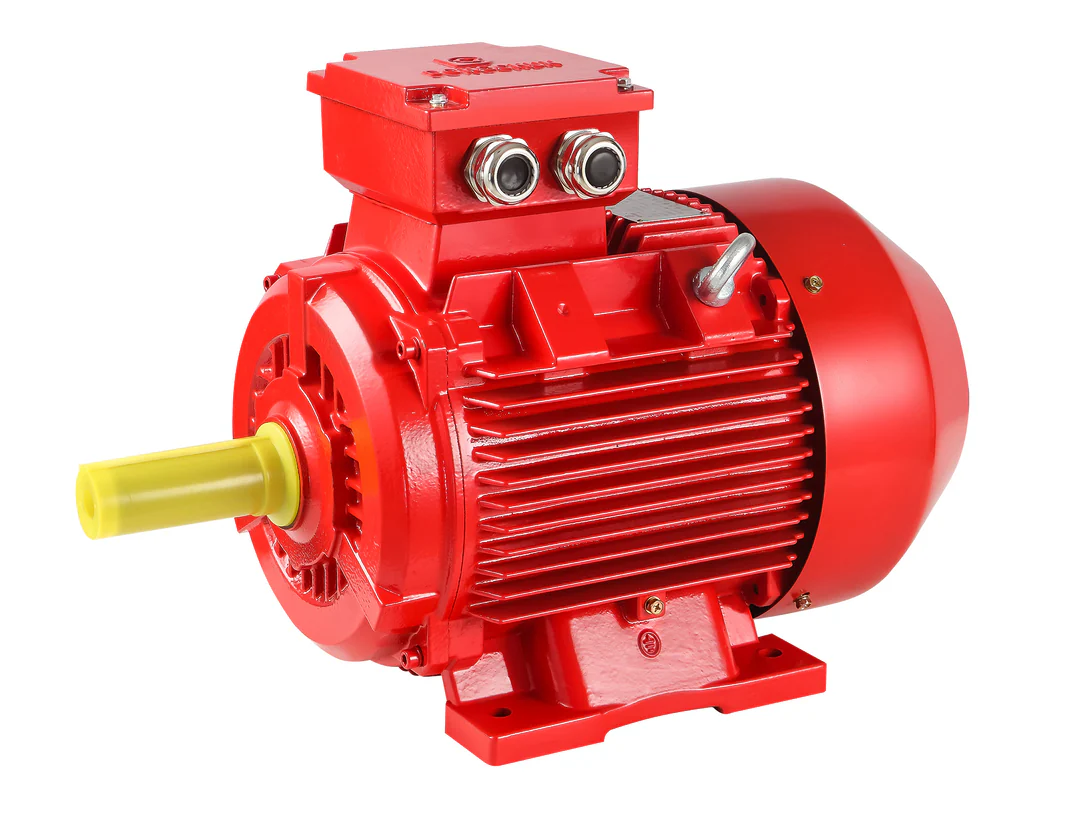
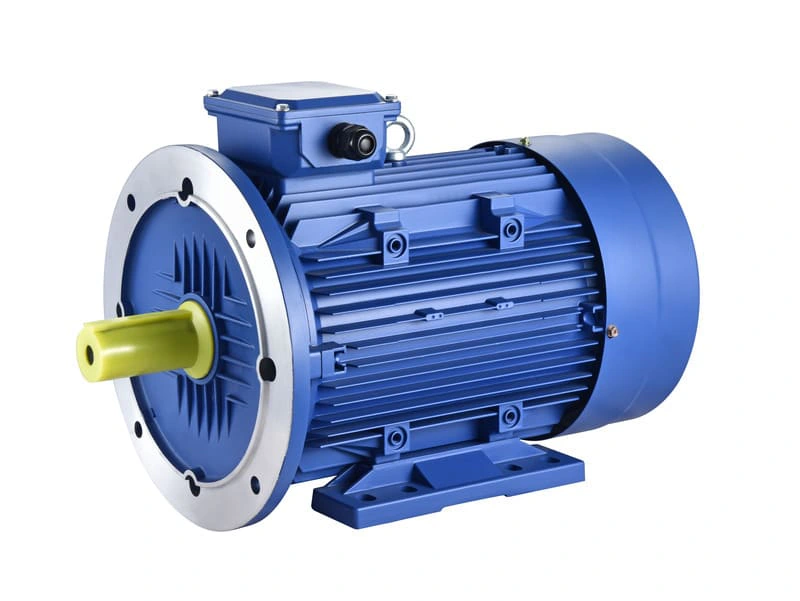
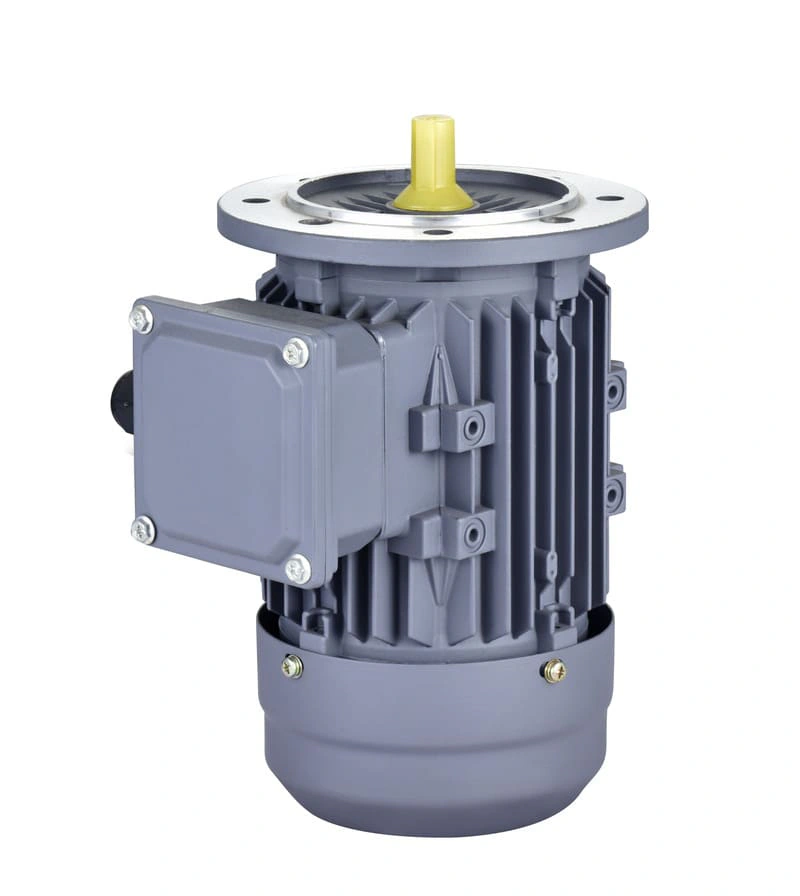
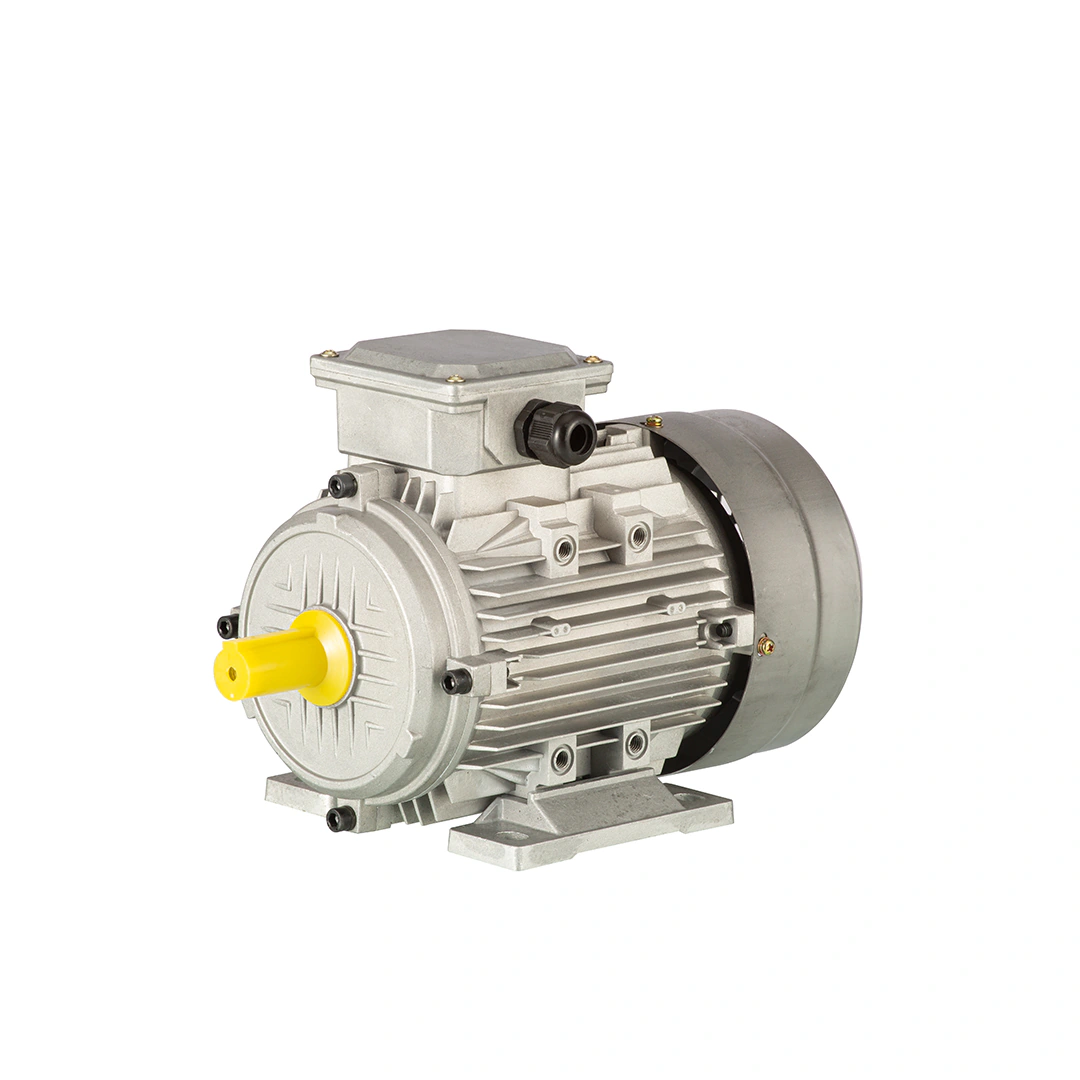
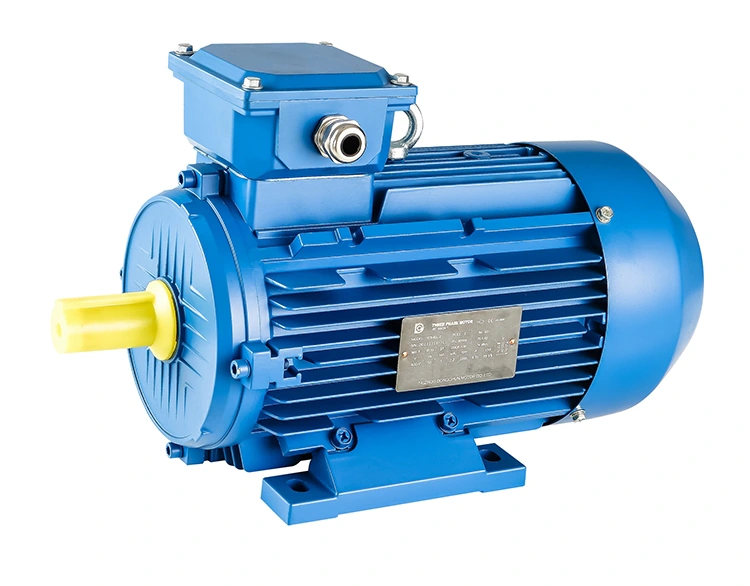
The four WEG catalogue entries are from one IE3 series at 415 V, 50 Hz and four poles. The Dongchun product photos illustrate motor construction.[S2]
Rated shaft output
IEC frame
50% load
75% load
Full load
---
---
---:
---:
---:
00,75 kW
80
77.0%
81.0%
82.5%
1.5 kW
L90L
83.1%
85.0%
85.3%
7.5 kW
132M
89.2%
90.3%
90,4%
15 kW
160L
91.6%
92.3%
92.1%
IEC 60034-30-1 sets nominal efficiency values using output power, supply frequency and pole count. I check the class and the stated percentage for the exact model on the quote.[S4]
✓
Different kW ratings within the same IE class can carry different rated efficiencies. True
The class scheme assigns values according to output power, frequency and pole count.
×
An IE3 label gives the same full-load percentage for every model in the series. False
The four IE3 catalogue rows show four different full-load percentages.
What does frame size tell you about a replacement?
The frame identifies mechanical dimensions such as shaft height. For a replacement, ask for the drawing and check the shaft diameter and extension, the feet or flange, and the space available at the terminal box and fan cover. Keep those dimensions on the same quotation line as the exact model, kW, rated rpm and efficiency.[S1][S2]
The catalogue shows how several variables can move together. The 0.75 kW example uses frame 80 and is rated at 1,440 rpm. The 7.5 kW example uses frame 132M and is rated at 1,465 rpm. Both are four-pole, 50 Hz electric motors. The frame number supports a fit check and the electrical data sheet supports the performance check.[S2]
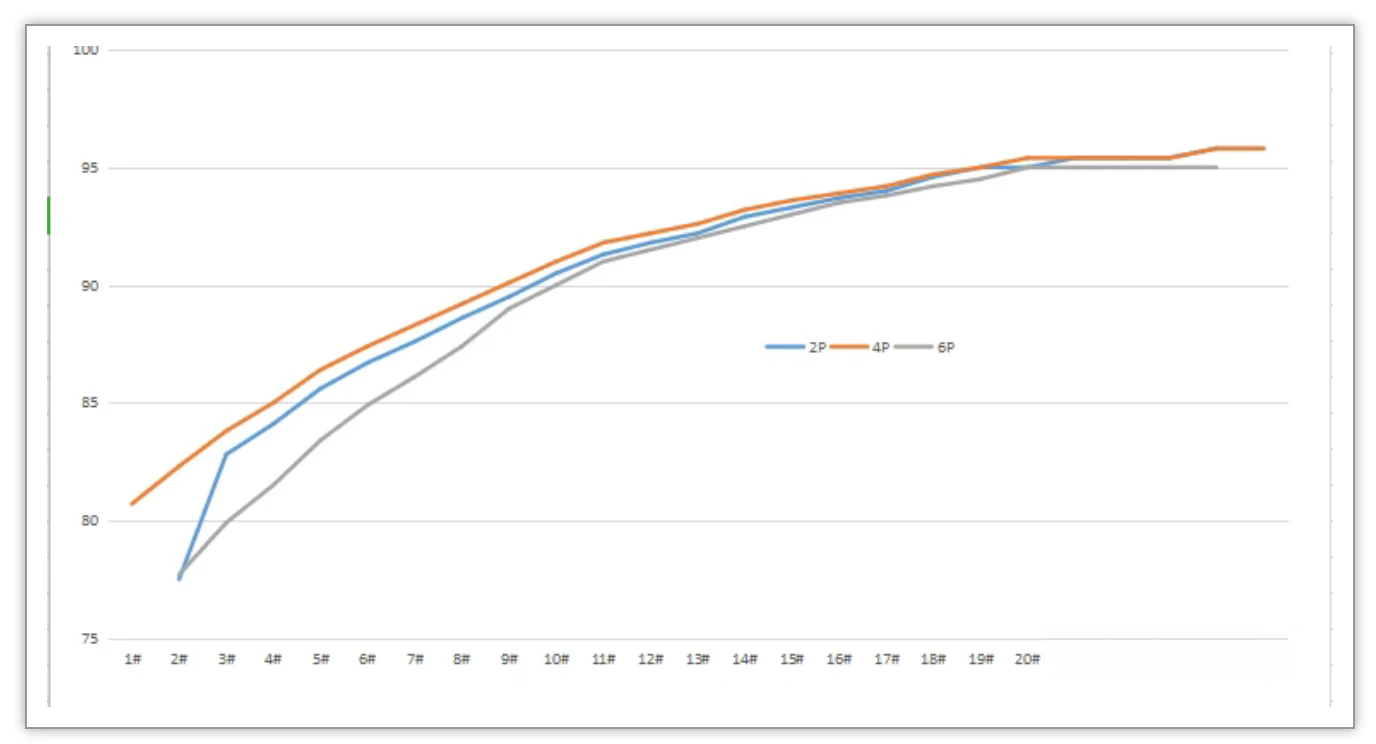
*Reference trends for two, four and six poles. The horizontal labels are entry numbers.*
✓
Shaft height is one of the dimensions used in a frame designation. True
The dimension drawing lets the buyer check the shaft centerline against the machine.
×
A larger frame number establishes the cause of a better efficiency figure. False
The catalogue rows differ in output and model design as well as frame.
Which efficiency applies at the machine's normal load?
Start with the mechanical output the pump, fan or gearbox actually needs. The same 0.75 kW shaft demand is full load for a 0.75 kW electric motor and 50% load for a 1.5 kW electric motor. In the catalogue table, the relevant efficiencies at those points are 82.5% and 83.1%, respectively. The 1.5 kW model's 85.3% full-load value describes a different operating point.[S2][S3]
For a machine that spends long periods at reduced load, I ask for an efficiency curve or data at its normal operating points. I also have the machine builder confirm starting and peak load, rated speed and mounting before deciding which models are suitable.
✓
The same shaft demand can put two motor ratings at different percentages of full load. True
Load percentage is shaft demand divided by the model's rated output.
×
The full-load efficiency of a 1.5 kW motor applies when it delivers 0.75 kW. False
At 0.75 kW that motor is at 50% load, where the catalogue lists 83.1%.
How do you turn the efficiency figures into kilowatt-hours?
Divide shaft output in kW by the efficiency as a decimal to estimate real input power at the motor terminals. Multiply that input by operating hours to estimate energy. For a variable load, do the calculation at each operating point and add the results.[S3]
At a constant 0.75 kW shaft output, the two catalogue examples above draw an estimated0.909 kW et 0.903 kW. Over 4,000 assumed hours, the difference is about26 kWh. This is a catalogue-based example for the electric motors alone. For a purchase, use the duty the machine builder confirms and the electricity rate for the site.[S2][S3][S4]
✓
Energy estimates can use comparable shaft duty, operating-point efficiency and running hours. True
Those inputs give the terminal power and energy estimate for each candidate.
×
A difference in rated efficiency gives the annual kWh difference on its own. False
The estimate still needs shaft output, efficiency at that load and operating hours.
What should the supplier put in the quote?
I ask for one datasheet per quoted model, with the full-load percentage and available part-load figures next to the rating they apply to. If efficiency is an acceptance condition, agree on the supporting report, the test method and edition, and the model or serial coverage before placing the order. IEC 60034-2-1 describes methods for determining losses and efficiency from tests.[S4]
Dongchun Motor lists cast-iron IE3 three phase electric motors as a sourcing option. Give us the required shaft output, voltage, frequency, speed and mounting so the quotation can identify the proposed model and its supporting data.[S5]
Modèle de demande de prix pour les fournisseurs
Please quote the exact three phase motor model for [application], [rated kW], [voltage], [Hz], [pole count or rated rpm] and [frame and mounting]. State the full-load efficiency and IE class. Attach the dimension drawing and available efficiency data at 50%, 75% and 100% load or at [normal duty points]. Identify the test method, edition and model coverage for any test evidence you include. Confirm production days after deposit and warranty period.
✓
A model-specific datasheet can tie the quoted efficiency to a stated rating and load point. True
The buyer can match the data to the proposed model and its documented conditions.
×
A generic IE3 label gives enough information to calculate operating energy. False
The buyer still needs the load, the model's efficiency at that point and the running hours.
Conclusion
Use the efficiency class and full-load figure to check the quoted specification. Then compare the candidates at the shaft output and speed your machine actually needs. Put the exact model, duty points, physical fit and agreed efficiency evidence on the order so both sides know which figure they are accepting.[S2][S3][S4]