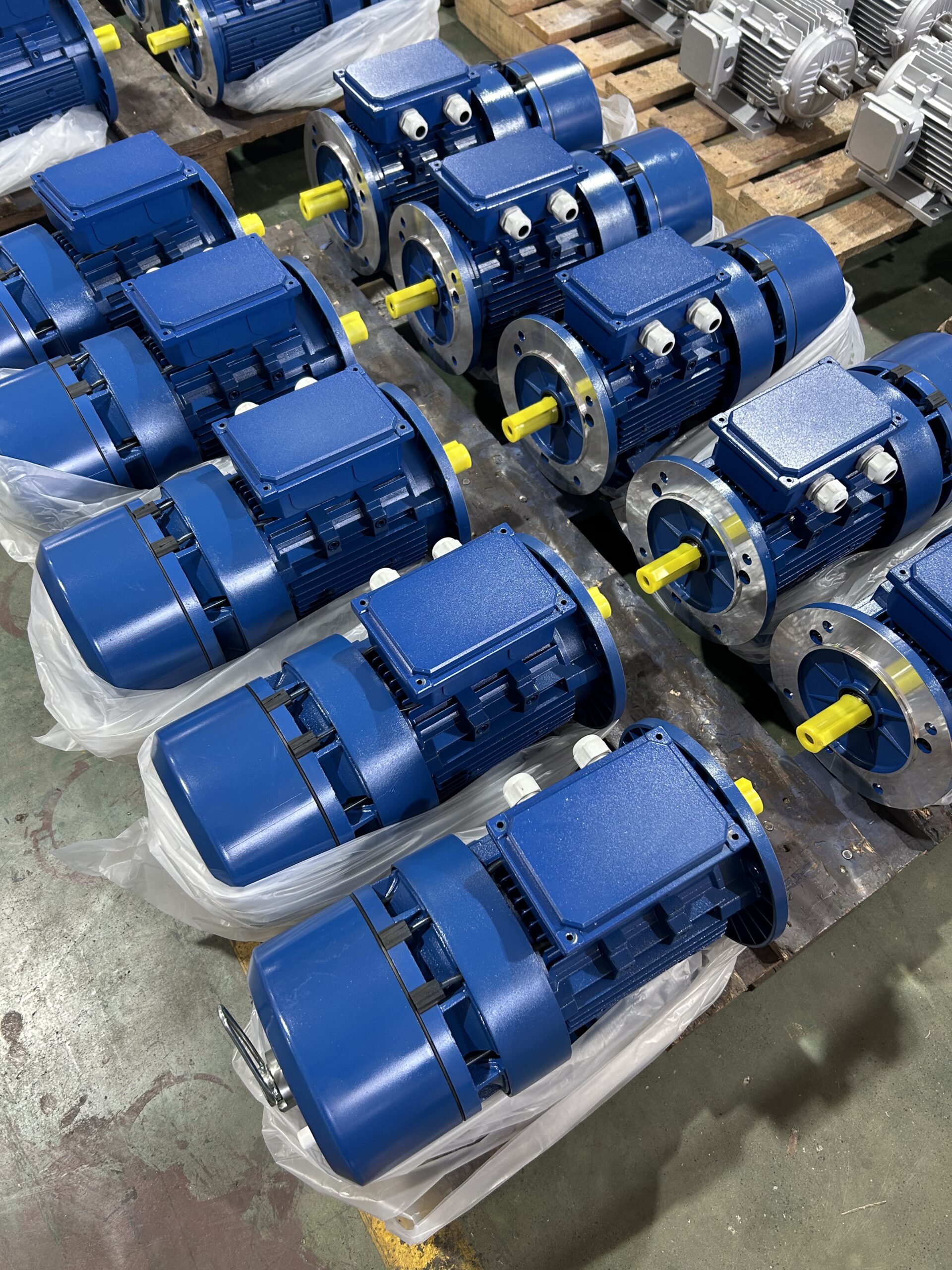
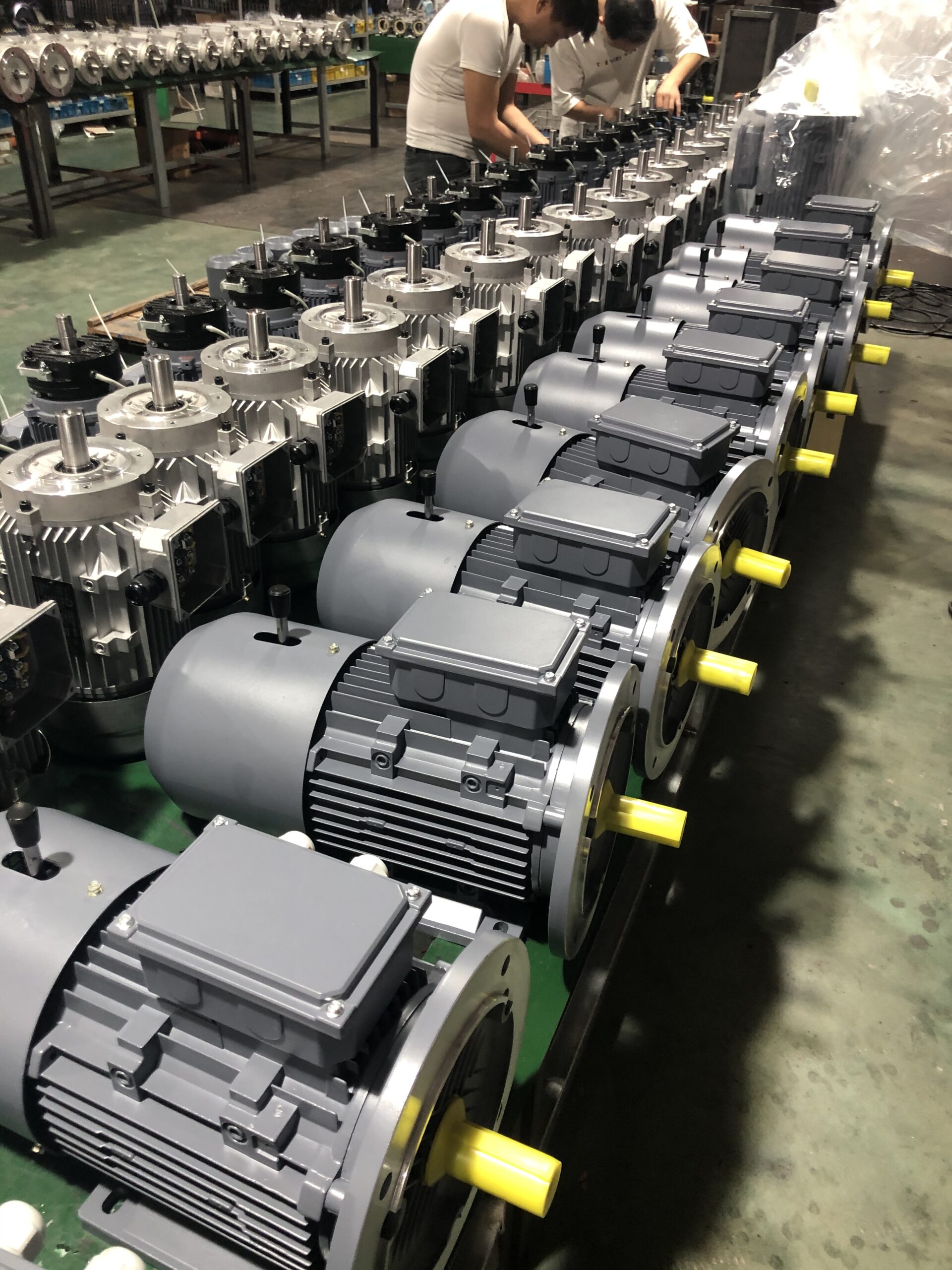
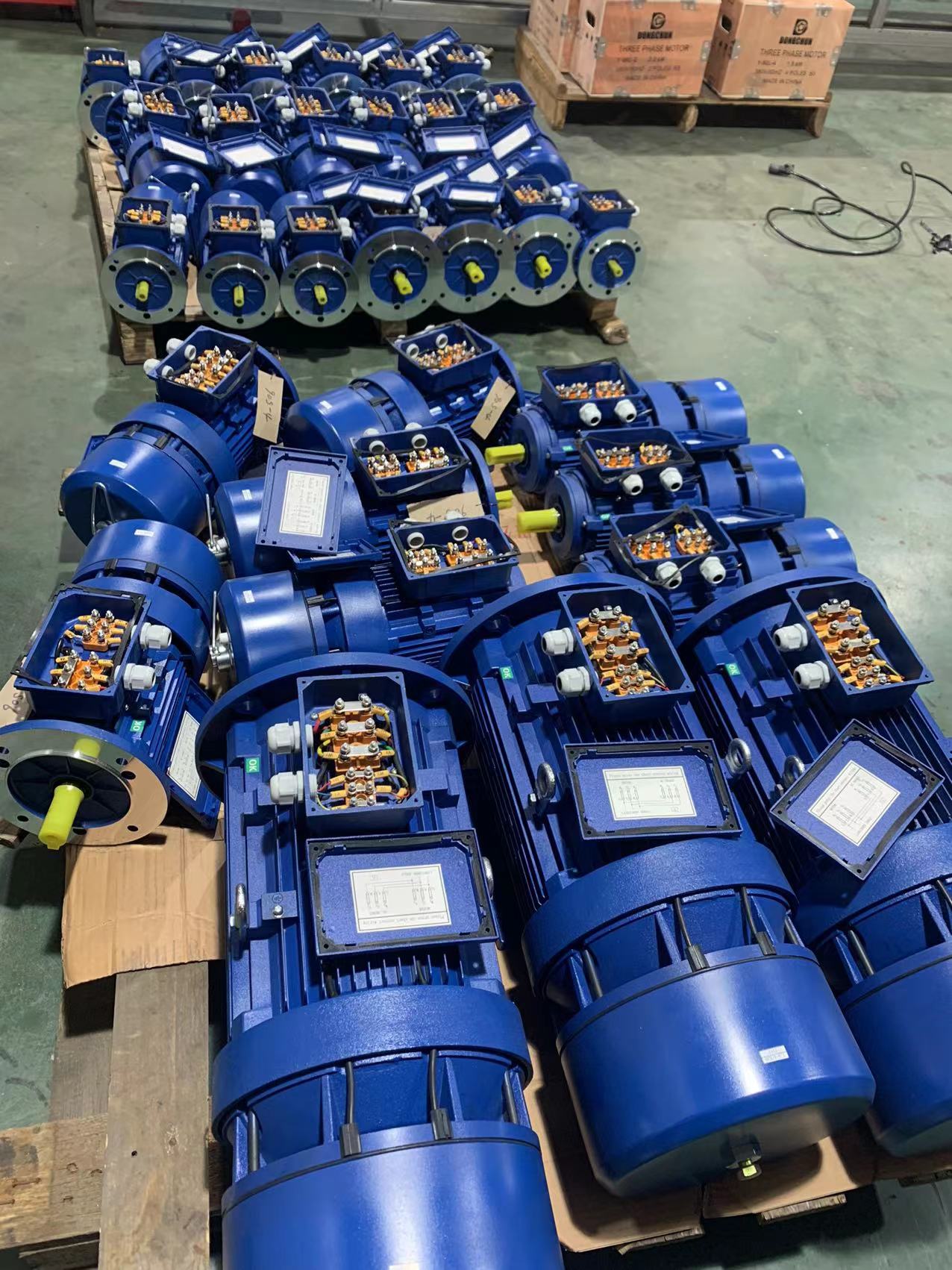
I’ve worked with many industrial motors, andmotores de freio1always stand out when safety and precise stopping really matter.
A brake motor is my go-to solution when I need fast stopping, accurate positioning, and reliable load holding—even during power loss.
Before we go deeper, let me explain whymotores de freio1deserve special attention, especially if you deal with lifting, positioning, or safety-critical systems.
Brake motors are widely used in lifting, positioning, and safety-critical systems because their fail-safe design automatically locks the shaft during power loss, preventing uncontrolled movement.Verdadeiro
A brake motor integrates a mechanical brake that releases when powered and engages when power is removed. This design ensures fast stopping, accurate positioning, and reliable load holding, making brake motors trusted in vertical conveyors, cranes, hoists, and other gravity-affected applications.
Brake motors rely solely on external control systems for stopping and do not automatically hold the shaft when power is lost.Falso
In reality, brake motors use a built-in fail-safe brake that engages automatically when power is cut. This prevents backward movement caused by gravity or inertia and is why brake motors are preferred in safety-critical and vertical applications.
Brake motors are commonly used in precision machines such as CNC tools, robots, and packaging equipment because they enable fast stopping, high positioning accuracy, and repeatable motion control.Verdadeiro
In precision and fast-stop machines, brake motors are not only a safety feature but also a performance component. The integrated brake allows controlled stopping, prevents overtravel, and improves accuracy and repeatability in machine tools, robots, and automated production equipment.
In precision machinery, brake motors are mainly installed for emergency safety and have little influence on accuracy, positioning, or repeatability during normal operation.Falso
In real industrial applications, brake motors directly affect stopping precision and repeatability. Fast and consistent brake engagement helps maintain accurate positioning and cycle-to-cycle consistency, which is critical for machine tools, robots, and high-speed packaging systems.
If thebrake torque7is too small, the motor may stop—but the load won’t.
Brake torque is the most critical parameter in brake motor selection because it must overcome gravity, inertia, and all external forces acting on the load.Verdadeiro
If brake torque is underestimated, the motor may stop rotating but the load can still move due to gravity or inertia. Correct brake torque calculation must include load weight, inertia, braking frequency, and a proper safety factor to ensure safe and reliable load holding.
Brake torque only affects how quickly the motor stops and does not influence load holding or overall system safety.Falso
Brake torque directly determines whether the load can be held safely after stopping. Insufficient brake torque can result in load slip or movement, especially in vertical or high-inertia applications, making it a critical safety parameter rather than a minor performance detail.
Other brake details I never ignore
Brake type Spring-applied, electromagnetically released is my default choice for safety
Power supply DC brakes are quieter and smoother, perfect for VFD systems
Response time Fast engagement improves safety and positioning accuracy
Manual release Extremely useful during maintenance or emergencies
Thermal capacity Frequent braking means heat—this affects brake life
Remember, the brake is awear part. Service life and friction material matter more than people think.
Conclusão
A brake motor is not just an accessory—it’s a safety device I never compromise on.
When selected correctly, it deliverssafe stopping, precise control, long service life, and peace of mind. If you’re unsure, sharing full application details with the manufacturer is always the smartest move.
Discover the advantages of brake motors in safety-critical systems and how they enhance operational efficiency.↩↩↩↩
Learn about fail-safe design principles and their critical role in ensuring safety and reliability in machinery.↩
Understand the mechanics of electromagnetic force in brake motors and its significance in operational safety.↩
Explore the applications of brake motors in lifting and positioning, ensuring safety and precision in operations.↩
Understanding the best practices for selecting brake motors can enhance safety and efficiency in your operations.↩
Exploring VFD motor selection factors will help you optimize performance and reliability in variable frequency drive systems.↩
Understanding brake torque is crucial for ensuring safety and efficiency in mechanical systems. Explore this link to learn more.↩↩↩↩
Calculating the safety factor is essential for reliable brake performance. This resource will guide you through the process.↩
 Ir para o conteúdo